Our other sites:


Emergency services are the backbone of public safety and national resilience. From police and fire stations to ambulance depots and NHS facilities, these sites house vital personnel, vehicles, and equipment that must remain secure, operational, and accessible at all times. As threats to public infrastructure such as vandalism, theft, target attacks, and protest disruption evolve, security fencing; particularly high security fencing, has become an essential component of emergency service site protection. Here we explore the unique requirements of each UK emergency service and outline how high security fencing solutions can support their operational integrity.
Why Emergency Services Require High Security Fencing
Emergency service facilities are not just workplaces. They are strategic assets that enable rapid response, public reassurance, and life saving interventions. Aside from causing harm to vehicles, equipment, and staff, any compromise to their security can have far reaching consequences, from delayed emergency response to loss of public trust. Fencing and gates play a critical role in defining secure zones, deterring unauthorised access, and providing a reliable and trustworthy service. For emergency services, fencing must balance robust protection with operational efficiency, ensuring that security never impedes response times or community engagement.
Typically, the needs of any emergency service station are similar, with security solutions comprising of:
However, individual emergency services often have distinct operational requirements, and beyond that, the specific site type and function (such as headquarters or secure storage facilities) will demand tailored security measures.
Police Facilities: Securing Evidence, Vehicles, and Personnel
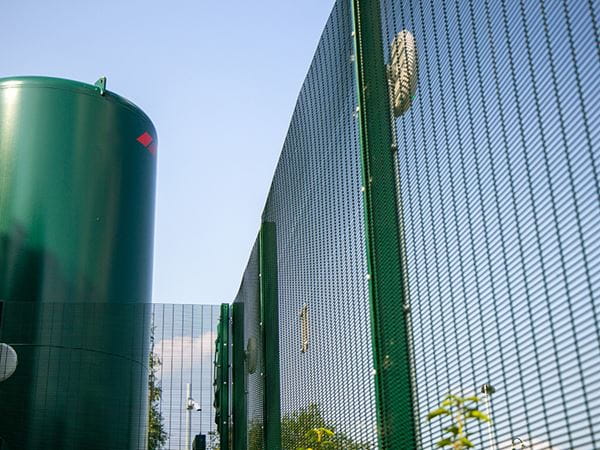
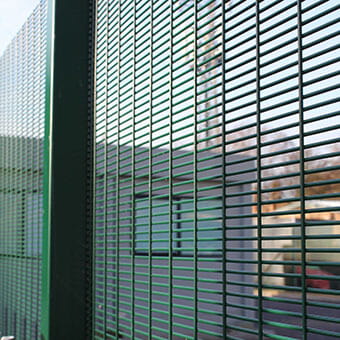
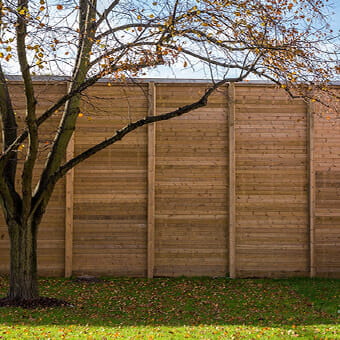
Police stations, custody suites, and vehicle compounds require some of the most stringent fencing specifications in the emergency services sector. These sites often store sensitive evidence, high value vehicles, firearms, and equipment that must be protected from tampering or theft. Unfortunately, police facilities may also be targeted by protestors or individuals seeking to disrupt operations. High security fencing for police sites typically includes anti-climb and anti-cut mesh fencing like Securi-Mesh® 358, and secure access gates with integrated control systems. In some cases, crash rated barriers are installed as a secondary perimeter to mitigate the risk of hostile vehicle attacks. Entrance gates may be in the form of a tiger trap or air lock; bi-folding speed gates paired with crash rated bollard or rising arm barriers. Visibility and concealment must also be balanced in different areas, with perimeter fencing often designed to allow surveillance, while storage compounds benefit from privacy fencing solutions such as acoustic barriers and EuroGuard® Combi (which can be LPS 1175 rated if required). Additionally, police stations which have cells attached, may find solid fencing such as Jakoustic® acoustic barriers an advantage for privacy and noise reduction.
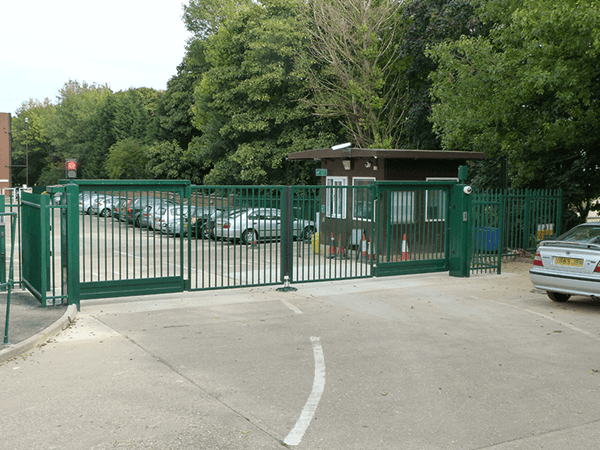
Fire and Rescue Stations: Balancing Security with Rapid Deployment
Fire stations and training centres must be secure but must also enable rapid egress for emergency vehicles and personnel. Fencing solutions must therefore support fast, unobstructed access while protecting valuable assets such as fire engines, breathing apparatus, and rescue tools. Automated gates with fast open-close cycles are commonly used, often integrated with priority access systems for emergency vehicles. In some cases, visual permeability is preferred to maintain community reassurance and allow passers-by to see that the station is active and staffed. Additional compounds or areas of security fencing may also be used to demarcate training zones, segregate public access areas, and protect fuel storage or maintenance bays.
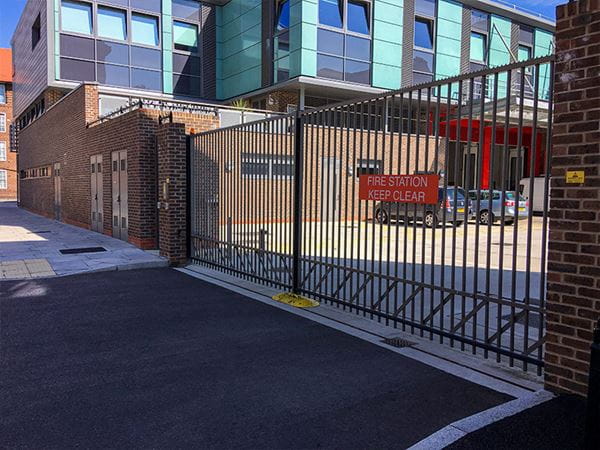
Ambulance Services: Protecting Response Hubs and Vehicle Compounds
Quick response times are critical with ambulance depots and response hubs; they must remain secure without compromising accessibility. These sites often house large fleets of ambulances, paramedic vehicles, and medical equipment that are vulnerable to theft or vandalism. Security fencing for ambulance services typically includes robust perimeter fencing, secure, rapid-access gates, and lighting integration to support nighttime operations. Access control is essential, with systems designed to allow authorised personnel to exit quickly while preventing unauthorised intrusion. In some regions, ambulance hubs are co-located with NHS facilities, requiring fencing solutions that can accommodate multiple operational zones with differing security profiles.
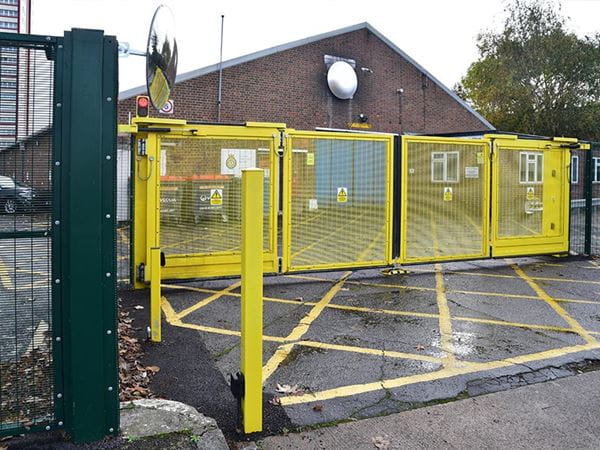
Coastguard, Maritime, Cliff, and Mountain Rescue: Remote Security Challenges
Coastguard stations, maritime, and cliff and mountain rescue facilities are often located in remote or coastal areas, presenting unique security and maintenance challenges. These sites may store rescue boats, life saving equipment, and communication systems that must be protected from environmental damage and unauthorised access. Fencing solutions for coastguard sites must be weather-resistant, corrosion-proof, and capable of withstanding high winds and salt exposure. Anti-climb designs are essential, particularly in areas with public footfall or tourist activity. In some cases, fencing is integrated with remote monitoring systems to support security in isolated locations. The ability to define secure zones without obstructing emergency access to the water is a key design consideration. Marine coatings on steel fencing and gates around coastal locations is highly recommended to ensure longevity.
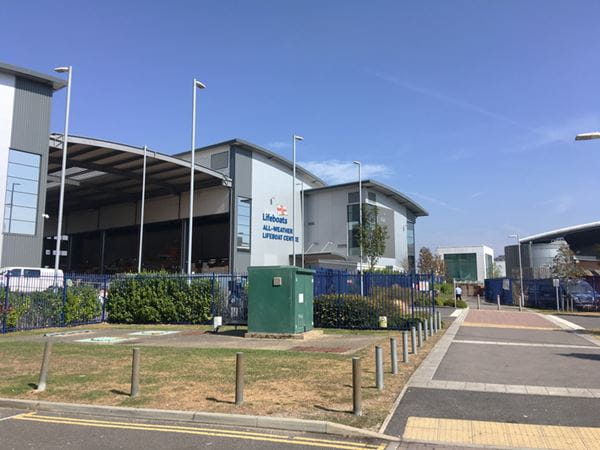
NHS and Healthcare Facilities: Security with Sensitivity
Hospitals, mental health units, and vaccine storage centres require fencing solutions that balance security with sensitivity. These sites must protect patients, staff, and medical assets while maintaining a welcoming and dignified environment. Privacy fencing is often used to shield sensitive areas from public view, particularly in mental health settings or secure wards. Acoustic barriers may be installed to reduce noise pollution and support patient wellbeing, while around medical assets and equipment, high security fencing such as Securi-Mesh is generally used. Secure access control is critical, especially in areas where pharmaceuticals or medical records are stored. Fencing must also comply with NHS guidelines and local planning requirements, which may include aesthetic considerations and community impact assessments.
Designing Fencing for Multiservice Sites and Shared Infrastructure
In some cases, emergency services share infrastructure or operate from joint response hubs. These multiservice sites require fencing solutions that can accommodate varied operational needs, from secure evidence storage to rapid vehicle deployment. Zoning is essential, with fencing used to define operational boundaries, segregate public and staff areas, and support integrated security systems. Flexibility is key, allowing for future expansion or reconfiguration without compromising security. In urban environments, fencing may also need to support community engagement, with designs that are visually appealing and non-intimidating while still offering robust protection.
Key Features of High Security Fencing for Emergency Services
Across all emergency services, certain fencing features are consistently required. Anti-climb and anti-cut designs are essential to deter intrusion and protect assets. Crash rated barriers or additional layers of fencing may be necessary at high risk sites to fortify the perimeter; particularly police stations or urban NHS facilities. Access control integration supports operational efficiency, allowing authorised personnel to enter quickly while maintaining perimeter integrity. Lighting and surveillance compatibility enhance situational awareness and support 24/7 operations. Materials must be durable, low maintenance, and in certain areas should be certified to Secured by Design and LPS 1175 ratings where applicable, to protect against forced entry.
Case Studies: Real-World Applications of Emergency Service Fencing
London Ambulance Service – We installed security fencing and automated gates at six sites across London, prioritising high visibility powder coating to help keep entrances clear and visible across the capital.
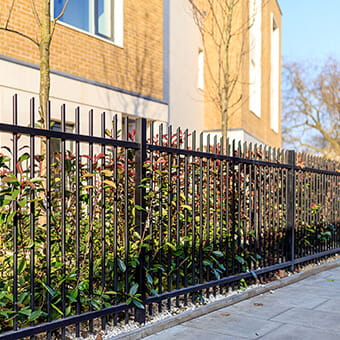
RNLI Lifeboat Service – Blue vertical bar railings were chosen to keep the headquarters in Poole secure but also looking smart.
London Fire Stations – We installed automated gates to eight stations and provided ongoing servicing and maintenance to keep them operative and reliable.
Police Stations – We have provided a number of police stations with varied solutions including LPS 1175 SR3 fencing and acoustic barriers.
Supporting the UK’s Emergency Services with Trusted Security Solutions
Emergency services operate under immense pressure and public scrutiny. Their facilities must be protected with fencing solutions that offer uncompromising security, and operational efficiency. Whether securing a police evidence store, a fire station forecourt, or a coastal rescue hub, security fencing is a vital component of emergency service infrastructure. By understanding the unique needs of each service and applying best practice design principles, we can help safeguard the UK's critical responders and support their mission to protect the public.
Related Content:
Related products
Jacksons Security has a range of products relating to this article, all complete with our 25 year service life guarantee. If you cannot find the item you are looking for, please do not hesitate to call our friendly sales team.
Top