Which acoustic barrier is right for your site?
Use our comparison tool to help you determine which acoustic barrier is right for your project.
Our other sites:
Acoustic fencing plays a vital role in reducing environmental noise, whether it’s traffic, railways, industrial operations, or school playground activity. But not all acoustic barriers are created equal. While both kit form acoustic barriers and pre-assembled acoustic fence panels can meet acoustic standards, their real-world performance depends on how well they achieve one critical goal: being sound-tight.
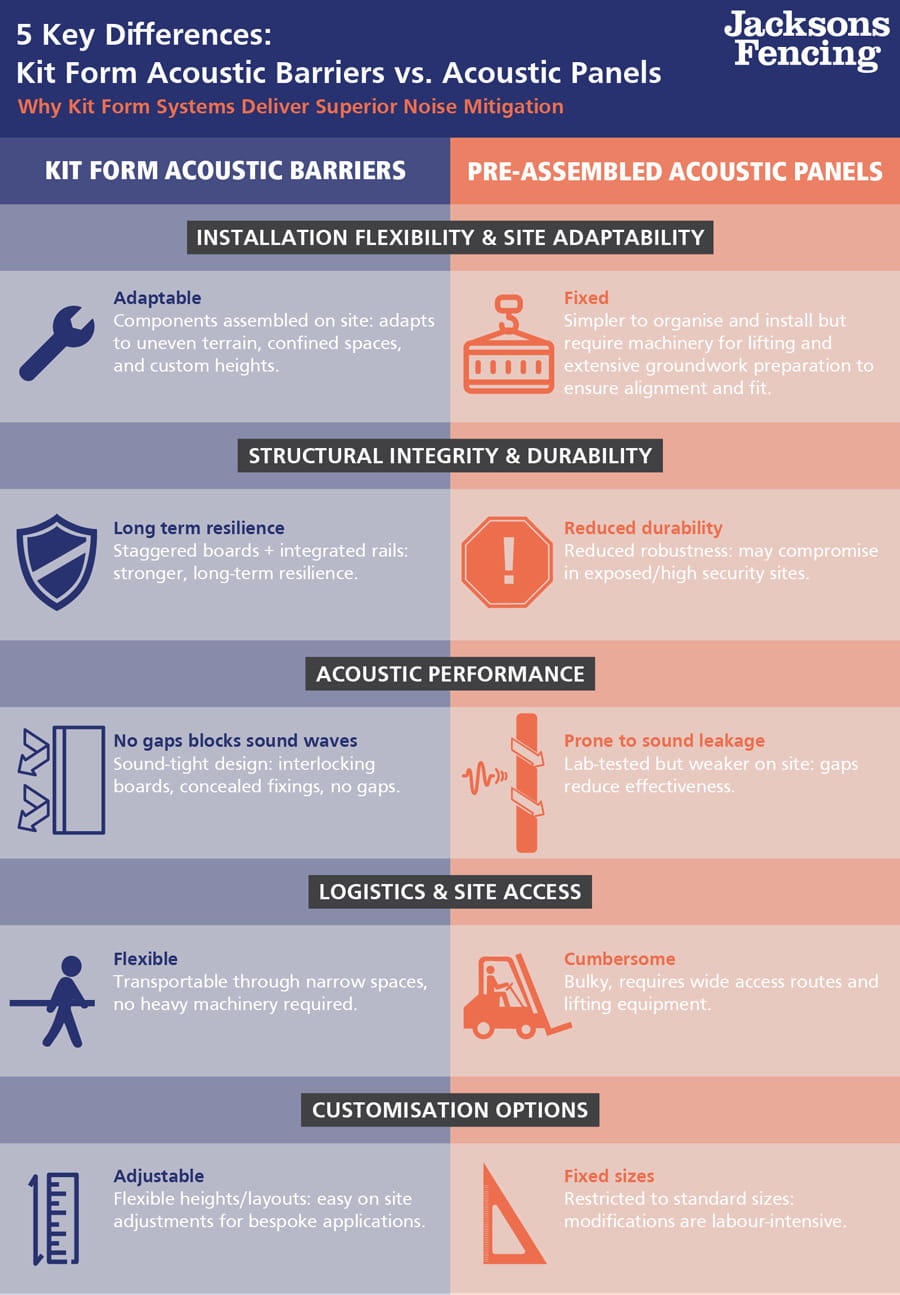
One of the most overlooked advantages of kit form acoustic fencing is the level of control it offers during installation. Kit form acoustic barriers, like Jakoustic®, are supplied in individual components: boards, posts, capping rails, fixings, and assembled on site. This type of construction offers unmatched flexibility for:
Because each component is assembled on-site, installers can ensure every board is tightly interlocked and aligned, adapt to minor site irregularities without compromising performance, and visually inspect and adjust each stage of the build.
Pre-assembled acoustic panels, while simpler to organise and install (if you have machinery to lift them), are fixed in size and shape. Panel form fencing can limit adaptability and require extensive groundwork preparation to ensure alignment and fit.
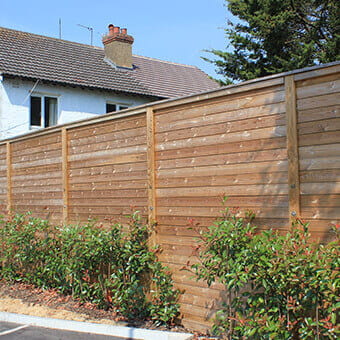
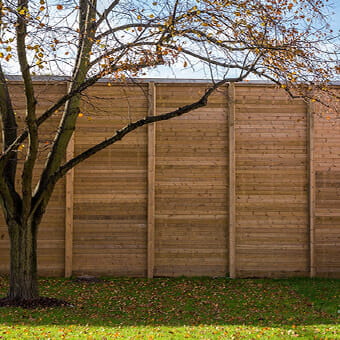
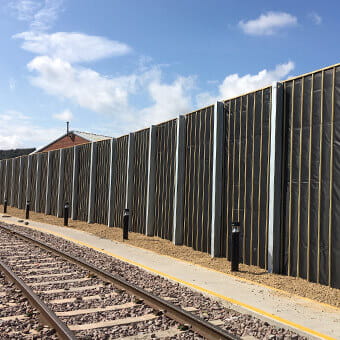
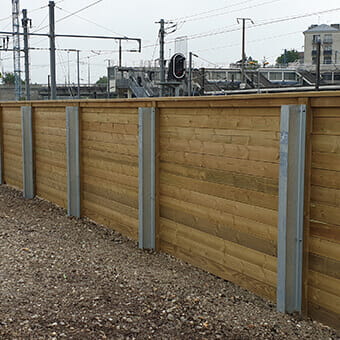
Available in reflective and absorptive variants, Jakoustic’s kit form design allows installers to adjust and align each component precisely, ensuring a seamless, gap-free barrier, even on challenging sites.
This hands-on approach helps guarantee a sound-tight finish, which is essential for acoustic performance. Even small gaps or misalignments can significantly reduce the effectiveness of a barrier, allowing sound to leak through.
Acoustic barriers must withstand wind load and weathering. Kit form fences typically use:

Pre-assembled panels may compromise on robustness to reduce weight or simplify handling. This can affect long-term performance, especially in high security or exposed environments.
Jakoustic fencing is engineered for durability, with proven performance in sectors like utilities, infrastructure, transport, and education, where reliability and safety are non-negotiable.
The whole point of an acoustic barrier is to block, reflect, and absorb sound. That only works if the barrier is sound-tight; no gaps, weak joints, or acoustic leaks.
While both kit form fencing and acoustic panels can be tested to standards like BS EN 1793/1794, meeting the standard isn’t enough. True acoustic performance depends on how well the barrier is designed and installed.
Kit form systems like Jakoustic are designed with these principles in mind. Every component contributes to a continuous, sound-tight structure. Some panel systems may meet lab-tested standards but struggle to replicate that performance on-site, especially if gaps form between panels or around fixings.
One of the most practical advantages of kit form acoustic fencing is how easily it can be transported and installed in restricted access locations. Because the system is delivered as individual components: boards, posts, rails, it can be:
This makes kit form fencing ideal for sites like:
Pre-assembled acoustic panels, by contrast, are bulky and often require mechanical lifting or wide access routes. That can make them impractical, or even impossible to install in confined spaces.
Jakoustic’s modular format means installers can bring components through buildings, down alleyways, or into basements, then assemble the barrier on site with precision. It’s a logistical advantage that opens up noise reduction to places acoustic fence panels simply can’t reach.
Kit form acoustic barriers offer far greater flexibility when it comes to customisation, especially in terms of height and layout. While acoustic fence panels can be stacked to increase height, this is typically limited to fixed increments based on panel dimensions. In contrast, kit form systems offer greater flexibility to achieve the exact height required.
This flexibility extends to bespoke applications such as acoustic enclosures or irregular boundaries. With kit form fencing, only the individual boards need to be cut to size, not an entire panel, making on-site adjustments easier, faster, and more precise. This also helps maintain a tighter, gap-free fit, which is essential for effective sound mitigation.
By comparison, acoustic panels are usually restricted to standard sizes and styles. Any modifications often require cutting through the full panel, which is more labour-intensive and can compromise the visual balance or acoustic integrity of the barrier.
Acoustic fence panels may suit smaller residential projects or temporary installations where speed is the top priority. But for long-term, high-performance noise reduction, especially in utilities, infrastructure, and sensitive environments, kit form acoustic barriers offer superior adaptability, durability, and acoustic integrity.
Jakoustic® remains our flagship solution because it’s designed to be sound-tight from the ground up. Every board, post, and fixing contributes to a continuous barrier that blocks, deflects, and absorbs noise, exactly as acoustic fencing should.
Discover our acoustic barriers and read about acoustic fencing specification
Use our comparison tool to help you determine which acoustic barrier is right for your project.
Jacksons Security has a range of products relating to this article, all complete with our 25 year service life guarantee. If you cannot find the item you are looking for, please do not hesitate to call our friendly sales team.
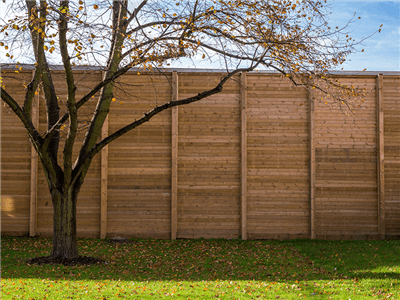
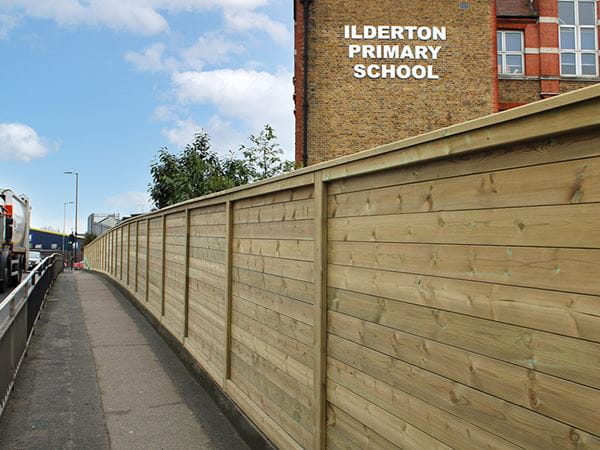
We have completed a large number of Acoustic projects in various sectors, from housing, retail, leisure and education, to hospitals and healthcare, transport, utilities, and high security CPNI sites. Discover more through our portfolio of Acoustic case studies.
We have an extensive library of Acoustic blogs covering a wide selection of topics, whether you need a helpful guide for recognising accreditations, an understanding of different processes such as our unique timber treatment or UKCA marking regulations for noise barriers.

From design and manufacturing to supply and installation, we can help you with your project. If you'd like to discuss anything in this article or need information or guidance, please feel free to contact us at any stage to discuss your requirements.
Top