Our other sites:


Light pollution is an increasingly recognised environmental issue, affecting everything from human wellbeing to wildlife behaviour. As commercial and industrial sites continue to expand, so does the need for effective light control. One of the most practical solutions is the use of well designed, tall, solid fencing.
What Causes Light Pollution?
Light pollution occurs when artificial light escapes into areas where it is not needed or intended. The most common causes include:
- Poorly directed external lighting
- Overuse of high intensity security lighting
- Floodlighting without shielding or control
- Reflective surfaces that amplify glare
- Gaps in boundary structures that allow light to spill through
When lighting is not contained within a site, it can produce glare, sky glow, and light trespass. These effects can disrupt nearby residents, impact local ecosystems, and create unnecessary energy waste.
Businesses Where Light Pollution Is Common
Certain industries are more prone to light pollution due to operational requirements and security concerns. These include:
- Logistics and distribution centres
- Industrial estates and manufacturing facilities
- Construction sites
- Retail parks and car parks
- Sports facilities and stadiums
- Transport hubs such as railway yards and depots
In these environments, lighting is often required for safety, security, and continuous operation. Without proper containment, however, significant light spill can occur beyond the site boundary.
Types of Light Pollution
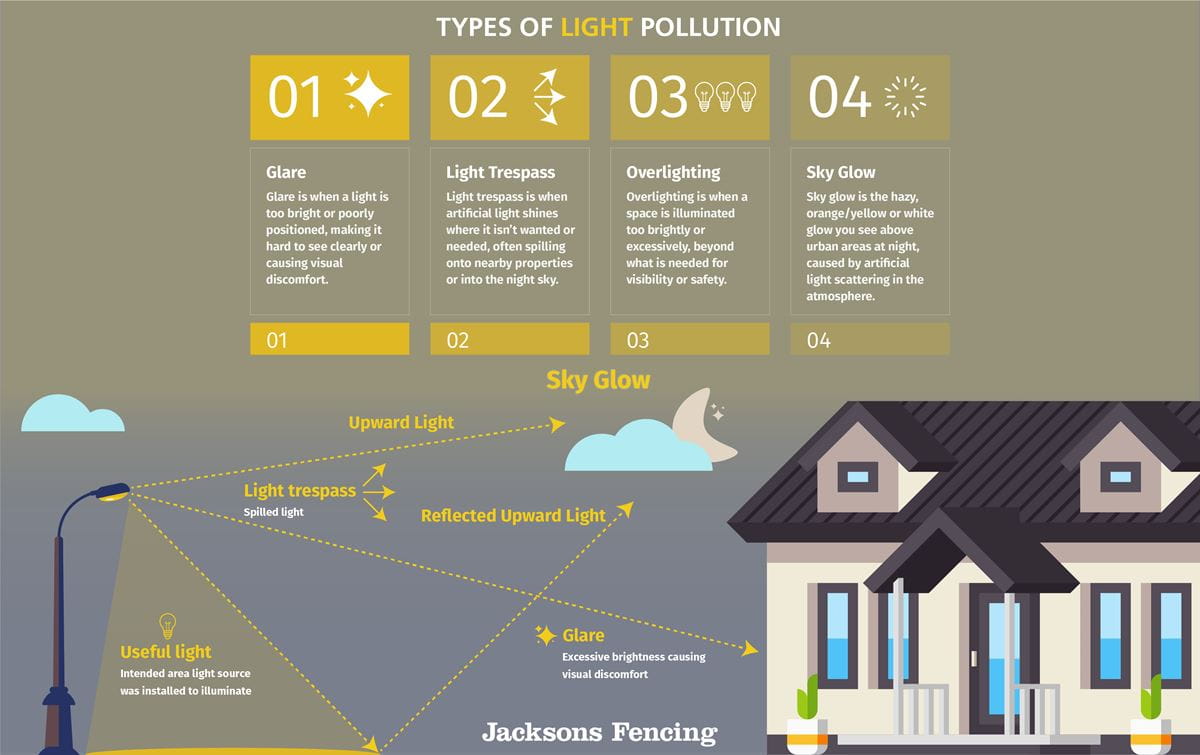
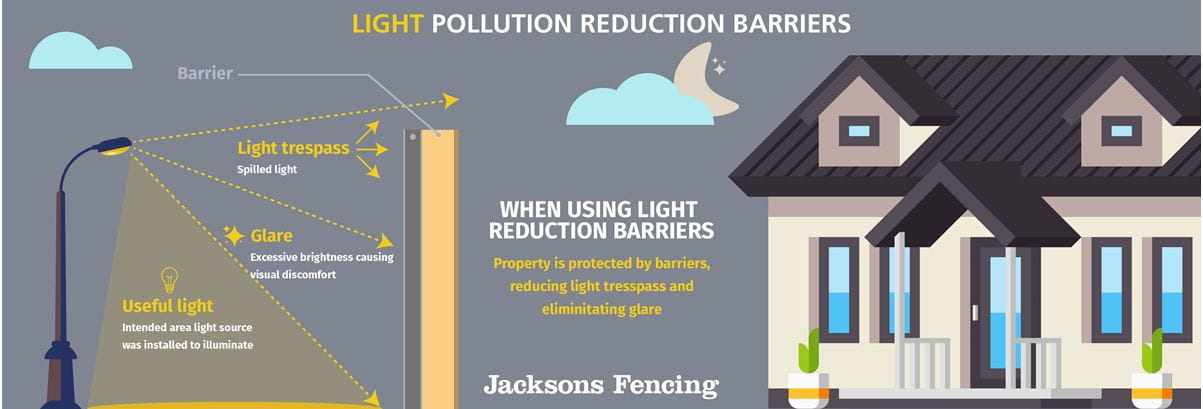
- Light trespass: Light that spills into neighbouring properties or public spaces. This often happens when external lighting is not fully contained within a site boundary. For example, floodlights on a warehouse may shine into nearby homes, or lighting from a car park or vehicle headlights can spill onto surrounding roads and gardens. Small gaps in fencing can allow visible strips of light to escape. Installing tall, solid light reduction barriers helps block this spill by creating a continuous surface, keeping light within the site and reducing impact on surrounding areas.
- Glare: Excessive brightness that can impair visibility or cause discomfort. This usually occurs when lights are too powerful or not properly shielded. For example, high intensity security lighting on an industrial site can dazzle drivers or affect nearby properties. Tall, solid barriers help to block direct lines of sight, reducing glare.
- Sky glow: The brightening of the night sky over populated areas caused by artificial light escaping into the atmosphere. While fencing has less impact here, solid barriers can still help contain lower level light and reduce reflection.
- Clutter: An over concentration of lights that creates visual distraction. Common on large commercial sites, this can make it harder for drivers and pedestrians to focus. Barriers help by limiting how many light sources are visible at once.
Each type contributes to environmental impact and can result in complaints, regulatory pressure, or reputational damage for businesses.
The Role of Fencing in Light Containment
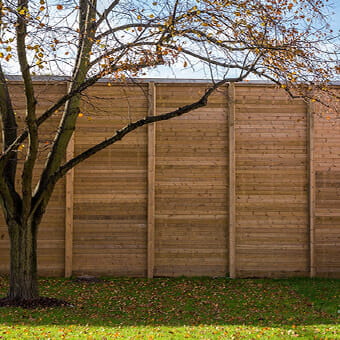
While lighting design plays an important role, physical barriers are one of the most reliable ways to control light escape. Tall, solid fencing acts as a shield, preventing direct light spill and reducing glare at the boundary.
Some light sources are difficult to control, such as vehicle headlights, forklift lighting, and mobile plant. These move continuously and cannot be fully managed through lighting design alone.
Traditional timber fencing can develop gaps over time due to weathering and movement. These gaps allow light to leak through and reduce effectiveness.
Why Gap Free Fencing Matters
Any fence that allows light to pass through fails to fully address light pollution. Over time, gaps can lead to:
- Increased light trespass
- Reduced privacy
- Compromised security
- Less effective noise reduction
A continuous, gap free barrier is essential for effective control.
Advanced Environmental Barrier Solutions
Modern barriers are engineered to provide a continuous, solid surface using interlocking boards.
- No gaps over time
- Complete light containment
- Improved acoustic performance
- Enhanced security
These systems offer a long term, low maintenance solution for controlling both light and sound.
A Smarter Approach to Site Management
For businesses operating near sensitive or residential areas, investing in high quality barriers is a proactive step. It supports environmental responsibility while improving security and efficiency.
Light pollution can be effectively managed with the right approach. Tall, solid fencing plays a critical role, and interlocking systems ensure long term performance without gaps.
By choosing the right solution, businesses can reduce light pollution, enhance security, and create more responsible, neighbour friendly sites. View our environmental noise and light reduction barriers using the link below.
Related products
Jacksons Security has a range of products relating to this article, all complete with our 25 year service life guarantee. If you cannot find the item you are looking for, please do not hesitate to call our friendly sales team.
Top