Our other sites:


- Why Acoustic Barriers Are Gaining Popularity
- Current Practices
- Noise Reduction Benefits
- MOD Policy Compliance
- Security Rated Options
In today’s climate of heightened global tensions, privacy and security at military sites have never been more critical. Defence bases and training areas are increasingly adopting acoustic security barriers as a practical solution to meet these demands. These barriers offer a unique combination of privacy, noise reduction, and enhanced certified security; making them an essential feature for modern military infrastructure.
Why Acoustic Barriers Are Gaining Popularity
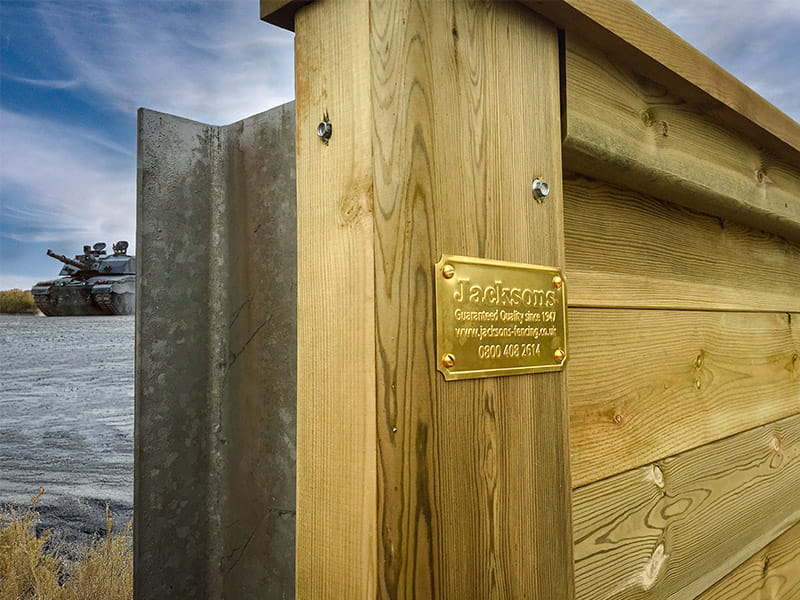
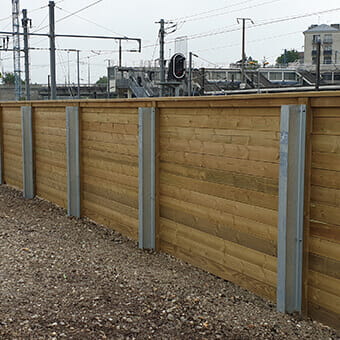
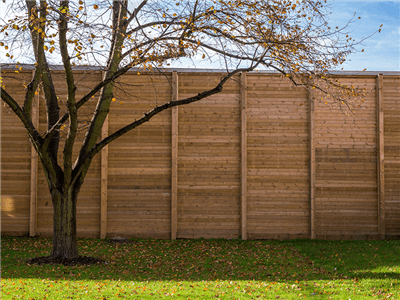
Acoustic security barriers are designed not only to reduce noise but to increase privacy and screen sensitive areas from view. Their construction features smooth surfaces with no hand or footholds, reducing the risk of climbing and intrusion. For those unfamiliar with the site, these barriers blend into the surroundings and can even be mistaken for a garden fence, providing discreet protection without drawing attention.
With the growing need for confidentiality, whether during training exercises, equipment testing, or the storage of ammunition and weapons, a privacy barrier acts as a first line of defence. It helps prevent potential threats, from individuals attempting to observe activities, to media representatives who could cause unnecessary concern by reporting sensitive operations. Many UK military sites where new tanks or equipment are tested or used in training are located alongside main roads, which adds another layer of risk by increasing visibility to the public.
Current Practices and Improvements
Chain link fencing was widely installed by the MOD during the 1970s, 1980s, and 1990s. In some camps, barracks, and facilities, timber fences have been placed in front of chain link as a quick fix to improve privacy. While this approach offers limited screening, purpose-built acoustic barriers deliver a far more effective and professional solution. In addition, maintenance is minimal compared with two separate fences, where weeds and foliage between them become difficult to manage and create a potential vulnerability by providing a place to hide if neglected.
Another common attempt to improve privacy is retrofitting chain link fencing with plastic fabric. While this may serve a short-term purpose, the material is often flimsy and deteriorates quickly, tearing and leaving the fence looking unsightly and ineffective. This approach can even create the opposite impression of what is intended, drawing attention and prompting questions about what is being hidden. Furthermore, the underlying fence remains chain link, a style widely recognised for its vulnerability.
Noise Reduction Benefits
Beyond privacy, acoustic barriers deliver significant noise reduction benefits. Military sites often generate high levels of noise from heavy machinery such as tanks, gunfire from ranges, and even HVAC systems in operational buildings. Consulting sound engineers during planning is essential to ensure compliance and effectiveness. Properly designed acoustic fencing can help maintain good relations with neighbouring communities by reducing noise pollution; especially important as urbanisation brings residential developments closer to military bases.
Night training during unsociable hours is a routine requirement in military facilities, and acoustic barriers significantly reduce the impact of these activities on surrounding areas. They also help limit light pollution from sources such as vehicle headlights, illuminated barracks, and flashes from controlled explosions, creating a more discreet and secure environment.
Acoustic Barriers and MOD Policy Compliance
UK MOD policies such as JSP 822 (Defence Training and Education) and JSP 375 (Health, Safety and Environmental Protection) set strict frameworks for training assurance, noise control, and risk management. JSP 822 mandates structured governance for all training activities, including those conducted during unsociable hours, while JSP 375 requires noise exposure to be assessed and controlled to protect personnel and minimise environmental impact. Similarly, MOD Test and Evaluation programmes under FATE and T3E emphasise secure, discreet operations at designated ranges.
Acoustic barriers directly support these policy objectives by:
Acoustic barriers are therefore not just a physical solution; they are a compliance enabler that helps military sites meet MOD standards for safety, security, and discretion.
Security Rated Options
For decades, NPSA (formerly CPNI) fencing systems have been the benchmark for perimeter security at military sites, offering tested and approved protection against a wide range of threats. However, with NPSA announcing that it will no longer test or maintain its Catalogue of Security Equipment for fencing, the industry is transitioning to alternative standards. LPS 1175 -rated fencing is now expected to become the most widely specified solution for military facilities, delivering assured performance through rigorous third-party testing and certification.
For sites requiring enhanced and certified protection, security rated versions of acoustic barriers are available. For example, the Jakoustic® Class 3 noise barrier can be certified to either C5 (SR3) and F1, or C5 (SR3) and G1 under LPS 1175, offering robust security alongside acoustic performance.
Related Content:
Check out our military base security fencing products. We manufacture and install a wide range of security fencing for the MOD sector. You may also be interested in our blog about forced entry standards, which explains why these standards are important for critical national infrastructure and high security sites.
MOD | Military Base Security Fencing Forced entry standards for fencing and gatesRelated products
Jacksons Security has a range of products relating to this article, all complete with our 25 year service life guarantee. If you cannot find the item you are looking for, please do not hesitate to call our friendly sales team.
Related Content
Acoustic Case Studies
Related Case Studies
We have completed a large number of Acoustic projects in various sectors, from housing, retail, leisure and education, to hospitals and healthcare, transport, utilities, and high security CPNI sites. Discover more through our portfolio of Acoustic case studies.
Acoustic Blogs
Related Content
We have an extensive library of Acoustic blogs covering a wide selection of topics, whether you need a helpful guide for recognising accreditations, an understanding of different processes such as our unique timber treatment or UKCA marking regulations for noise barriers.

Contact Us
Need Help?
From design and manufacturing to supply and installation, we can help you with your project. If you'd like to discuss anything in this article or need information or guidance, please feel free to contact us at any stage to discuss your requirements.
Top