Our other sites:


When designing secure sites, whether critical national infrastructure, data centres, utilities, defence estates, or high value commercial premises, forced entry protection is a core requirement. However, the landscape of forced entry standards can be difficult to navigate.
This guide explains what these standards are, why they matter, who defines them, and which ones apply to fencing, gates, and turnstiles. It also highlights why LPS 1175 is the most widely recognised and recommended standard for high security perimeter protection.
What is a forced entry standard?
A forced entry standard is a formal testing and classification system used to measure how well a physical security product such as a fence, gate, or turnstile can resist attack using specified tools for a defined period of time.
It simulates realistic attempts to penetrate a perimeter by intruders with different capabilities, allowing security designers to compare products objectively.
Where are forced entry standards used?
These standards are typically used in sectors where perimeter delay is essential:
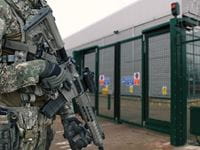
Government and defence
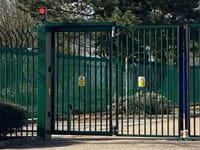
Data Centres
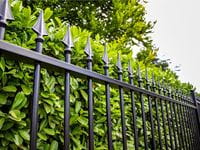
High value domestic
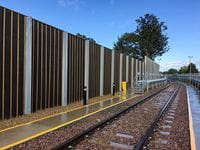
Transport and logistics
Utilities and CNI
Architects and security consultants rely on these standards during specification to ensure chosen products offer the right level of resistance for the assessed risk.
Why are forced entry standards important?
Who sets forced entry standards?
Forced entry standards are produced by independent certification bodies or national security authorities. These include:
Which standards cover fences, gates, and turnstiles?
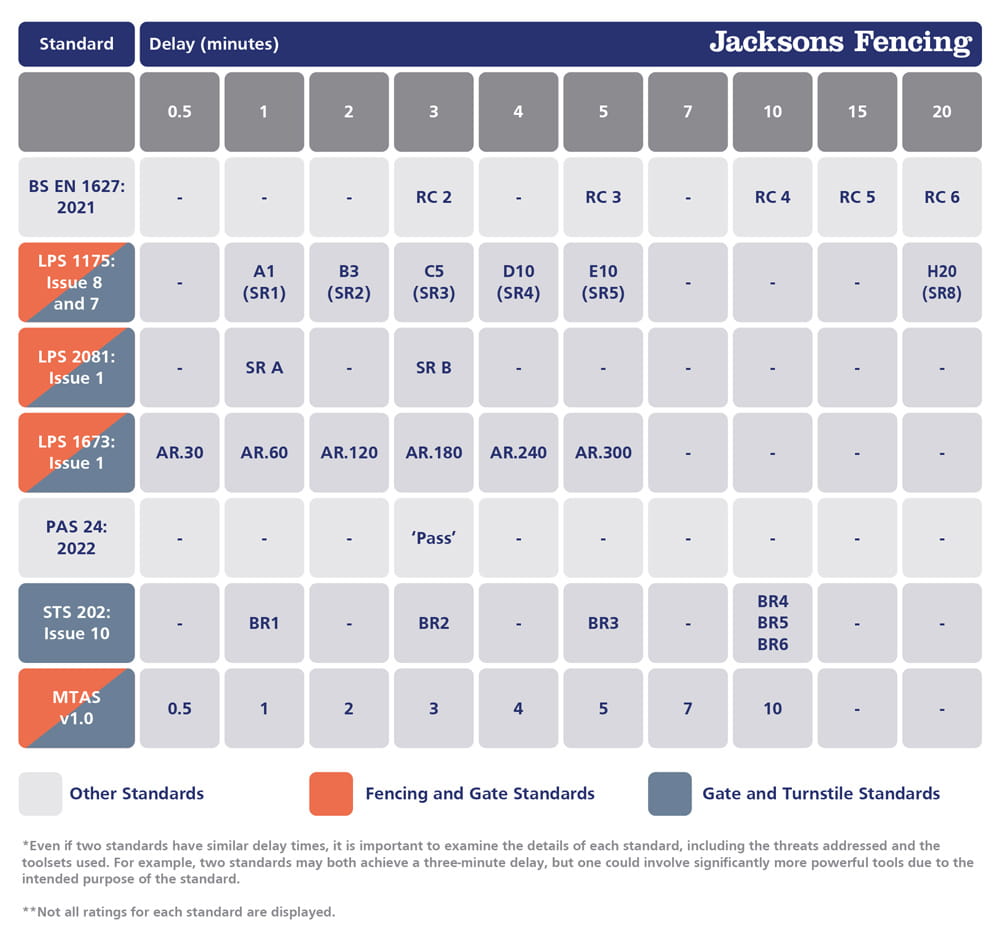
Fences, gates, and turnstiles are commonly certified to:
For gates and turnstiles, the following additional standard is relevant:
Recommended standard: LPS 1175
LPS 1175 is the most widely recognised forced entry standard for fencing and gates, both in the UK and internationally.
LPS 1175 covers a wide range of threats with classifications from low level opportunistic attempts to extended attacks with heavy tools. It is commonly used within critical national infrastructure sectors.
The standard is highly granular, allowing precise alignment with a site’s assessed threat level, and is regularly updated to reflect evolving attack methods. Issue 8 is the most current version.
Jacksons Fencing offers the UK’s widest range of fencing and gates tested and certified to LPS 1175, enabling architects to meet stringent security requirements at varying risk levels.
Fence standards explained
Below is an overview of the main forced entry standards relevant to perimeter fencing and how they are typically applied.
LPS 1175: Issue 8 (and Issue 7)
LPS 1175 assesses resistance to forced entry using defined toolkits (Tool Categories A to H) over specific time periods.
Issue 8 uses a matrix classification, such as A1, B3, or E10, combining toolkit and delay time. Issue 7 used SR (Security Rating) classifications such as SR1 to SR8.
Issue 7 remains in use on some legacy projects; however, Issue 8 is the preferred and recommended version for new schemes.
Applications:
Standard to high security sites including schools, data centres, utilities, and defence estates. Any project requiring formal certification of delay time.
LPS 2081: Issue 1
LPS 2081 is designed to address stealth attacks carried out quietly to avoid detection.
Applications:
Residential security, commercial premises requiring covert attack resistance, and areas with acoustic sensitivity such as urban or night-time environments.
LPS 1673: Issue 1
LPS 1673 is a performance standard focused on providing delay against violent, targeted attacks. Its primary aim is to protect people by providing time to reach a safer area or call for help.
It uses Attack Ratings (AR) composed of:
Applications:
High risk domestic properties, safe rooms, schools, hospitals, and locations at risk of targeted attacks against high profile individuals.
MTAS v1.0 (Manual Tool Attack Standard)
Developed under guidance from UK security authorities, MTAS assesses forced entry resistance using defined tool categories and time ratings.
Applications:
Critical infrastructure, public realm projects, and sites using NPSA-aligned security specifications.
Gates and turnstiles
Gates and turnstiles can be tested to all of the standards above. However, due to their function as controlled access points, additional standards apply.
STS 202: Issue 10
STS 202 assesses security gates, doorsets, and shutters against manual attack tools, with a strong focus on entry delay and sustained attack resistance.
Applications:
Secure entrance points, pedestrian portals, turnstiles, and vehicle access gates.
Other operational considerations (from NPSA guidance)
NPSA notes that the forced entry standards covered do not address other important performance characteristics:
Acoustics
Noise reduction is often essential in urban environments or around sensitive sites. Jacksons Fencing has acoustic security barriers rated to LPS 1175 C5, F1, and G1 that can reduce noise by 28dB.
Sustainability
Architects increasingly prioritise materials with a long service life, low whole-life carbon, minimal maintenance, and recyclable components.
Timber and steel systems with long guarantees like our 25 year guarantee can contribute positively to sustainability goals.
Vandalism
NPSA guidance highlights that none of the forced entry standards directly address vandalism.
In fact, products built for high forced entry resistance may be more expensive to repair if vandalised. Designers may need to balance robustness; visibility and openness; construction method: welded pale-through-rail; fixings: anti-vandal fixings and connectors.
Jacksons Fencing products are designed with long-term durability, anti-vandal features, and low maintenance in mind, helping reduce lifecycle costs.
Forced entry standards provide architects and security professionals with a reliable, evidence based way to specify fencing, gates, and turnstiles for high risk environments. Among these, LPS 1175 remains the most comprehensive and widely used benchmark for high security perimeter protection.
By understanding how each standard applies and considering additional factors like acoustics, sustainability, and vandalism, designers can create secure, functional, and resilient perimeters tailored to the needs of each site.
If you’d like help selecting the right certified fencing or gate system for your project, Jacksons Fencing’s technical team is always happy to advise.
Browse our LPS 1175 certified fencing and gate range or learn more about LPS 1175 Issue 8.
Related Products
Jacksons Fencing have a large range of related products, all complete with our 25 year guarantee. If you cannot find the item you are looking for, please do not hesitate to call our friendly sales team.

Related Content
Case Studies
Related Case Studies
We have completed a large number of projects in various sectors, from housing, retail, leisure and education, to hospitals and healthcare, transport, utilities, and high security NPSA (previously CPNI) sites. Discover more through our portfolio of case studies.

Blogs
Related Content
We have an extensive library of blogs covering a wide selection of topics, whether you need a helpful guide for recognising accreditations, an understanding of different processes such as galvanisation, or specialist advice on securing a rural site against crime.

Contact Us
Need Help?
From design and manufacturing to supply and installation, we can help you with your project. If you'd like to discuss anything in this article or need information or guidance, please feel free to contact us at any stage to discuss your requirements.
Top