Our other sites:


How house builders can integrate the right fencing, acoustic barriers, and access features into Suitable Alternative Natural Greenspace to satisfy legislation and delight residents.
What is a SANG and why does it matter in housing schemes?
A Suitable Alternative Natural Greenspace is a recreational site deliberately designed to attract residents of new housing away from sensitive protected habitats, particularly Special Protection Areas (SPA) and Special Areas of Conservation (SAC). The aim is to provide an appealing, semi-natural place for everyday walking, dog walking, and informal recreation so that the protected site does not experience additional disturbance from population growth associated with development. This approach sits within the UK’s Habitats Regulations framework and is used by local planning authorities to demonstrate that plans and projects will not adversely affect the integrity of designated sites.
Natural England and numerous local authorities provide criteria for effective SANGs. A commonly referenced benchmark is to provide about 8 hectares of SANG per 1,000 new residents, alongside features such as circular footpaths and car parking sized to anticipated use. The objective is to achieve quality and attractiveness so that the SANG truly substitutes for trips to SPAs.
Fencing types that work in SANGs and how to deploy them
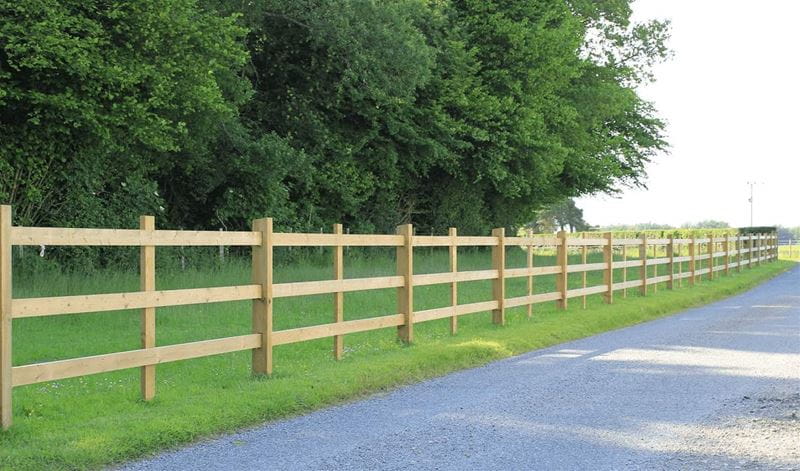
Post and rail fencing is a SANG staple. It is visually light, cost effective, and aligns with the semi-natural aesthetic expected by visitors. Use it to define the outer edges of grassland, steer desire lines away from ecologically sensitive corners, and subtly indicate dog free zones or conservation areas without creating a fortress feel. Where stock control is needed, wire mesh can be added while maintaining openness. The choice of timber and finishes should reflect longevity and minimal urban clutter, consistent with Natural England’s call for a semi-natural setting with minimal intrusive structures.
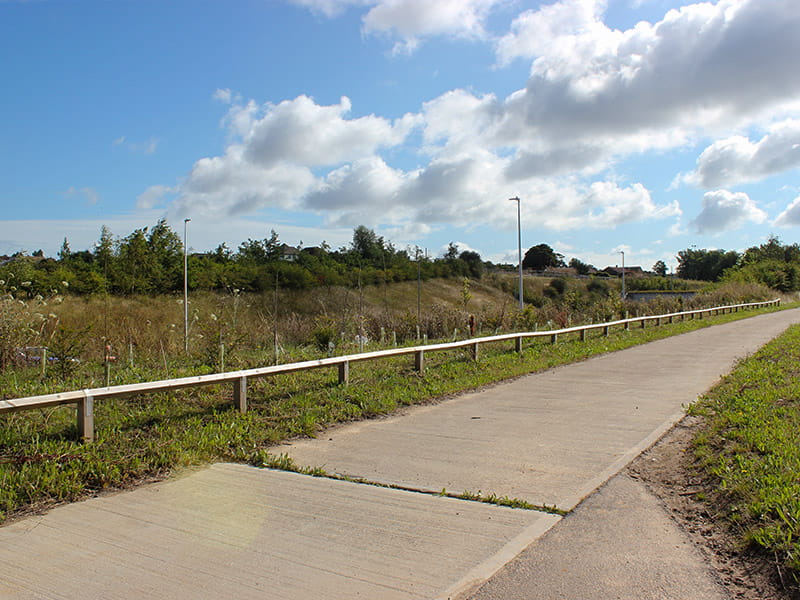
Knee rail fencing is particularly useful around the periphery of car parks, path junctions and meadow margins. It signals no vehicle access and guides movement, but it does not obstruct views or wildlife movement. On sloping edges it also provides a visual cue to keep cyclists and dogs on paths, reducing erosion and habitat trampling, which Natural England warns can harm high value sites. Knee railing can be paired with low shrub planting to increase legibility of routes while keeping the SANG landscape informal.
Agricultural wire stock fencing is sometimes necessary where grazing is part of the management regime or where dog and livestock interactions must be controlled. In these cases, wayfinding and gates need to be generous, robust, and intuitive, so visitors feel welcome and flows remain smooth. Clear, consolidated signage near gates should avoid clutter and use consistent branding to help people know where they can go and where dogs should be on leads. Guidance on minimising sign clutter while maintaining clarity aligns with current active travel and wayfinding advice.
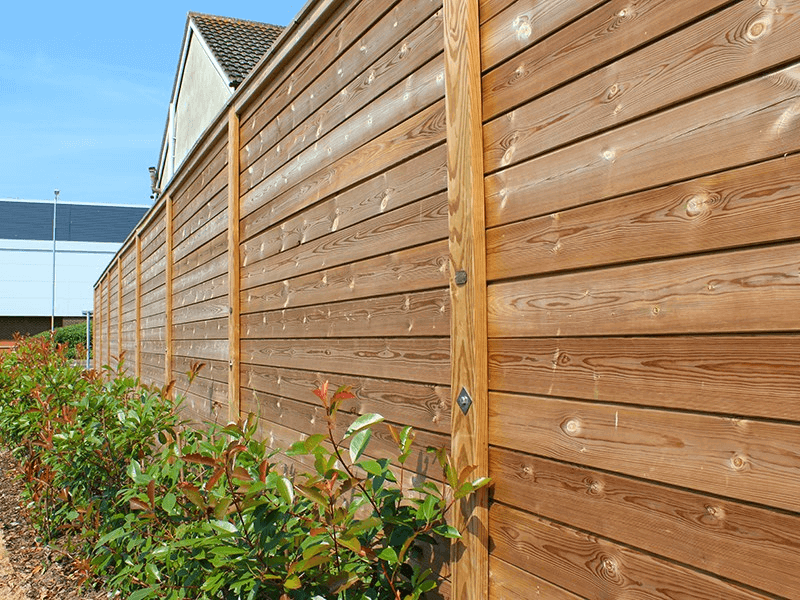
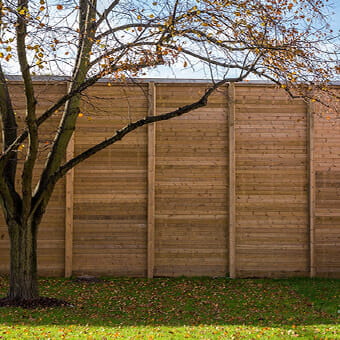
Acoustic barriers and landscaped bunds become relevant along noisy edges and roads. Timber acoustic barriers can reduce car door slams, engine noise, and dog bark reflections near the car park. Where there is space, a planted bund can deliver a softer profile and additional biodiversity benefits alongside the sound reduction. Using UK standards and local authority noise guidance keeps specification defensible at planning.
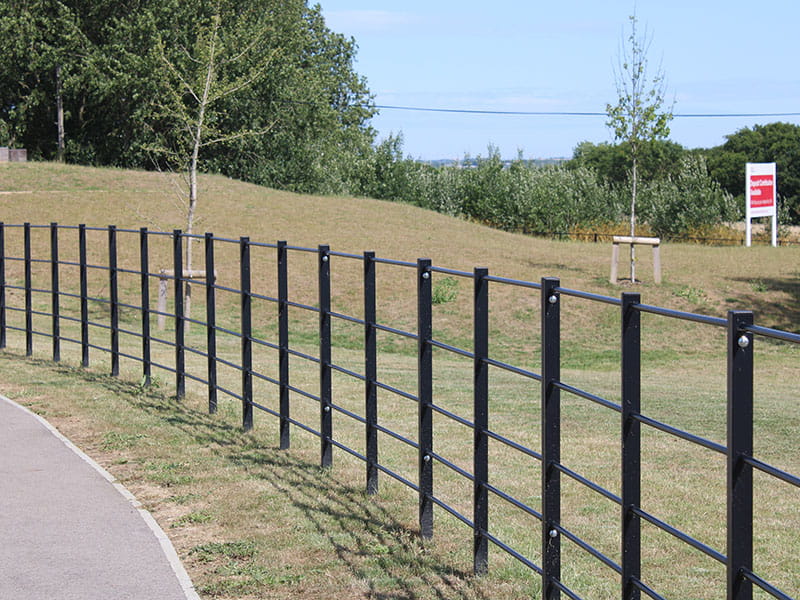
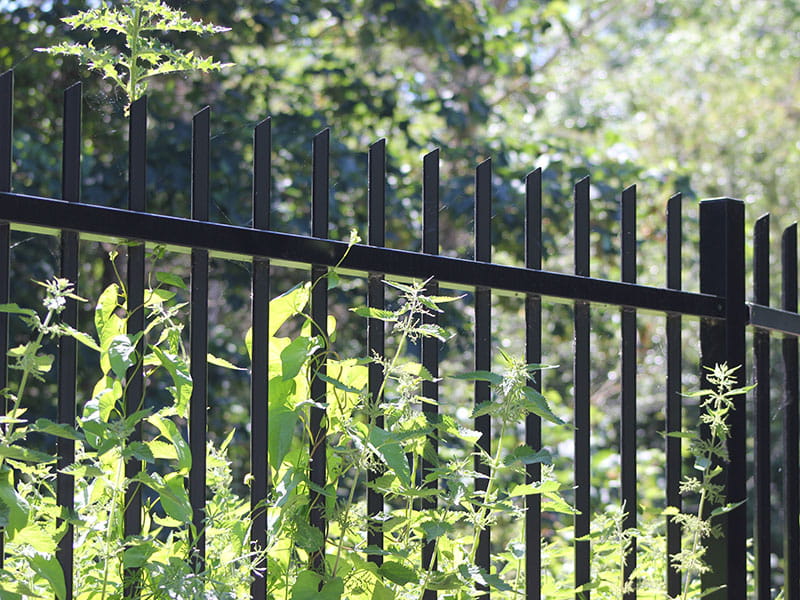
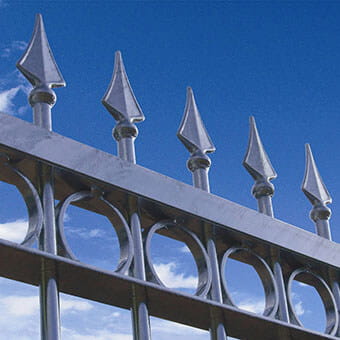
Security fencing can be appropriate at select interfaces with private gardens, SuDS basins, or plant compounds. Here, Secured by Design principles help to balance openness with crime prevention through natural surveillance, clear sightlines, and the elimination of hiding places at entrances. Choose fence types that preserve visibility on approach to gates and do not block wildlife passages, such as vertical bar railings, and avoid creating low use corners that can attract antisocial behaviour after hours.
Access and parking
SANGs must be easy to reach if they are to be used, with parking that matches the visitor catchment and safe, legible walking routes. Natural England derived guidance expects car parking for sites above a certain threshold and emphasises clear signage and circular routes of around 2.3 to 2.5 kilometres, with longer options where possible. These design cues influence how and where fencing, barriers, gates, and wayfinding are specified, from the car park threshold through to the main path network.
There is an important paradox to manage. If your SANG parking invites additional vehicle trips near the SPA you are trying to protect, localised traffic noise can rise, and that may trigger an acoustic design response around approach roads, car parks or sensitive edges. Acoustic barriers and well planned boundary treatments can be part of a balanced solution that protects both nearby residents and the park-like calm that makes a SANG appealing.
Wayfinding, CPTED, and inclusive design in SANG layouts
CPTED, or crime prevention through environmental design, is not about over-securitising a green space. It is about clarity, visibility, and intuitive routes that reduce opportunities for crime while increasing perceived safety for all users. In practice, that means setting fence lines and planting so they reinforce legible paths, locating entrances where they are overlooked by homes or rangers, and ensuring signage is consistent, minimal, and located at decision points. UK resources on Secured by Design and national design guidance offer practical checklists for this, as does sector guidance on signage and wayfinding for active travel networks.
Fencing choices around gateways should maintain good sightlines. Where off lead dog parks are proposed, consider mesh fencing systems as these do not create blind zones and keep even small dogs in. The point is to integrate fencing with a site wide approach to safety, not treat it as a standalone component.
Integrating LEAPs and play without compromising the SANG function
Many SANGs sit alongside or within wider open space networks that include play areas. LEAPs, or Local Equipped Areas for Play, are a familiar typology in UK housing and are referenced within Fields in Trust guidance. Their presence can increase dwell time and encourage local families to choose the SANG instead of the SPA. When positioning a LEAP, keep it close to primary access and parking so supervision is easy and noise remains at the active edge of the site, not the quiet heart. Buffer planting and a low height timber playground fence can define the play envelope without suburbanising the landscape.
While different sources summarise LAP, LEAP and NEAP standards with varying levels of prescription, the common thread is to provide inclusive, well located, and overlooked play that sits within a coherent open space hierarchy. That coherence is strengthened when fencing is used to guide movement and protect habitat, not as an afterthought.
Edges, thresholds, and dog management
The transition from car park to path, from meadow to woodland, or from public edge to private rear garden influences how people behave. Where dog walking is a primary draw, consider dog waste stations and clear on lead cues along sensitive habitats. Low post and rail fencing combined with hedgerow planting can gently reinforce those behaviours while maintaining the natural feel that Natural England and local guidance emphasise. Where livestock grazing is part of site management, appropriately placed stiles or self closing gates with simple latch mechanisms will reduce damage and keep flows smooth at peak times.
Acoustic barriers for car parks and approach roads
If your development funnels significant traffic near a SPA boundary or a new SANG, take a proactive stance on acoustics. Early baseline noise surveys and modelling against BS 8233 targets for outdoor amenity, alongside BS 4142 where fixed plant or service yards are nearby, will inform whether acoustic barriers, earth bunds, or alternative layouts are warranted. Councils often publish planning notes and local thresholds that echo national practice, and aligning your SANG boundary and fencing solution to those expectations makes approval smoother.
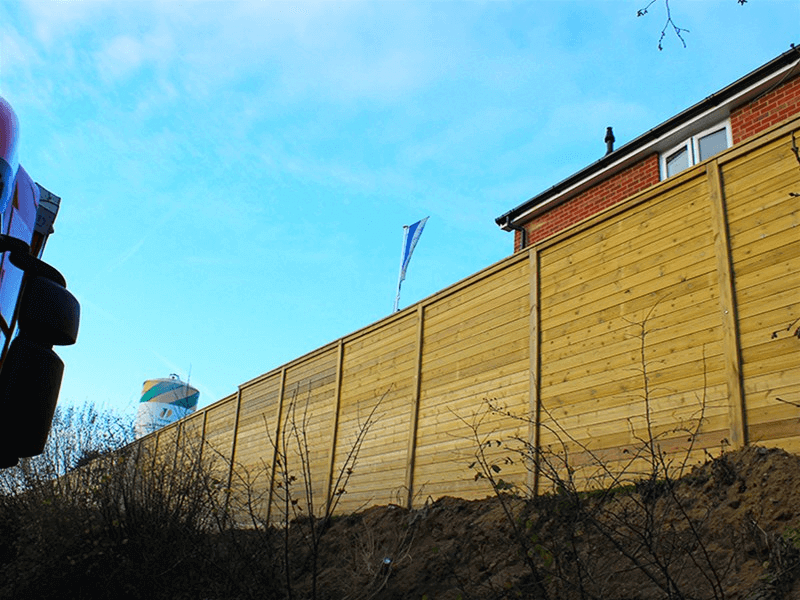
During build out, construction stage noise management to BS 5228 can avoid reputational issues and protect the semi-natural experience of any early opened SANG areas. Temporary acoustic screens and site hoardings can do double duty as safety barriers and noise control where haul roads pass close to public routes.
Practical specification tips for house builders
For post and rail fencing, choose durable, responsibly sourced timber with a high quality finish and long guarantee. Keep runs continuous around car parks and at path junctions to guide movement and protect planting. For knee rail fencing, specify a robust, planed finish, with galvanised straps, and set a consistent offset from footpaths. Where acoustic barriers are justified, opt for certified timber systems (especially next to roads) with known performance and complement hard barriers with planting to soften the visual impact and provide habitats. Where security is a concern at service yards or plant compounds near the SANG interface, follow Secured by Design guidance and ensure lines of sight are maintained into gateways and along main routes.
Align wayfinding with Active Travel England good practice by placing as few signs as possible, exactly where choices are made. Brand the SANG routes consistently across entrances, car parks, and maps, and avoid sign clutter on fence lines. Where a LEAP is included, respect Fields in Trust benchmarks and ensure the play boundary is easy to read from afar, using low fencing or knee rail plus landscape buffers rather than high solid enclosures in otherwise natural settings.
Bringing it all together
Well designed SANGs let housing come forward while safeguarding habitats. Getting the fencing right is part functional, part psychological, and part regulatory. Post and rail and knee rail fencing quietly choreograph movement and protect sensitive edges. Acoustic barriers, where justified, keep the tranquillity that draws people in. Security minded detailing and CPTED principles make routes legible and welcoming without urbanising the landscape. And the integration of a LEAP at the active edge can anchor family use so the SANG becomes a beloved daily destination rather than a token green space on a site plan.
For builders working at pace, the most efficient approach is to lock these elements in early, and to demonstrate how fencing, access, acoustics, and play all reinforce the SANG’s core purpose. That integrated story aligns with the Habitats Regulations, with Natural England’s guidance and with local SPDs, and it yields better places for people and nature.
Related Content
Related products
Jacksons Security has a range of products relating to this article, all complete with our 25 year service life guarantee. If you cannot find the item you are looking for, please do not hesitate to call our friendly sales team.
Related Content
Case Studies
Related Case Studies
We have completed a large number of projects in various sectors, from housing, retail, leisure and education, to hospitals and healthcare, transport, utilities, and high security NPSA (previously CPNI) sites. Discover more through our portfolio of case studies.

Blogs
Related Content
We have an extensive library of blogs covering a wide selection of topics, whether you need a helpful guide for recognising accreditations, an understanding of different processes such as galvanisation, or specialist advice on securing a rural site against crime.

Contact Us
Need Help?
From design and manufacturing to supply and installation, we can help you with your project. If you'd like to discuss anything in this article or need information or guidance, please feel free to contact us at any stage to discuss your requirements.
Top