Which acoustic barrier is right for your site?
Use our comparison tool to help you determine which acoustic barrier is right for your project.
Our other sites:
For developments located near major roads, motorway noise is one of the most common and challenging environmental issues. Continuous traffic, heavy goods vehicles, and high speeds create a steady level of sound that can impact both residential comfort and compliance with planning requirements.
Motorway noise is not just an inconvenience. It can have a significant impact on health, affecting sleep and reducing quality of life, while influencing the desirability of homes and commercial spaces. As a result, planners and developers are under increasing pressure to incorporate effective noise mitigation measures into projects located close to transport infrastructure.
One of the most widely used and proven solutions is motorway acoustic fencing.
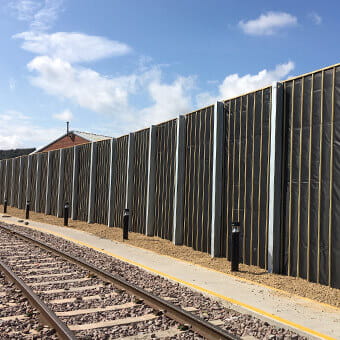
Motorway acoustic fencing, also known as a highway noise barrier, is a purpose-designed barrier system that reduces the transmission of sound from roads into surrounding areas. It is typically installed alongside motorways, dual carriageways, and major road networks; commonly used to protect nearby residential developments.
Unlike standard fencing, acoustic barriers are engineered systems designed to meet specific performance criteria. In the UK, this includes compliance with UKCA marking requirements, meaning the barrier must be tested and certified as a complete system rather than individual components.
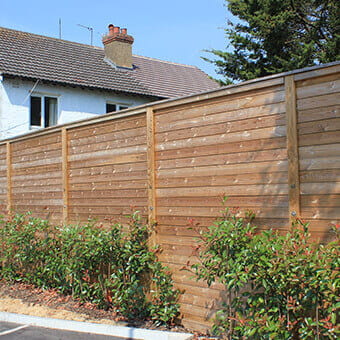
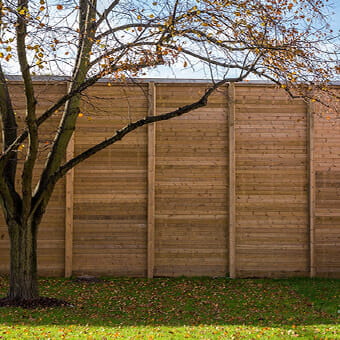
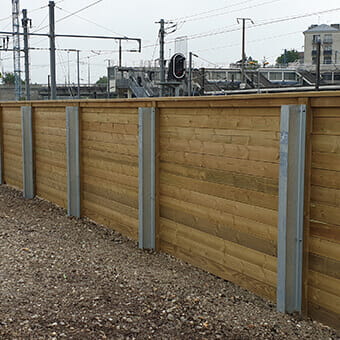
At Jacksons, our acoustic fencing is supplied as a complete kit system, using a combination of timber boards and steel I-beams. The timber components are kiln dried, pressure treated, and supported with a 25 year guarantee, ensuring long-term durability alongside acoustic performance.
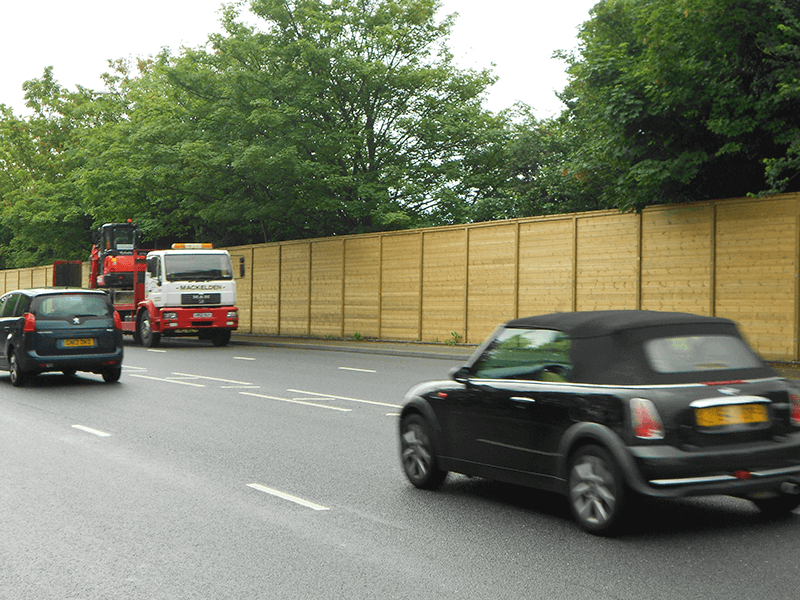
Acoustic barriers should be considered early in the design and planning process, particularly on developments located near major roads or transport corridors. Incorporating noise mitigation at the right stage helps ensure compliance with planning requirements and avoids costly redesign later in the project. Key points where acoustic fencing is typically required include:
Motorway acoustic fencing works in two primary ways:
1. Blocking the direct path of sound
The barrier interrupts the line of sight between the noise source and the receiver. Since sound travels in waves, blocking this direct path significantly reduces the amount of noise that can pass through.
2. Controlling how sound behaves
Depending on the type of barrier, sound is either reflected away or absorbed, reducing the amount that reaches nearby properties.
This leads to two main types of motorway noise barriers.
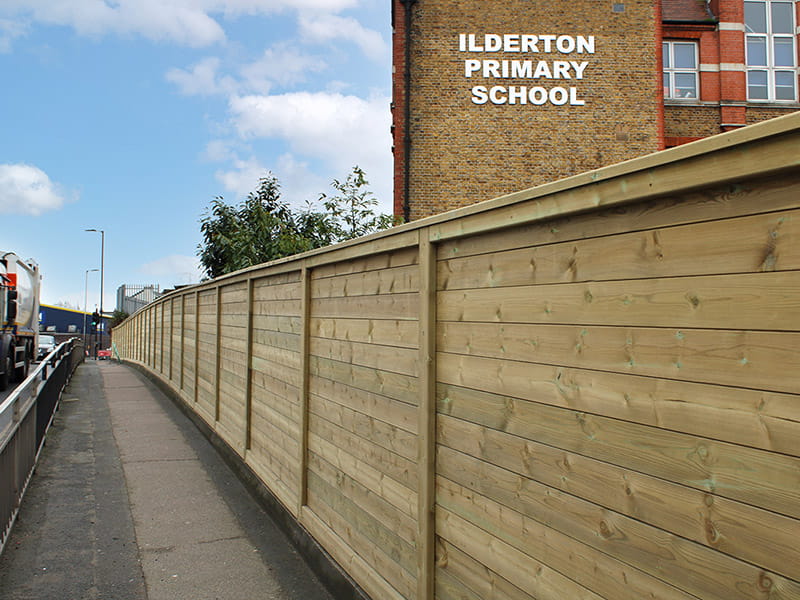
Reflective barriers
Reflective acoustic fencing is designed to deflect sound away from the protected area. These barriers are often used where there is no sensitive receptor on the opposite side, such as open land or infrastructure.
They are typically a more cost effective solution and the most popular type, but require careful placement to avoid redirecting noise in an undesirable direction.
Absorptive barriers
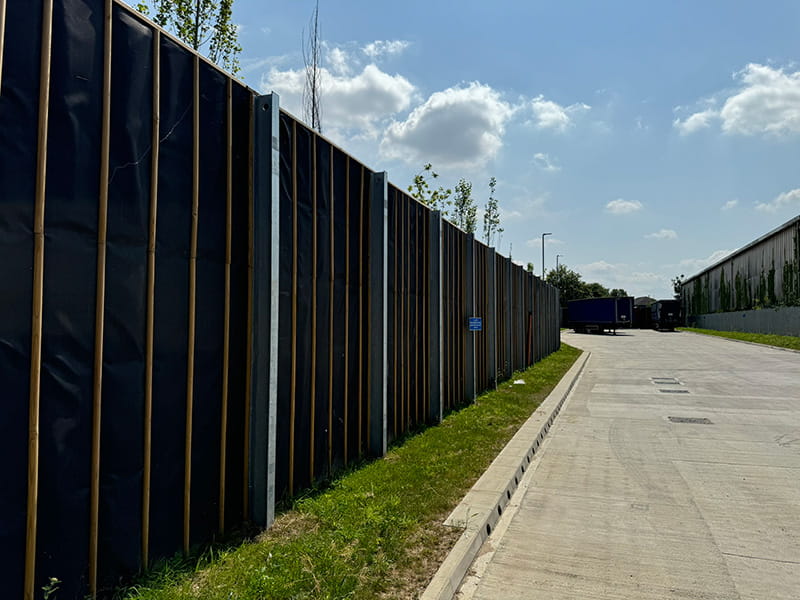
Absorptive acoustic fencing reduces noise by absorbing sound energy rather than reflecting it. This prevents sound from bouncing back across the carriageway or into other areas.
Absorptive barriers are often used in more complex environments, such as urban areas or locations with noise-sensitive receptors on both sides of the road.
This depends on several factors, including:
Reflective barriers may require installation on both sides to prevent noise being redirected back across the road. In contrast, absorptive barriers are often effective with a single installation because they reduce the amount of reflected sound.
Each project should be assessed individually to determine the most effective solution.
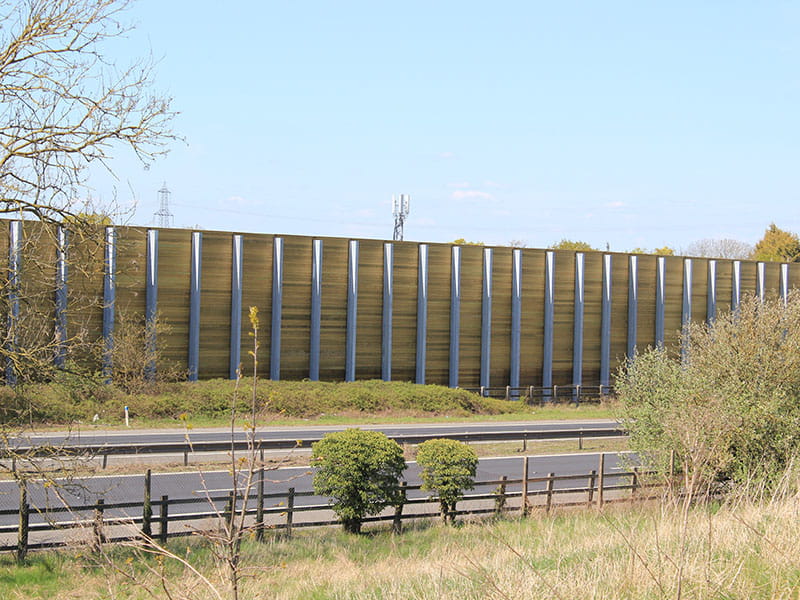
The height of a motorway acoustic barrier plays a critical role in its performance. Most barriers range between 2 to 5 metres, although this can vary depending on the site and required noise reduction. We have designed and installed barriers that are 8 and 9 metres tall.
In general:
An effective motorway acoustic fencing system must combine acoustic performance with durability and compliance.
Key features include:
Jacksons acoustic fencing systems are designed with these factors in mind, supplied as a complete kit and available with professional installation if required.
Motorway acoustic fencing is designed for long term performance, but regular inspection and basic maintenance are important to ensure it continues to function effectively.
Key considerations include:
With proper installation and maintenance, high quality acoustic fencing systems can deliver reliable performance for many years. Systems that meet recognised standards, combined with pressure treated timber and long term guarantees like our 25 year guarantee, provide added confidence in lifespan and durability.
When properly designed and installed, motorway acoustic barriers can significantly reduce perceived noise levels.
Typical reductions range from 5 to 15 decibels, which can translate to a noticeable improvement in how loud traffic sounds to the human ear. A reduction of 10 decibels is generally perceived as halving the loudness of sound to the human ear. Jacksons reflective acoustic barriers can reduce noise by up to 28dB while the absorptive variant can reduce noise by up to 32dB.
However, effectiveness depends on several factors:
Acoustic fencing is most effective when considered as part of a wider noise management strategy.
To maximise performance, several important design considerations should be addressed:
Positioning: Barriers should be located as close as possible to the noise source or the area being protected.
Continuity: Gaps in the barrier significantly reduce effectiveness. A continuous, well installed system is essential.
Material selection: Timber, steel, concrete, and composite materials can all be used, each with different acoustic and aesthetic properties.
Structural integrity: Barriers must be able to withstand environmental forces, particularly wind loads on exposed motorway sites.
Integration with the environment: Visual appearance, planning requirements, and maintenance access must all be considered.
Motorway acoustic fencing is widely used across:
Jacksons has delivered acoustic barrier solutions for a range of developments, including housing schemes where mitigating road noise was critical. Read about some of our projects below:
Acoustic barriers new build housing development
Acoustic fencing reduces noise for new housing development
These projects demonstrate how well designed acoustic fencing can support planning requirements while improving living conditions for residents.
Motorway acoustic fencing plays a vital role in managing traffic noise and supporting modern development. Whether used alongside highways or to protect residential schemes, these systems provide a practical and effective solution to one of the most persistent environmental challenges.
By selecting the right type of barrier, designing it correctly, and ensuring compliance with standards such as UKCA marking, it is possible to significantly reduce the impact of motorway noise.
For developers, planners, and contractors alike, investing in a high quality acoustic fencing system is not just about compliance. It is about creating more comfortable, liveable environments for the long term.
Related Content
Acoustic barriers must be installed correctly to perform effectively. Find out some of the common mistakes made when installing acoustic barriers:
Use our comparison tool to help you determine which acoustic barrier is right for your project.
Jacksons Security has a range of products relating to this article, all complete with our 25 year service life guarantee. If you cannot find the item you are looking for, please do not hesitate to call our friendly sales team.
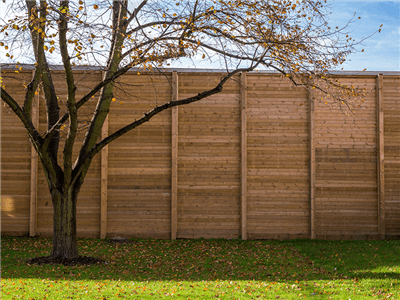
We have completed a large number of Acoustic projects in various sectors, from housing, retail, leisure and education, to hospitals and healthcare, transport, utilities, and high security CPNI sites. Discover more through our portfolio of Acoustic case studies.
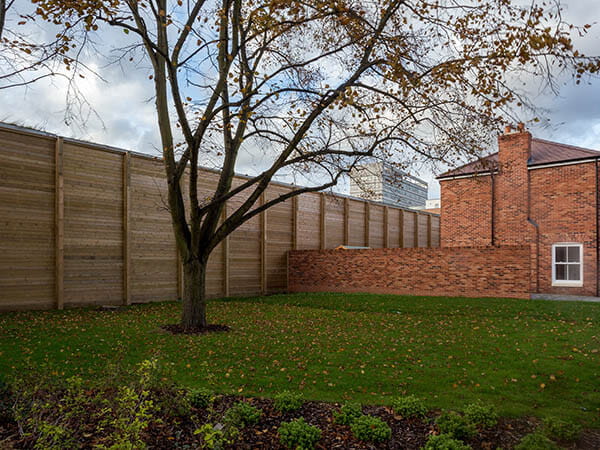
We have an extensive library of Acoustic blogs covering a wide selection of topics, whether you need a helpful guide for recognising accreditations, an understanding of different processes such as our unique timber treatment or UKCA marking regulations for noise barriers.

From design and manufacturing to supply and installation, we can help you with your project. If you'd like to discuss anything in this article or need information or guidance, please feel free to contact us at any stage to discuss your requirements.
Top