Our other sites:


In the security industry, failures are often more revealing than successes. Every breach tells a story about what went wrong, why it happened, and how organisations can prevent similar incidents in the future. At Jacksons Fencing, we design perimeter solutions that put longevity, reliability, and risk mitigation first, but even the best specifications cannot compensate for poor system integration, weak maintenance regimes, or the wrong product choices.
This article explores five real world fence failures, drawn from reported case studies across commercial, industrial, and high security environments. Each incident highlights a different vulnerability in the perimeter chain and offers clear lessons for anyone responsible for safeguarding people, assets, or critical operations.
1. When the security fence becomes a ladder
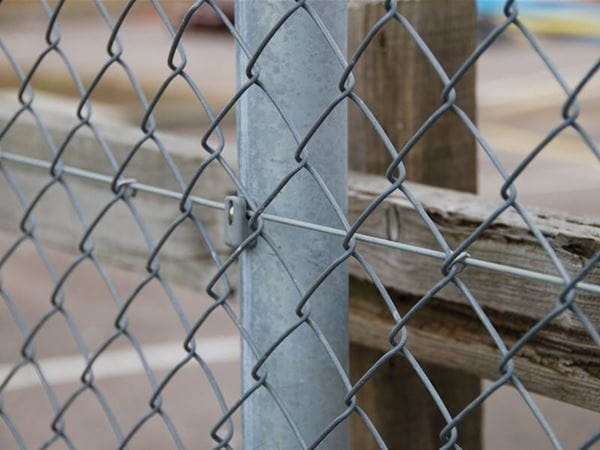
One of the most common perimeter failures is also one of the simplest. A regional electronics distribution centre in the United States experienced repeated break ins, and CCTV footage revealed that intruders were scaling the ten foot chain link fence in under eight seconds. The fence had not been cut. It had been climbed with ease because the mesh pattern created perfect hand and footholds.
This issue is not unique to this case. Chain link fencing is still widely used across commercial sites and industrial estates because it is inexpensive and familiar. However, familiarity does not equal security. The open diamond mesh provides the very features that make climbing straightforward even for moderately fit individuals.
What this teaches us:
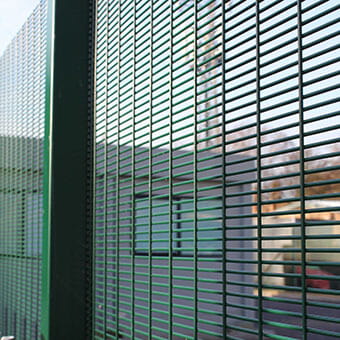
Security fencing must create delay, not opportunity. Anti climb welded mesh security panels with small, tightly spaced apertures like 358 Securi-Mesh® remove purchase points and significantly increase the time and effort required to gain access. A system designed from the outset to resist climbing forces attackers to consider more difficult, noisy, and time consuming methods, increasing the chance of detection.
2. Strong panels, weak fixings
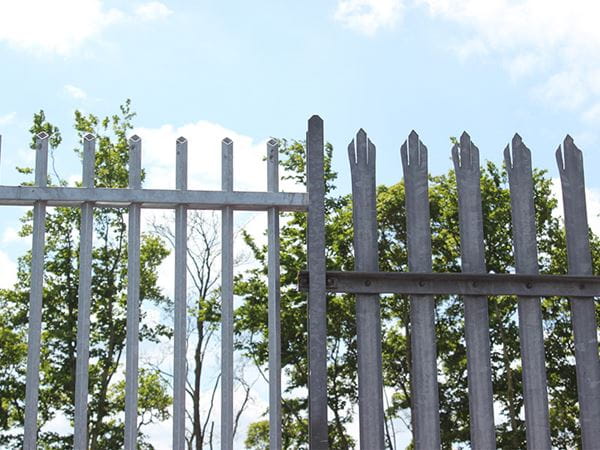
A second breach at a utility substation demonstrates another frequently overlooked weak point. Here, the high security panels themselves were intact, but the intruders had simply unbolted an entire section of security fencing using a standard socket wrench. They then reattached the panel when they left, causing the thefts to continue unnoticed for some time.
Restricting access is usually at the top of the list when considering threats around a site; however, it is not always the greatest risk to the perimeter itself. Recent incidents have shown that fencing can be unbolted from posts or rails, and the panels or pales can be removed and sold as scrap metal. This creates inconvenience in terms of cost, and during the time required to replace the fence the site becomes vulnerable. Additional expense may also be incurred if manned security guards are required in the interim.
These failures show the importance of remembering that a fence is more than its panels. It is a complete system. A chain is only as strong as its weakest link, and standard off the shelf fixings introduce an immediate security risk. Find out more about our tamper proof fixing methods.
The lesson:
Secure fixings are one of the most important parts of a security fencing system. Tamper resistant bolts, concealed connectors, welded construction, and systems designed to prevent tool access ensure that no part of the fence can be removed without significant effort. This is especially important for critical infrastructure, utilities, and sites containing valuable or hazardous materials.
3. Perimeter weaknesses beyond the fence line
High profile cultural institutions can also experience perimeter failures. The 2019 Dresden Green Vault heist, where attackers stole jewellery worth at least €113.8 million, exposed the consequences of weaknesses in supporting systems around the perimeter. Reports described how the intruders used arson and a power disruption to degrade exterior lighting and reduce the effectiveness of security measures before entry.
This incident reinforces a message that the security industry has communicated for years. A perimeter is never just a physical barrier. It is an ecosystem of measures, including lighting, power redundancy, surveillance, and early warning systems. Learn more about the 5 Ds of Perimeter Security.
What we’ve learnt:
Security fencing must be integrated into a wider risk management strategy. A robust perimeter design considers how the physical barrier interacts with alarms, lighting, response plans, and power supplies. Any system that can be disabled or bypassed becomes a potential enabler for deeper compromise. A security fence without lighting, alarms, or consistent monitoring becomes an isolated line that can be exploited under the right conditions.
4. A gap in the fence leads to a public safety hazard
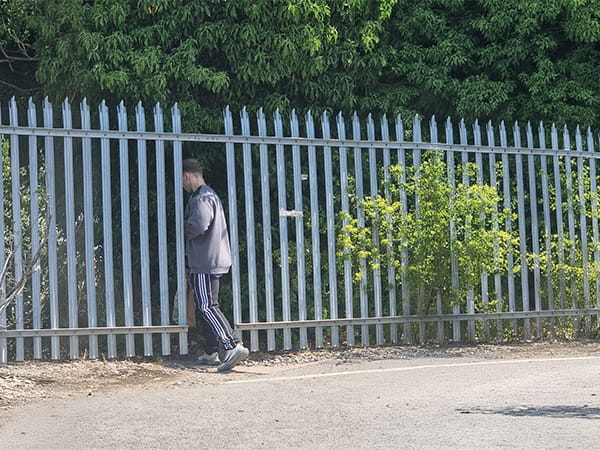
Sometimes a failure is not sophisticated. In Mildenhall, Suffolk, a security audit identified a clear gap in a perimeter fence near an access point at an industrial site. The issue was not addressed at first, and because it presented a foreseeable risk to the public, the matter was escalated to the enforcing authority. Only then was the site boundary secured. The culprit was a tale as old as time; a Triple Point Palisade fence with a whole section missing. Find out more about why we do not manufacture steel palisade fencing.
This incident highlights a different kind of vulnerability. The breach was not the result of determined intruders or advanced planning. It was a simple failure of upkeep, outdated products, and a breakdown in the reporting and escalation process.
What this teaches us:
Perimeter security is an ongoing commitment. Regular fence line checks and immediate action on defects are essential. Gaps, leaning posts, damaged panels, or unsecured gates all create opportunities for accidental or deliberate access. Organisations must implement clear reporting procedures so that issues cannot be ignored and risk cannot build without intervention.
5. Unmonitored security fencing enables long term occupation
A warehouse facility in London experienced a more prolonged breach in 2024. Despite having a fenced perimeter, the site lacked continuous monitoring. A group of intruders gained access and remained on site for almost two weeks. The resulting occupation caused significant property damage and large quantities of hazardous waste. Only after legal action, police involvement, and specialist support was the situation resolved. New measures were implemented, including reinforced perimeter fencing, advanced surveillance systems, and 24/7 security patrols.
This case demonstrates that passive security fencing without active oversight is not enough to protect valuable assets. Without surveillance or alarm integration, intruders were able to enter, occupy, and damage the site without immediate challenge.
The lesson:
Perimeter security must combine appropriate physical barriers with detection and response. CCTV, monitored sensors, patrols, and intelligent detection technologies ensure the fence is not just a line on a map but a vital part of an active protective system. When threat levels or site usage patterns change, temporary or mobile detection solutions can provide rapid enhancement until long term upgrades are made.
Bringing the lessons together
These five cases differ widely in context, location, and severity, but they all reveal the same overarching principle. A perimeter fails when one of its layers becomes predictable, weak, or poorly integrated. The strongest fences in the world cannot compensate for neglected maintenance or inadequate monitoring, just as advanced surveillance cannot make up for an easily climbable or removable panel.
Across the examples above, five themes emerge.
- Attackers always target the easiest point of access. This might be a climbable mesh panel, a removable bolt, or a gap in the fence. Even opportunistic intruders will exploit weak points if they are obvious.
- A fence is only one part of a security ecosystem. Effective perimeters combine security fencing and gates with lighting, alarms, response plans, and reliable power. Weakness in any layer compromises the entire system.
- Monitoring is critical. Security fencing without surveillance gives determined intruders time to operate. Continuous monitoring ensures that breaches are detected early and addressed quickly.
- Maintenance prevents preventable failures. Small issues can become significant vulnerabilities if not addressed. A proactive maintenance strategy is essential for long term performance of security fencing.
- Security fence fixings and detailing matter as much as the fencing itself. Panels, posts, and connections must all be chosen with security in mind, not just cost or appearance.
Real world security breaches provide invaluable learning opportunities. They remind us that perimeter security is not simply about erecting a barrier. It is about designing, integrating, maintaining, and monitoring a system that works together to deter, delay, and detect intrusion.
At Jacksons Fencing, we engineer every product and system to reduce vulnerabilities across the entire perimeter. By applying these lessons, organisations can build perimeters that stand up not only to everyday use but also to the determined attempts of those who would seek to breach them.
If you would like support reviewing your existing perimeter or installing a more resilient solution, our team of specialists is ready to help.
Related Products
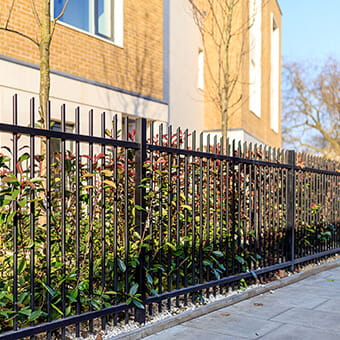
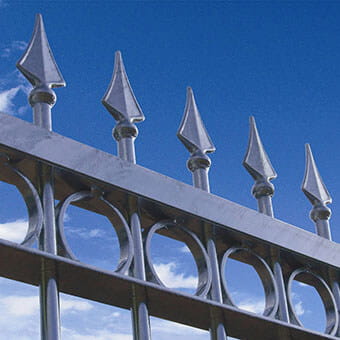
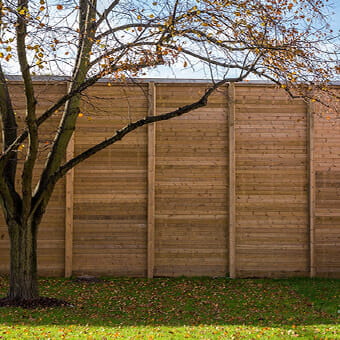
Jacksons Fencing have a large range of related products, all complete with our 25 year guarantee. If you cannot find the item you are looking for, please do not hesitate to call our friendly sales team.
Related Content
Case Studies
Related Case Studies
We have completed a large number of projects in various sectors, from housing, retail, leisure and education, to hospitals and healthcare, transport, utilities, and high security NPSA (previously CPNI) sites. Discover more through our portfolio of case studies.

Blogs
Related Content
We have an extensive library of blogs covering a wide selection of topics, whether you need a helpful guide for recognising accreditations, an understanding of different processes such as galvanisation, or specialist advice on securing a rural site against crime.

Contact Us
Need Help?
From design and manufacturing to supply and installation, we can help you with your project. If you'd like to discuss anything in this article or need information or guidance, please feel free to contact us at any stage to discuss your requirements.
Top