Our other sites:


Fencing is a familiar feature across public areas, from parks and playgrounds to sports grounds and shared community spaces. It is easy to underestimate its importance until something goes wrong. When fencing is poorly made, badly installed, or allowed to deteriorate, it can create genuine safety risks for the people who use these spaces every day.
In parks and other public environments, fencing does far more than mark boundaries. It protects facilities, manages movement, safeguards vulnerable users, and prevents access to hazards. When quality is compromised, these safeguards can fail quickly, leaving the space less secure, less functional, and potentially unsafe.
Injury Risks That Are Easy to Miss
Lower quality fencing is far more likely to fail under normal use. Timber can split, metal can bend, and fixings can loosen or be tampered with over time. This can create sharp edges, finger or limb trapping points, exposed bolts, or unstable sections that pose a genuine risk of injury.
In busy public areas, particularly parks and playgrounds, fencing is often leaned on or climbed. Children are especially vulnerable. A fence that appears only slightly damaged can become dangerous if it gives way or breaks without warning. Missing pales are a particular concern because they can encourage young children to run through the gap. If they do, they may encounter sharp edges where the pales have been removed or run directly into the hazard that the fence was originally installed to protect them from.
High quality fencing with long guarantees is designed to withstand vandalism and constant public use. Features such as hidden vandal proof connectors and pales that are built into or held securely between the rails, rather than simply bolted to the front, help prevent damage and tampering. This type of construction keeps the fence stable, secure, and intact, even when subjected to repeated impact, attempted removal of components, or deliberate vandalism.
By reducing weak points and preventing easy access to fixings, this design significantly lowers the risk of loose parts, sharp edges, or structural failure. It ensures that the fence continues to perform safely and reliably in demanding environments.
When Fencing Fails to Control Access
One of the key functions of fencing in public areas is access control. Although this is often associated with obvious hazards such as roads or water, it is just as important within play parks and playgrounds themselves.
If fencing is no longer fit for purpose, gaps can appear quickly. A young child may be able to slip through an opening in seconds and gain access to other parts of a park where hazards may be present, including cycle routes, uneven terrain, or service areas. Damaged fencing can also allow dogs or other animals to enter play spaces, creating further risks for children and other vulnerable users.
Animals also need protection within parks. If fencing around a dog training area becomes damaged and dogs escape, they may place themselves in danger and create risks for other people using the park. Even a brief loss of containment can lead to collisions, unexpected interactions with other animals, or dogs entering areas where they may feel threatened or become difficult to control. High quality and well maintained fencing prevents these risks and helps ensure that training areas remain safe, controlled, and suitable for public use.
Dogs are not the only animals that require safeguarding. Many parks contain valuable habitats that support birds, mammals, amphibians, and invertebrates. Protecting these habitats helps maintain biodiversity and allows wildlife to thrive alongside public activity. Fencing is often the most effective way to create clear boundaries around sensitive areas and to guide visitors along intended routes.
Fencing can protect wetlands and reed beds from trampling, while woodland fencing shields young trees and ground flora during regeneration. In wildflower meadows, perimeter fencing prevents foot traffic from damaging pollinator rich planting. Along riverbanks it helps reduce erosion and protects nesting sites for species that rely on quiet and stable ground.
By combining appropriate fencing with maintained paths, clear signage, and thoughtful planting, parks can provide safe public access while preserving the ecological value of their landscapes. This balanced approach supports wildlife, enhances visitor experience, and strengthens the long term health of the park environment.
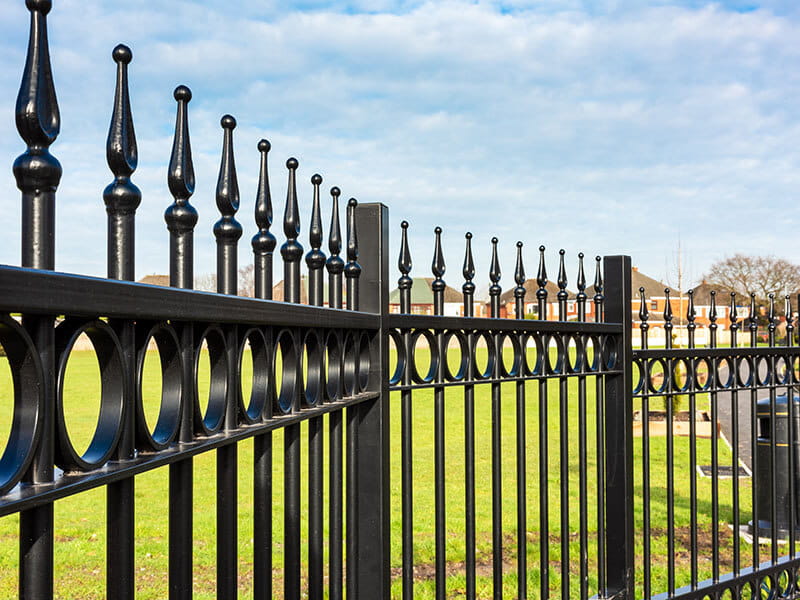
An example of Jacksons metal railings used to protect access to a park
Protecting Park Equipment and Public Assets
Fencing in parks also protects equipment, planting, and wider public investment. Poor quality fencing without anti vandal properties is easier to breach and more vulnerable to intentional damage or antisocial behaviour. This can allow unauthorised access to machinery and maintenance equipment that may be worth tens of thousands of pounds, creating safety risks as well as financial losses.
Once fencing becomes damaged, deterioration often accelerates. Weak points spread, repairs become more frequent, and costs rise. Entire sections may require replacement far sooner than expected. In well used public areas, this leads to repeated disruption for visitors and increased workload for maintenance teams.
High quality and well maintained fencing helps prevent these issues, protects valuable assets, and ensures that parks operate safely, efficiently, and with minimal interruption to the public. This supports a stronger reputation for the local area, encourages more people to enjoy the park, and has a positive impact on local authorities involved in procurement by demonstrating responsible investment and effective management.
Access will still be required; therefore secure, easy to use, and matching metal gates are essential.
Compliance Issues and Hidden Dangers
Fencing in public areas must meet relevant safety standards and duty of care requirements. Playground fencing illustrates how quickly compliance can be lost when quality or maintenance falls short.
Playground fencing should be designed to comply with BS EN 1176 and is manufactured with anti trap features; preferably RoSPA approved or compliant. Spacings, edges, and finishes are carefully controlled to reduce the risk of finger, limb, or head entrapment. If a pale or any component is removed, bent, or damaged, those spacings can fall outside acceptable limits immediately.
Similar risks arise when fencing is built by builders and installers on site, sourcing timber from merchants and is installed in public parks. Although this approach may work in a private garden, it often fails to meet the essential principles found in standards such as BS EN 1722. When fencing in a public setting does not comply with these fundamentals, it introduces avoidable hazards and undermines the duty of care expected from the site operator.
A damaged section of fencing may appear minor, but it can create sharp edges, finger traps, or openings that present serious entrapment risks. In severe cases these hazards can be life threatening. Once damaged, the fencing no longer complies with the relevant standard and becomes a significant safety and legal concern.
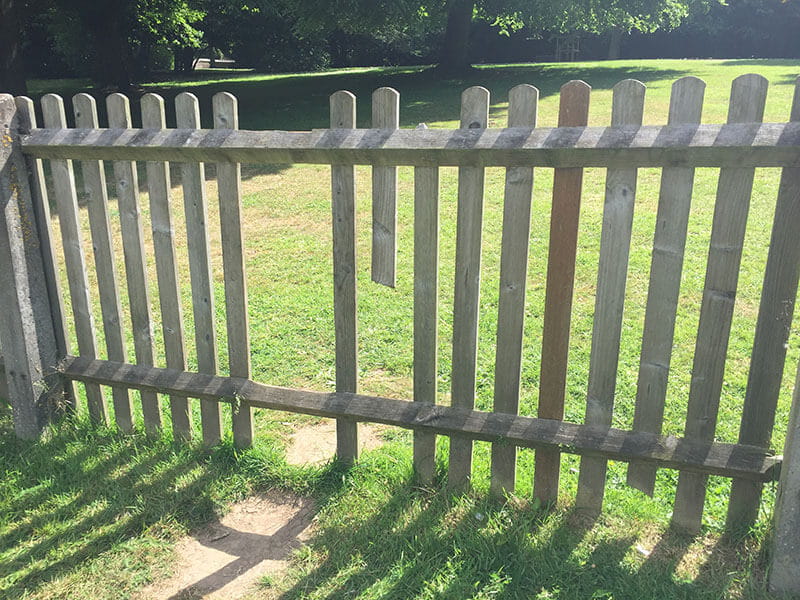
An example of a fence incorrectly specified for a play ground.
Weathering, Wear and the Value of Long Guarantees
Fencing in parks and public areas is exposed to the weather throughout the year. Lower quality materials are more susceptible to rot, corrosion, and structural fatigue, especially in locations that face constant moisture, wind, or salt exposure. Over time, these weaknesses lead to instability, safety risks, and earlier than expected replacement.
This is why long term guarantees are so important. Manufacturers such as Jacksons provide twenty five year guarantees on their fencing systems, offering confidence that the materials and construction are designed to perform over decades rather than a short period. Longer guarantees are often a reliable indicator of higher quality, and they help reduce the risk of unplanned replacement costs for public sector budgets.
Designing Out Vandalism and Tampering
Fencing in public areas must also be designed to withstand misuse and intentional damage. Anti vandal design features and anti tamper fixings play a crucial role in maintaining safety, security, and long term compliance.
Systems that use concealed or anti tamper fixings make it far more difficult for panels or components to be removed. Designs that prevent pales from being taken out reduce the risk of gaps forming, which can create access issues or serious entrapment hazards. These features help ensure that the fence remains stable and functional even when subjected to attempted interference.
Improved resistance to vandalism not only enhances safety but also reduces ongoing maintenance requirements and long term costs. Choosing fencing that is engineered to resist damage helps parks and public areas remain safe, secure, and visually well maintained throughout their service life.
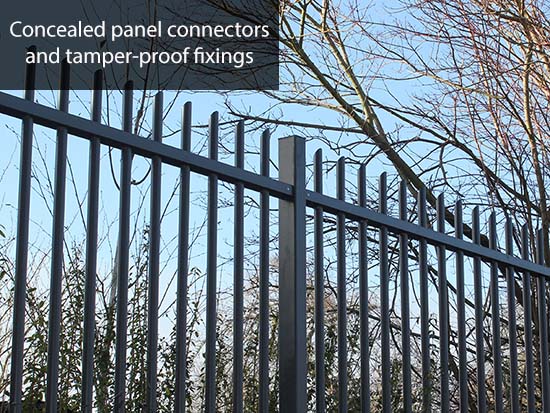
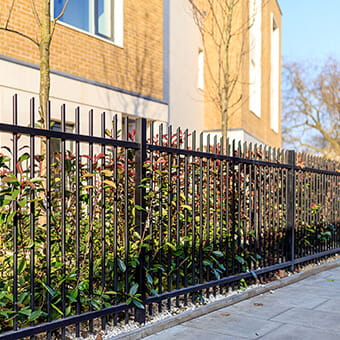
An example of vertical bar fencing with hidden vandal proof panel to post connectors and a pale through rail design.
CPTED and Fencing in Parks
Crime Prevention Through Environmental Design uses thoughtful layout and clear boundaries to improve safety in public spaces. In parks, fencing is one of the most effective tools within this approach because it defines space, guides movement, and supports natural surveillance.
Well chosen fencing helps shape how visitors enter and move through the site. It directs people towards preferred routes, improves sightlines, and creates a clearer distinction between open public areas, managed play spaces, and protected zones. This reduces opportunities for concealed activity and makes it easier for staff and the community to observe what is happening within the park.
In children’s play areas, sports facilities, and sensitive habitats, fencing provides essential physical protection while maintaining an open and welcoming appearance. Strong construction, appropriate height, and good visibility all support safety and encourage positive use of the space. When combined with lighting, signage, and maintained landscaping, fencing becomes a key element of a wider strategy that promotes safe and enjoyable parks.
Legal Responsibility and Public Confidence
Those responsible for parks and public areas have a clear duty of care. If fencing fails and someone is injured, the legal and reputational consequences can be serious.
Poorly maintained or visibly damaged fencing also affects how safe a space feels. In contrast, well designed and well maintained fencing supports public confidence and encourages continued use of community facilities.
Why Quality Fencing in Parks Matters
High quality fencing, correctly specified and professionally installed, provides long term safety and value. Systems designed with controlled spacings, smooth finishes, anti tamper features, and robust materials are far more reliable over time.
Regular inspections and prompt repairs remain essential, but choosing the right fencing from the outset significantly reduces risk and time and maintenance on repairs.
Poor quality fencing in parks and public areas can create risks that are not always obvious at first glance. From uncontrolled access and injury hazards to compliance failures and legal exposure, the consequences can be severe. Investing in high quality fencing, long guarantees and anti vandal design helps protect people, public assets and the long term usability of shared spaces.
If you have any questions, please feel free to contact us. We have many years of experience and have supported some of the largest and most successful fencing projects in major parks across the country for decades. Our team is always ready to offer guidance, share expertise, and help you find the most suitable solution for your site.
Related content:
The Best Type of Fences for Parks
The importance of secure fixings and fittings for fencing and gates
Related products
Jacksons Security has a range of products relating to this article, all complete with our 25 year service life guarantee. If you cannot find the item you are looking for, please do not hesitate to call our friendly sales team.
Related Content
Case Studies
Related Case Studies
We have completed a large number of projects in various sectors, from housing, retail, leisure and education, to hospitals and healthcare, transport, utilities, and high security NPSA (previously CPNI) sites. Discover more through our portfolio of case studies.
Blogs
Related Content
We have an extensive library of blogs covering a wide selection of topics, whether you need a helpful guide for recognising accreditations, an understanding of different processes such as galvanisation, or specialist advice on securing a rural site against crime.

Contact Us
Need Help?
From design and manufacturing to supply and installation, we can help you with your project. If you'd like to discuss anything in this article or need information or guidance, please feel free to contact us at any stage to discuss your requirements.
Top