Our other sites:


As the UK accelerates towards a more digital, AI driven economy, the increase in data centres has rapidly accelerated and they are now classed as CNI (critical national infrastructure). However, their growth brings challenges that extend beyond power demand, land availability, and cooling technology. Increasingly, noise and light pollution sit at the heart of planning debates, particularly as new facilities are being developed closer to residential, rural, and mixed use areas.
Noise from high capacity cooling systems, standby generators, electrical transformers, and ventilation equipment has already led to public disputes, planning objections, and delays across the UK and internationally. Meanwhile, light spill from 24/7 operational sites can attract local resistance, especially in rural environments where dark sky preservation is a priority. For developers, addressing these issues early is no longer optional; it’s a strategic necessity for achieving planning consent, maintaining community goodwill, and ensuring long term operational resilience.
The importance of acoustic barriers
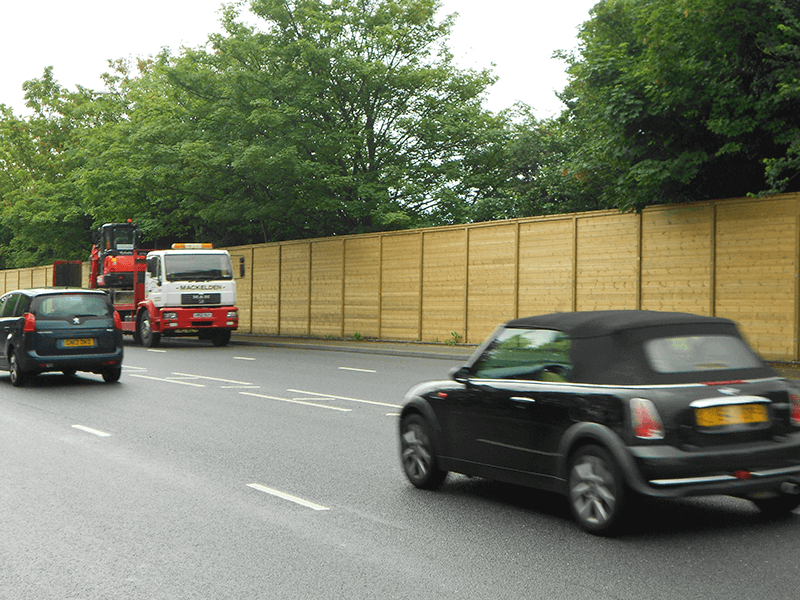
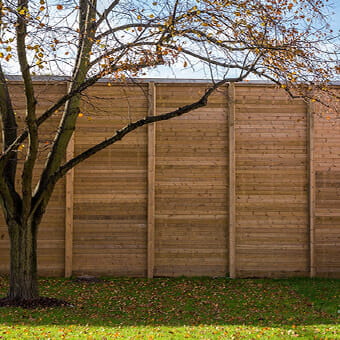
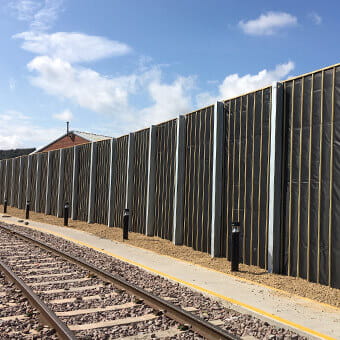
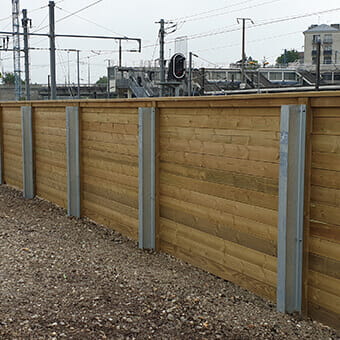
One of the most effective and increasingly adopted solutions is the use of acoustic barriers; engineered boundary structures designed to absorb or deflect noise away from sensitive receptors. When supported by a broader environmental mitigation strategy, these barriers can play a pivotal role in transforming contentious proposals into sustainable, neighbour friendly developments that meet the demands of planners and local communities.
In this article, we explore how noise and light pollution mitigation, anchored by well designed acoustic barriers, helps secure planning approval for data centre propositions.
Why noise pollution is a priority in data centre planning
Data centres generate complex acoustic environments. Unlike typical commercial buildings, these facilities run 24 hours a day, and in addition to standard operational noise such as deliveries and general site activity, they often employing:
Together, these systems create a constant mix of broadband and low frequency noise that rarely abates. Studies and industry analyses highlight that noise is one of the most common drivers of community objections, especially where hyperscale or colocation facilities are located near existing homes or mixed use zones. Read about an acoustic barrier installation at a hyperscale data centre.
Cooling systems alone can produce continuous high decibel sound, while generators can create tonal, low frequency noise that travels further, penetrates walls more easily, and can cause vibration-related complaints.
As demand for digital services grows, and with it the number of UK data centres, communities are becoming increasingly sensitive to the cumulative impact of these operations. Some new facilities have been situated in urban and suburban locations close to residents, prompting councils to enforce stricter requirements around noise control from the earliest planning stages.
In many cases, objections are rooted not only in existing noise levels but also in the fear of long term acoustic impact on daily life, sleep quality, and wellbeing. Planners therefore expect robust and credible mitigation measures, supported by professional acoustic modelling, to demonstrate that proposed facilities will comply with local regulations and avoid being a persistent nuisance.
Acoustic prediction and early assessment: foundations for approval
One of the most critical steps in achieving planning consent is early acoustic prediction. Detailed modelling helps developers evaluate whether a site is viable, identify necessary mitigation strategies and engage transparently with planning officers and residents.
Noise prediction is now a standard component of environmental impact assessments and planning submissions. It is particularly crucial when data centres are located near homes, schools, or ecologically sensitive zones. By forecasting noise from mechanical equipment, ventilation systems and emergency generators, developers can integrate appropriate mitigation such as acoustic barriers well before construction begins.
Acoustic due diligence activities often include:
These evaluations not only support planning compliance but also help avoid costly redesigns, retrofits or operational restrictions later in the build programme.
How acoustic barriers reduce noise at sensitive boundaries
Acoustic barriers are highly effective at managing environmental noise. Their ability to interrupt the path of sound, makes them an essential tool in data centre mitigation strategies.
1. Blocking line of sight noise transmission
Noise radiates in straight lines; if there is a direct line of sight between equipment and receptors, the noise will travel more freely. Acoustic barriers break this path, preventing direct sound propagation and reducing noise levels significantly at the property boundary. This is particularly important where mechanical equipment is roof mounted or located near the site perimeter.
2. Reducing low frequency noise impact
Low frequency noise from generators, transformers and large cooling equipment poses a particular challenge because it can:
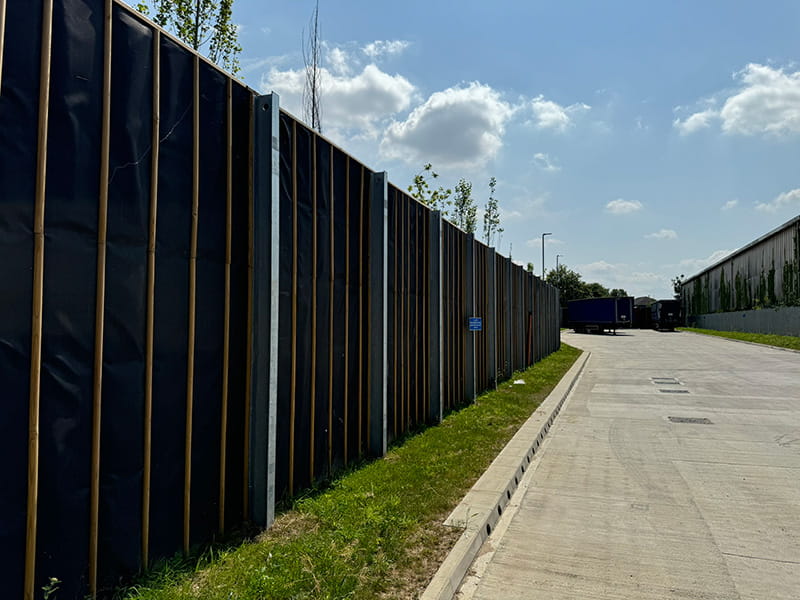
Well designed barriers; often including an absorptive side, ideally combined with equipment enclosures, can attenuate low frequency transmissions and address one of the most common noise complaints against data centres.
3. Demonstrating proactive mitigation to planners
Acoustic barriers provide visible, credible evidence that developers have taken measurable steps to limit environmental impact. Local authorities often request such measures as part of planning submissions or require them through conditional approvals. In many cases, failure to implement effective boundary treatments is a major reason data centre proposals face refusal or extended review periods.
4. Enabling compliance with emerging legislation
As new noise abatement regulations come into effect; for example, requirements for third party acoustic studies and ongoing compliance monitoring, acoustic barriers help ensure operators meet stringent noise limits. In some jurisdictions, data centre proposals are only approved if they design buildings to incorporate sound mitigation measures that prevent noise from exceeding baseline ambient conditions established through professional studies.
The overlooked issue: Light pollution and its impact on planning
While noise is usually the dominant concern, light pollution from security lighting, access roads, and maintenance activity also affects planning outcomes. Data centres typically generate two main types of light pollution that influence how they are perceived by planners and local communities. General lighting pollution comes from fixed sources such as building illumination, street lighting, and permanent security lighting, which create skyglow and light spill that brighten the night sky and alter nearby environments. Temporary lighting pollution arises from intermittent or high intensity sources such as vehicle headlights during night-time deliveries and motion activated security lights, creating sudden glare and unwanted illumination that can disturb residents and increase the visual impact of the site. Although fewer technical studies are published, light spill can affect:
Planners increasingly expect light mitigation measures to accompany noise control strategies as part of a holistic environmental approach. Acoustic barriers serve double duty here: many barrier systems also help manage light spill by obscuring direct views of illuminated equipment yards or reducing glare from on site lighting that might otherwise affect neighbouring properties.
In rural settings, where visual impact forms a major part of planning scrutiny, well designed fencing and barriers can reduce the perceived industrial footprint of a data centre, complementing landscape screening schemes and preserving local character.
Why early mitigation wins community support
Community resistance is often the biggest threat to planning approval. Negative sentiment can build quickly when residents feel:
Noise complaints in particular can become highly emotive, leading to prolonged disputes or political pressure against development. Several widely publicised conflicts stemmed from data centres perceived to be insufficiently considerate of their acoustic impact.
By engaging early with residents and presenting clear mitigation strategies including the specification of acoustic barriers, developers demonstrate commitment to being good neighbours. Practical steps include:
This approach is particularly important given the increasing variability and complexity of local noise regulations across councils, counties and devolved authorities. Without such engagement, developers may find themselves navigating conflicting or unclear ordinances, creating unnecessary risk to the planning process.
Acoustic barriers in the planning submission: a practical advantage
Acoustic barriers enhance the strength of planning applications because they provide quantifiable noise reduction performance that can be incorporated into:
This is critical, as planning officers increasingly look for developments to provide a detailed suite of supporting environmental information including noise impact assessments, before granting approval.
In many cases, specifying acoustic barriers helps developers demonstrate that all “plain or easily achievable” mitigation has been considered and implemented - an important criterion in environmental impact screening.
Acoustic barriers as a cornerstone of responsible data centre development
Data centres are essential to the UK’s digital future, but they must be developed responsibly, particularly as they move closer to communities. Noise and light pollution are now central considerations in planning decisions, and failure to mitigate these impacts can lead to objections, delays or even refusals.
Acoustic barriers provide a powerful, flexible and highly effective tool in addressing these issues. When integrated into a broader mitigation strategy that includes acoustic prediction, equipment selection, visual screening and community engagement, they not only help developers secure planning approval, but also build long term trust and operational resilience.
As demand for digital infrastructure grows, the most successful data centre developers will be those who treat environmental mitigation not as a compliance requirement, but as a cornerstone of thoughtful, community conscious design.
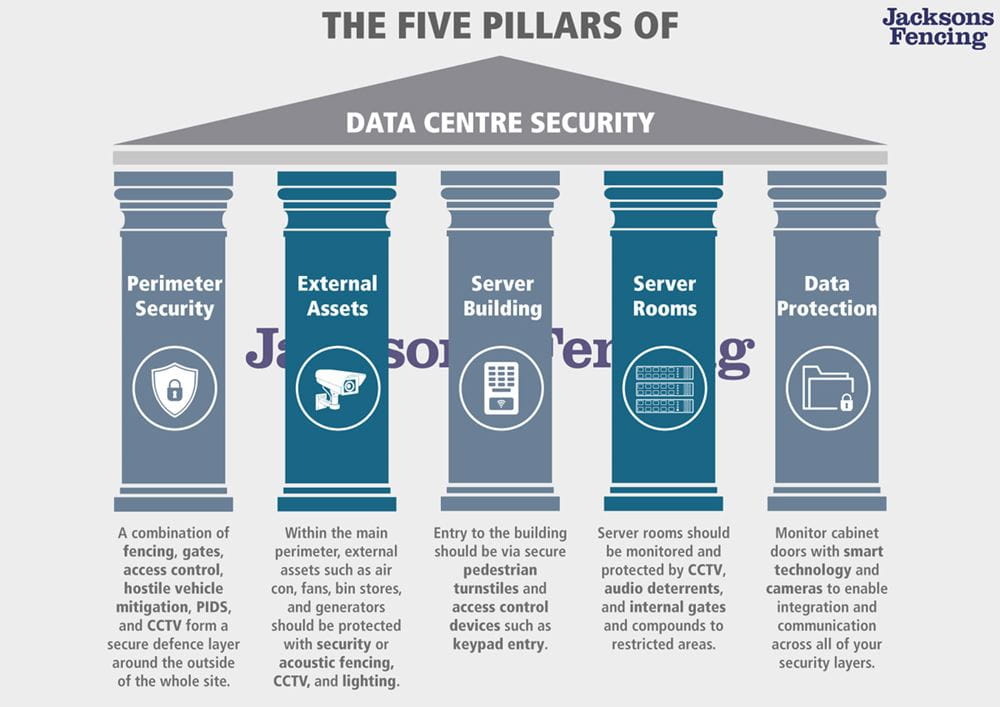
When protecting your data centre, we recommend addressing the following five security layers to ensure total protection at every level. This strategy should be used in tandem with the five Ds of perimeter security: Deter, Detect, Deny, Delay, Defend.
Related Content
Read about perimeter fencing in layered data centre security models:
Related products
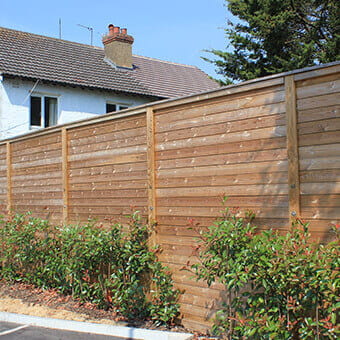
Jacksons Security has a range of products relating to this article, all complete with our 25 year service life guarantee. If you cannot find the item you are looking for, please do not hesitate to call our friendly sales team.
Related Content
High Security Case Studies
Related Case Studies
We have completed a large number of High Security projects in various sectors, including data centres, embassy buildings, government properties and NPSA (previously CPNI) sites. Discover more through our portfolio of High Security case studies.

Other Security Related Blogs
Related Content
We have an extensive library of blogs about the High Security sector, covering a wide selection of topics including guides for choosing the right security product, understanding security ratings, and planning and designing secure sites.

Contact Us
Need Help?
From design and manufacturing to supply and installation, we can help you with your project. If you'd like to discuss anything in this article or need information or guidance, please feel free to contact us at any stage to discuss your requirements.
Top