Our other sites:


Modern data centres are no longer standalone facilities quietly supporting back office systems. They are critical infrastructure, underpinning cloud services, financial systems, public services and increasingly AI driven workloads. As their importance grows, so too does their exposure to physical security risk.
In response, data centre operators are adopting layered security models, combining physical, electronic, and procedural controls to protect people, assets, and continuity of service. Within this model, perimeter fencing plays a foundational role. Often underestimated, it is the first physical layer in a system designed to deter, delay, and defend against unauthorised access.
This article explores the role of perimeter fencing within a layered data centre security approach, and why it remains a critical component in protecting high value, high risk sites.
Understanding the layered security model
Layered security, sometimes referred to as defence in depth, is built on the principle that no single measure should be relied upon in isolation. Instead, multiple complementary layers are deployed so that if one is breached, others remain in place to prevent, detect or slow further intrusion.
In a data centre environment, these layers typically include:
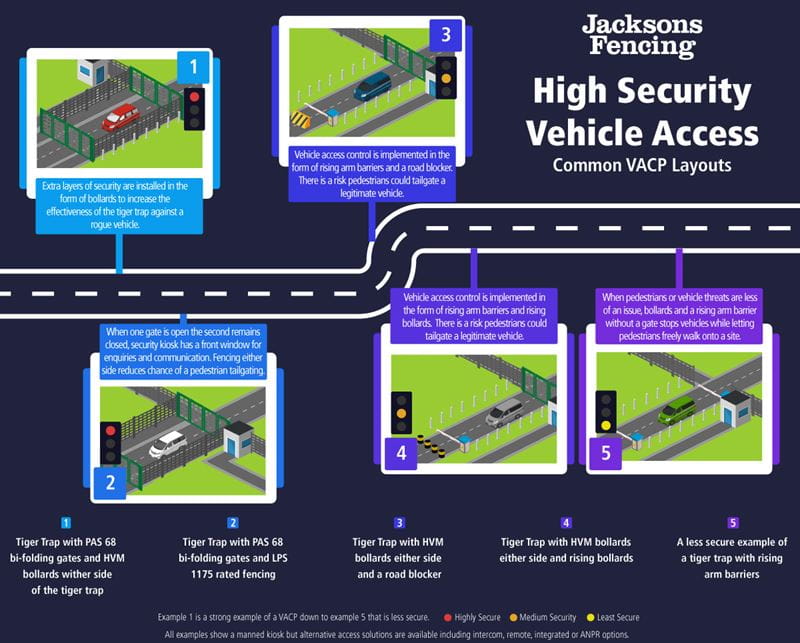
Each layer has a specific purpose. Together, they reduce risk, increase resilience, and provide time for response. In addition, each layer can consist of several sub-layers. For example, vehicle access control points (VACPs) may include an external gate or barrier that allows a vehicle to enter; however, the internal gate or barrier remains closed until staff are satisfied. This arrangement is often referred to as a tiger trap. Another example is two rows of fencing: one designed to prevent vehicle-borne attacks, and the other to restrict access on foot.
Perimeter fencing sits at the outermost edge of this model. While it is not the only control, it is often the most visible and sets the tone for the entire security posture of the site.
The external perimeter as the first line of defence
The primary purpose of perimeter fencing is to establish a clear and robust physical boundary. This boundary defines where controlled space begins and unauthorised access ends.
In the context of a data centre, this boundary protects assets long before an intruder reaches the building envelope. It helps prevent opportunistic access and creates a physical obstacle that must be overcome, rather than bypassed digitally or socially.
A well designed perimeter fence performs three key functions.
Deterrence
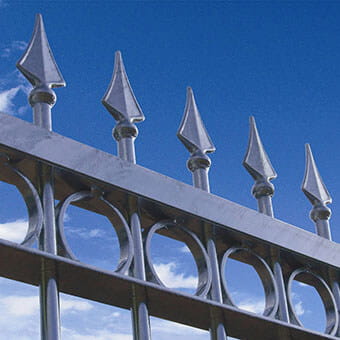
Highly visible, professionally installed fencing sends a clear signal that a site is protected. For many threats, particularly opportunistic or low level intrusion, this alone may be sufficient to discourage attempts to access the site.
Fence height, design, and overall presentation all contribute to perceived difficulty and risk. In a layered model, deterrence helps reduce the likelihood that other security layers are tested at all.
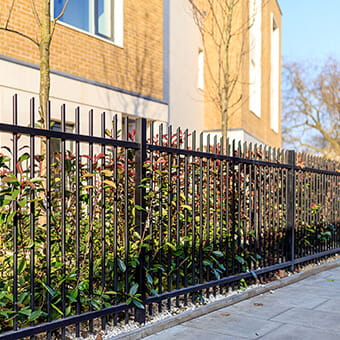
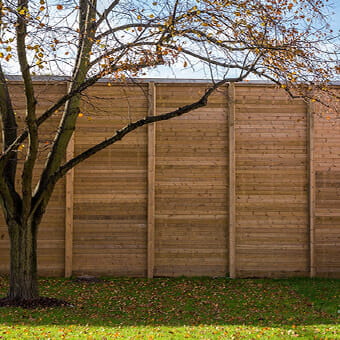
Deterrence is not always about height or appearing menacing. In an urban setting, a security rated acoustic barrier can provide a discreet solution that prevents climbing and access, while its garden-style appearance avoids signalling that it protects a high security data centre.
Delay
No fence is entirely impenetrable. Its purpose is not to eliminate risk, but to slow unauthorised access long enough for detection and response to take place.
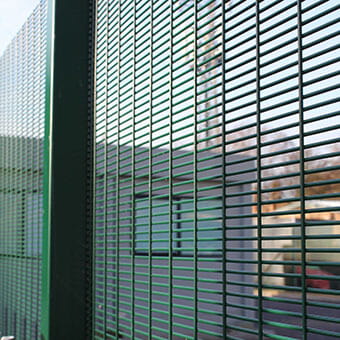
This is where certified solutions to a forced entry standard come into play. LPS 1175 certified fencing is given a classification based on a toolset, number of attackers, and time delay that the fence can provide. In addition, anti-climb and anti-burrowing features such as the fabric of the fence, the depth of the foundations, and security toppings can significantly increase the time and effort required to breach the perimeter.
This delay is critical. It allows surveillance systems to detect activity and enables onsite or remote security teams to respond before further access is gained.
Deny
Fencing naturally channels movement towards designated access points. This makes it possible to apply higher levels of control where people or vehicles enter the site, for example through gates, turnstiles or guardhouses.
Without a defined perimeter, managing access becomes fragmented and inconsistent, increasing risk across the entire facility.
Supporting electronic and procedural security layers
Perimeter fencing does not operate in isolation. Its true value is realised when integrated into the wider security architecture of the site.
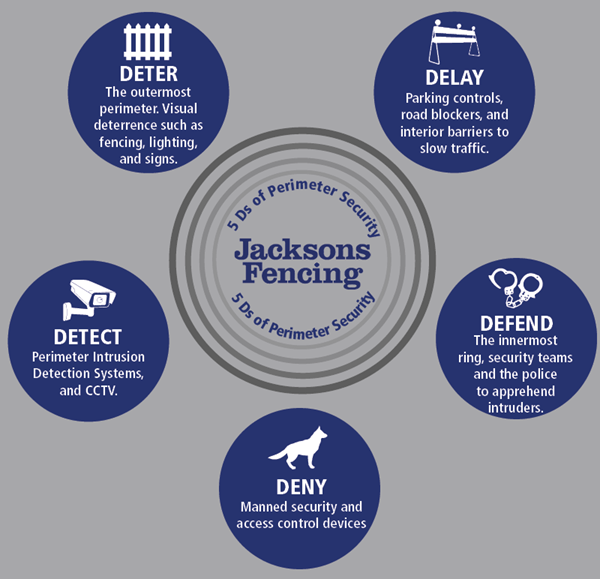
In addition to deterrence, delay and denial, a perimeter fence also helps to support the remaining elements of the five Ds of perimeter security: detect and defend.
Detect: Integration with surveillance and detection
A fence does not detect on its own, but it plays a vital enabling role. Detection typically comes from CCTV, motion detection, lighting and analytics, and PIDS (fence mounted sensors). Fencing provides the physical framework that ensures these systems are effective by creating predictable lines of movement, reducing ambiguity for sensors, and establishing clear trigger points for alerts.
Defend: Supporting access control and response procedures
The defend element is about what happens after a threat is detected. This may involve security personnel, remote monitoring teams, police or rapid response units, and alarm escalation procedures.
The fence’s role in defence is indirect but essential. It buys time, limits access options, and prevents escalation beyond the perimeter. A defined perimeter simplifies response planning by clearly identifying where unauthorised access is most likely to occur and where response resources should be directed.
It also reinforces procedural controls such as visitor management, contractor access, and emergency protocols. When physical boundaries are clear, compliance with these procedures becomes easier to enforce and audit.
Addressing modern data centre risk profiles
The risk landscape facing data centres is changing. Higher power densities, AI workloads, and increased sector visibility have raised both the value of assets and the consequences of disruption.
Modern perimeter fencing must now account for:
In this context, fencing must be more than a static barrier. It must be robust, adaptable and aligned with the long-term operational needs of the site.
This includes considerations such as modular expansion, compatibility with future security technologies, and durability over extended asset lifecycles.
Common shortcomings in perimeter-led security
Despite its importance, perimeter fencing is often undervalued during early project phases. Common issues include:
In a layered security model, weaknesses at the perimeter undermine every other layer. Even the most advanced internal controls are compromised if unauthorised access reaches the site unchecked.
Perimeter fencing as a strategic decision
For data centre operators, perimeter fencing should be considered a strategic investment, not a commodity item. Its design influences everything from security effectiveness to planning outcomes and operational efficiency.
When specified correctly, it:
Most importantly, it contributes to the resilience and reliability that data centre clients expect.
Layered security is essential for protecting modern data centres, but its effectiveness depends on the strength of each individual layer. Perimeter fencing forms the foundation of this model, setting the physical boundary that all other controls rely upon.
As data centres continue to evolve in scale, density and importance, the role of the perimeter must evolve with them. By viewing fencing as an integrated, risk-based component of a layered security strategy, operators can better protect their assets, their people and the critical services they support.
Contact our high security team for help with your data centre projects.
Related Content
Read about some of the data centre security projects that we have worked on:
Related Products
Jacksons Fencing have a large range of related products, all complete with our 25 year guarantee. If you cannot find the item you are looking for, please do not hesitate to call our friendly sales team.
Top