Our other sites:


- Risks of a Weak Perimeter
- Cost of Perimeter Failure
- Strengthening MOD Perimeters
- Trusted Installation
- Fencing for Defence Sites
Protecting defence environments is a core national responsibility. These sites cover a wide range of locations that include MOD facilities, air force bases and stations, naval bases, weapons storage depots, army barracks and garrisons, training areas and specialist locations, and command headquarters. Alongside these sites is a growing community of defence contractors that produce sensitive and often highly advanced components. If the perimeter in any of these settings is left weak or becomes compromised, the risks increase sharply. These risks can involve anything from protestor access and domestic unrest to activity linked to hostile states and wider geopolitical pressure.
This blog looks at what happens when a perimeter fails in any of these defence facilities. It considers both the immediate and the less visible consequences. It also explains how organisations can strengthen their sites through certified fencing, barrier systems, acoustic solutions, and expert installation.
The Risks of a Weak Perimeter
The impact of a compromised defence perimeter is far reaching. Other sectors that form part of the critical national infrastructure face serious consequences if a site is breached, but in many defence environments the risks escalate within minutes of unauthorised access. When a perimeter fails, the speed at which an intruder can reach sensitive areas, disrupt operations, or gather critical information leaves very little room for response. This is why maintaining a secure and resilient boundary is essential.
Protestor Intrusion
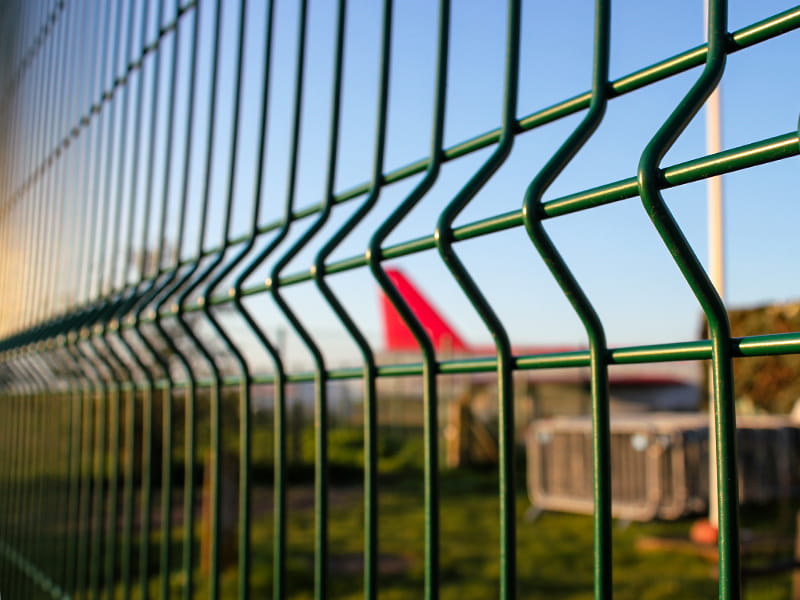
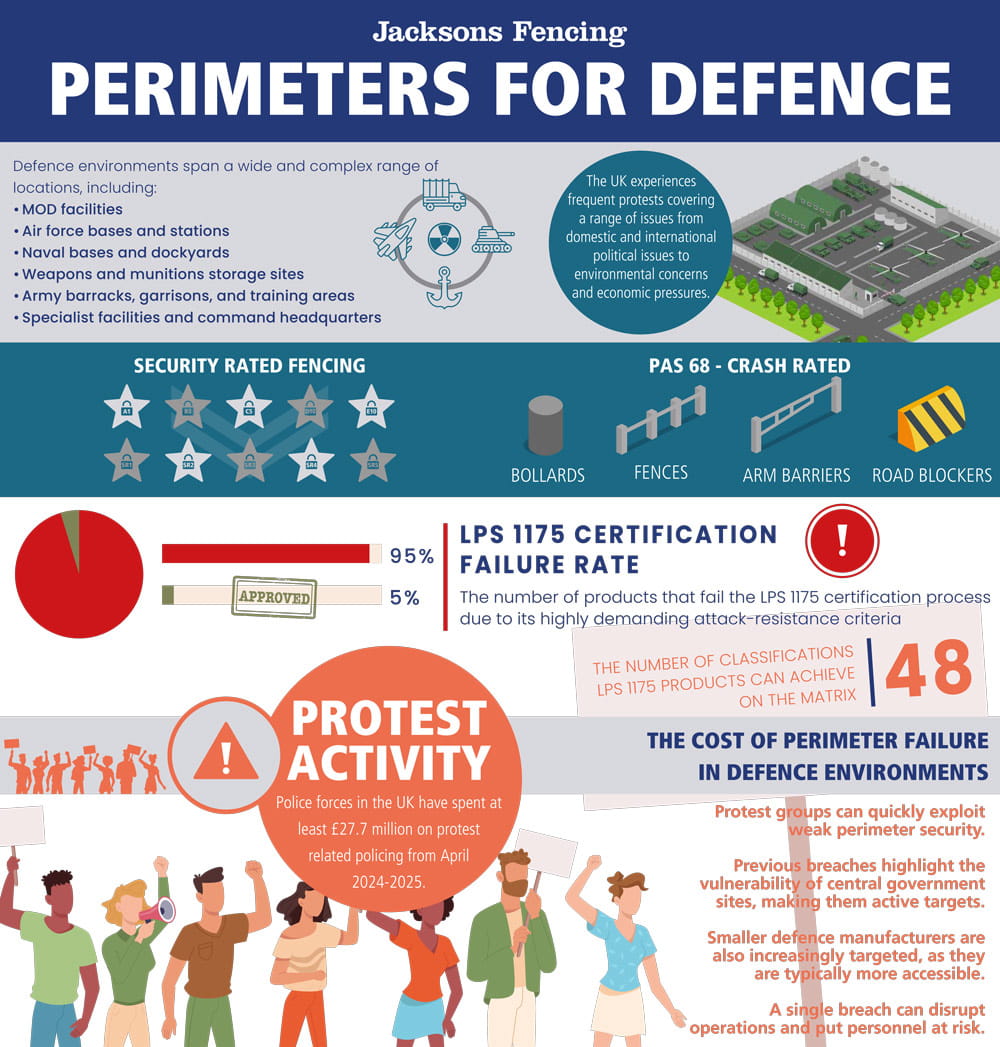
Protest groups can act with surprising speed when a perimeter is not properly secured. The break in at RAF Brize Norton where activists entered the airfield on electric scooters and sprayed red paint into the engines of RAF Voyager aircraft, showed how quickly a weak boundary can be exploited for maximum disruption and publicity. A similar pattern was seen when activists sprayed red paint across the Ministry of Defence headquarters in London, demonstrating that even central government sites are vulnerable when perimeter controls fail. A weak boundary line becomes an open invitation for attempts to cause disruption, gain media attention, damage assets, and challenge public confidence. Even a single breach can halt operations without warning and place personnel in a position of unnecessary risk.
In addition, smaller defence manufacturers are becoming increasingly common targets because they are viewed as far easier to approach than major MOD sites or large defence contractors. Many of these businesses do not expect organised protest groups to arrive at their sites and often rely on basic security measures that offer limited protection. In many cases, simply being part of the defence supply chain, or providing components to a larger manufacturer, is enough for protestors to single them out. This can lead to sudden disruption, reputational damage, and operational setbacks that place pressure on both their staff and their wider production commitments.
It is not only smaller organisations that face this issue. Larger defence manufacturers have also been targeted in a number of high profile incidents reported in the national news, which shows that the scale of the business offers no guarantee of protection when perimeter security is inadequate.
Hostile State Activity
Foreign intelligence services continually look for weaknesses within national defence infrastructure. Any gap in perimeter security can allow hostile actors to gather intelligence, interfere with sensitive equipment, or identify vulnerabilities for future exploitation. These risks have increased as technology has advanced, with drones, remote surveillance tools, and cyber enabled intrusions now forming part of the modern threat landscape. It is also important to recognise that an effective perimeter is not only about preventing physical access. Protecting privacy, shielding sensitive activity from observation, and limiting opportunities for covert monitoring are equally important in maintaining a secure and resilient site.
Domestic Pressure and Unrest
As protest legislation has changed and tensions around security infrastructure have grown, defence sites have experienced increasing public pressure. Crowds near sensitive locations introduce unpredictability, and any perimeter weakness increases the likelihood of groups attempting to enter restricted areas to make a political point or sabotage facilities.
The True Cost of Perimeter Failure
The impact of a compromised defence perimeter is far reaching. Other sectors counted as critical national infrastructure and if a site is compromised could have a serious impact but often defence sites, if the perimeter is compromised it can have serious detrimental consequences within minutes of gaining access to the perimeter.
Operational Disruption and Reduced Military Readiness
Perimeter breaches can cause immediate disruption to essential operations. Damaged aircraft, vehicles, or communication assets halt deployments, training programmes, and routine movements. Heightened alert levels require personnel to be diverted from their primary duties, leading to operational fatigue and reduced preparedness.
Financial Damage and Emergency Upgrades
Repairing vandalised or damaged assets that are worth millions of pounds can place significant strain on defence budgets that are already under pressure. In addition, emergency upgrades to essential infrastructure while teams try to access affected assets, including fencing, surveillance systems, access points, control equipment, and on site patrol capability, create further short term financial demands. Funds that were intended for long term strategic programmes are then diverted to urgent remedial work, which disrupts planning cycles and slows wider development across the defence estate.
Compromised National Security and Intelligence Exposure
If a hostile individual gains access to sensitive areas, the consequences can be severe. Even brief entry into a restricted zone may allow observation of equipment layouts, technology, or routines. Information gathered from a single incursion can inform future attacks or be used by foreign intelligence networks.
Damage to International Relationships and Defence Commitments
The UK’s reputation as a reliable defence partner depends on the secure operation of its military sites. Perimeter failures can reduce the nation’s ability to support allied operations, participate in joint exercises, or deploy key assets at short notice. International confidence is influenced by the perceived strength and resilience of domestic security.
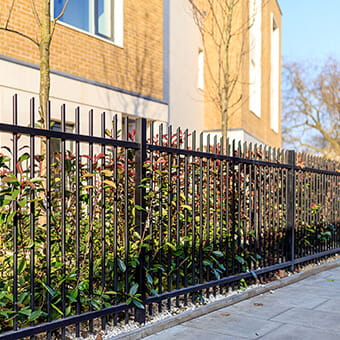
Check out our military base security fencing products. We manufacture and install a wide range of security fencing for the MOD sector. You may also be interested in our blog about forced entry standards, which explains why these standards are important for critical national infrastructure and high security sites.
Escalation of Civil Unrest and Legal Consequences
Any breach encourages further activism. Legal battles follow. Public scrutiny intensifies. Security personnel face growing pressure. A compromised perimeter becomes a catalyst for additional disorder and ongoing challenges.
Strengthening MOD Perimeters
A secure perimeter begins with a complete and thorough security audit. Understanding the specific threats, operational requirements, and environmental context provides a foundation for correct specification.
Certified Fencing Systems
Certified systems such as LPS 1175 rated fences provide proven resistance against intrusion attempts and help to tie in with a security strategy by providing a layered approach. Selecting the correct rating ensures the perimeter reflects the actual threat level, whether for high risk environments or specialist contractor sites. Certification also supports compliance with defence procurement standards.
Climbing a Perimeter
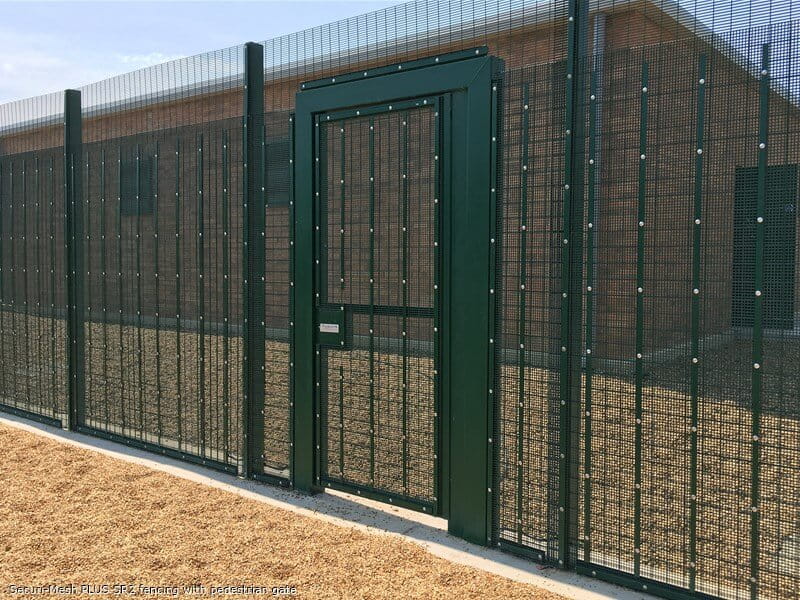
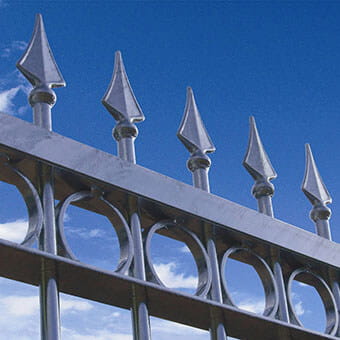
Just because a fence is certified does not mean it has been assessed for resistance to climbing. Certified fencing systems have helped sectors such as defence move away from insecure options such as chain link fences that can be cut with ease, but climbing remains one of the most common methods used by intruders to gain unauthorised access. A secure perimeter therefore requires more than certified resistance to cutting or breaching. It also needs design features that limit climbing opportunities, including security toppings and fence profiles that offer no foot or handholds, all of which help to slow or deter any attempt to scale the boundary.
Crash Rated and Vehicle Mitigation Systems
Vehicle based threats continue to evolve, which makes crash rated barriers or bollards essential in any credible security strategy. These systems protect sites from both accidental impact and deliberate attempts to use a vehicle as a weapon. They are now expected in high value defence environments and at contractor sites where the consequences of a breach would be severe. Their inclusion must always relate directly to the specific risks of the site.
The principle is no different from the way vehicles are sometimes used to ram a jewellery shop to force instant entry. There is little value in installing a secure LPS 1175 certified fence that withstands cutting or a fence that prevents climbing if a single impact from a vehicle can create a large opening and allow offenders to enter on foot. This is why separate PAS 68 or equivalent crash rated barriers should be placed in front of the LPS 1175 fence where vehicle access is a realistic threat. These barriers absorb or stop the impact before it reaches the fence line, maintaining the integrity of the perimeter and ensuring the fence continues to perform its intended function.
Additional Perimeter Requirements
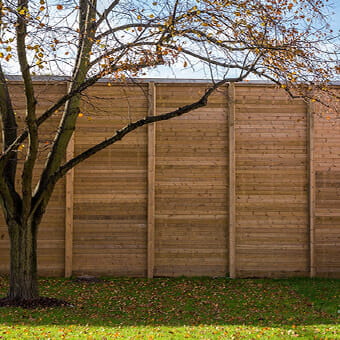
Many defence environments require far more than pure security. Privacy, control of light and noise, and the overall visual appearance of the perimeter all play an important role in site performance, security, and relations with the surrounding community. Timber acoustic barriers that also meet recognised security standards such as LPS 1175, and that offer anti climb features with no foot or handholds, are becoming increasingly popular. They provide privacy alongside effective noise and light reduction, while delivering certified protection without creating the impression of a high security defence site. This combination supports sensitive operations and training activity and offers an appearance that blends naturally with the environment. Our article on Acoustic Barriers for Defence Sites explores this in more detail.
Trusted Installation
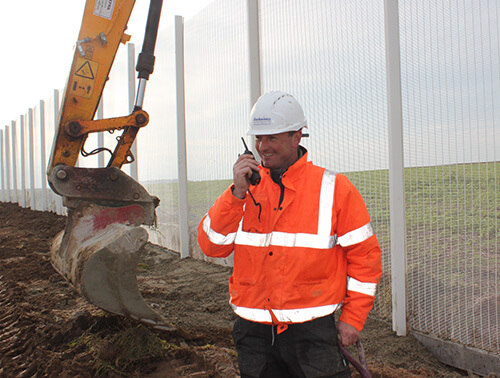
Even the best fencing system will underperform if not installed correctly. Defence environments require installers who understand the specific demands of restricted sites, who work with precision, and who maintain security awareness at all times. At Jacksons we provide our own trained, vetted, and experienced installation teams who deliver work to the exacting standards required in the defence sector.
Fencing for Defence Sites
Perimeter failure in defence environments carries serious operational, financial, reputational, and strategic consequences. With increased protest activity, rising geopolitical pressure, and more sophisticated hostile actors, the perimeter is no longer a simple boundary. It is a critical defensive asset that protects people, equipment, and sensitive operations.
A resilient perimeter relies on a balanced combination of measures. Anti climb certified fencing provides core protection against intrusion, acoustic privacy solutions reduce noise and shield sensitive activity from observation, and vehicle mitigation systems stop attempts to force entry using vehicles. When these elements are installed by specialists who understand the demands of defence sites, they create a perimeter that is strong, adaptable, and ready for future threats. Defence environments cannot afford weak points. The cost of failure is too high.
If you would like expert guidance on specifying secure systems for defence applications, our team is ready to support you.
Related content
Layered physical security for military and defence sites
Related products
Jacksons Security has a range of products relating to this article, all complete with our 25 year service life guarantee. If you cannot find the item you are looking for, please do not hesitate to call our friendly sales team.
Related Content
Case Studies
Related Case Studies
We have completed a large number of projects in various sectors, from housing, retail, leisure and education, to hospitals and healthcare, transport, utilities, and high security NPSA (previously CPNI) sites. Discover more through our portfolio of case studies.

Blogs
Related Content
We have an extensive library of blogs covering a wide selection of topics, whether you need a helpful guide for recognising accreditations, an understanding of different processes such as galvanisation, or specialist advice on securing a rural site against crime.

Contact Us
Need Help?
From design and manufacturing to supply and installation, we can help you with your project. If you'd like to discuss anything in this article or need information or guidance, please feel free to contact us at any stage to discuss your requirements.
Top