Our other sites:


- Importance of layered security
- The outer security zone
- Perimeter intrusion detection and early warning
- Vehicle access control
- Core high security zones
- Acoustic barriers for sensitive operations
- Certified fencing
- Layered security and the five Ds
Military and defence environments present some of the most complex security challenges of any sector. Threats range from hostile reconnaissance and unauthorised intrusion through to sabotage and vehicle borne attack. In response, MOD sites are designed around the principle of defence in depth, where multiple, integrated security measures work together to reduce risk in line with MOD policy and Joint Service Publication (JSP) guidance.
This blog looks at what happens when a perimeter fails in any of these defence facilities. It considers both the immediate and the less visible consequences. It also explains how organisations can strengthen their sites through certified fencing, barrier systems, acoustic solutions, and expert installation.
The importance of layered security and defence in depth
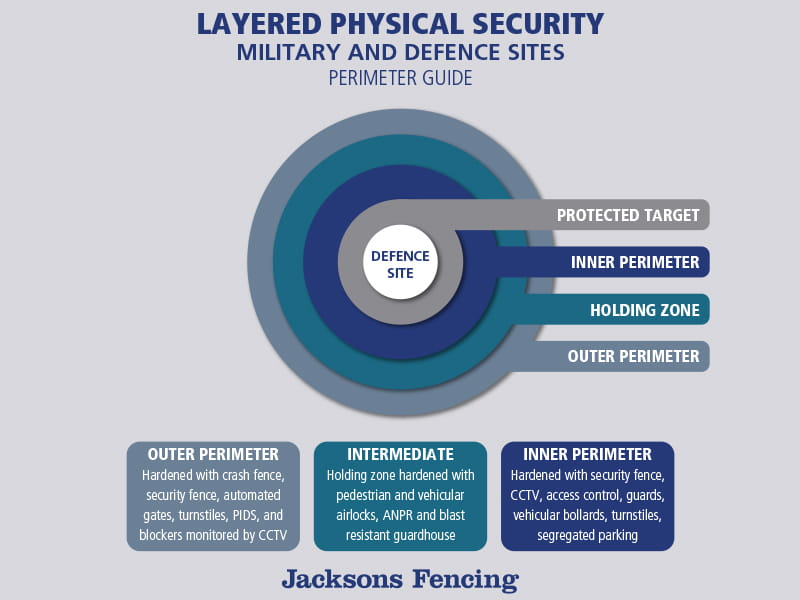
Layered security recognises that no single protective measure is sufficient in isolation. An adversary or attacker may defeat one layer (an example could be the perimeter fence) but should never be able to progress freely across a site.
Across the defence estate, layered security is informed by threat assessments, response force timings, asset criticality, and operational activity, as reflected in JSP guidance and site specific security risk assessments. Perimeter systems, hostile vehicle mitigation, detection technologies, and internal zoning are designed as a coordinated system, supporting both routine operations and elevated threat conditions.
This defence in depth approach ensures resilience against both external attack and insider threat.
The perimeter fence as the outer security zone
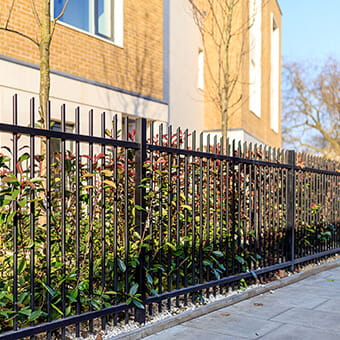
The perimeter fence forms the outer security zone and establishes the controlled boundary of the site. It provides the first visible deterrent and physical delay, supporting MOD requirements for defined boundaries, clear zones, and effective surveillance.
When a risk assessment identifies a vehicle borne threat, the perimeter provides an opportunity to introduce PAS 68, IWA-14, or ISO 22343 crash rated hostile vehicle mitigation measures. These measures often include separated crash rated systems or earth bunds, which are used to prevent vehicle penetration towards occupied buildings, critical infrastructure, or to counter attempts to breach a perimeter fence and enable access on foot. In many situations, the crash rated barrier or bollards are installed to protect the perimeter fence itself.
Perimeter layouts are normally configured to maintain clear lines of sight, support Guard Force patrols, and comply with defence estate design principles referenced within JSP guidance. This is not always the case though, and the perimeter can instead be designed to promote site privacy while managing noise and light pollution affecting neighbouring properties. More detail on this will follow.
Perimeter intrusion detection and early warning
Perimeter intrusion detection systems (PIDS) are a key component of MOD compliant layered security. While fencing provides delay, PIDS deliver early warning and situational awareness in line with defence security policy.
Fence mounted sensors are a common accessory to notify the Guard Force to attempted intrusion or interference. When integrated with CCTV, lighting, and alarm management systems, PIDS support rapid assessment and proportionate response as required by site security instructions and JSP aligned procedures.
Early detection remains critical in maximising response effectiveness and preventing escalation.
Visual screening and denial of hostile reconnaissance
MOD security policy places strong emphasis on denying hostile reconnaissance. Visual screening and privacy fencing play an important role in restricting observation of sensitive activity.
Perimeter and internal screening can obscure critical infrastructure, vehicle movements and Guard Force routines, reducing the risk of intelligence gathering. This approach supports JSP guidance around discretion, asset protection, and information denial while enhancing the overall effectiveness of physical security measures.
Vehicle access control points and hostile vehicle mitigation
Vehicle access control points (VACPs) are recognised within MOD guidance as high risk areas that require enhanced protection and a layered approach to control. A VACP may incorporate rising bollards, bi-folding speed gates, sliding gates, road blockers, and tiger traps, depending on the assessed threat and the operational requirement. These locations are frequently where check points and manned security teams are positioned.
Where hostile vehicle mitigation is required, PAS 68 crash rated bi-folding speed gates deliver rapid operation combined with proven impact resistance, supporting both security and the efficient movement of authorised vehicles.
Layered vehicle controls ensure that failure of a single element does not result in loss of site integrity.
Core high security zones and inner protected areas
Within defence sites, security is organised around a series of protected inner areas that align with JSP guidance on zoning and graduated levels of protection. Core high security zones safeguard assets of the greatest sensitivity, including critical national infrastructure, classified capabilities, weapons storage, command facilities, and mission critical systems. These zones form the final protective layers within a defence in depth model.
Internal security fencing is essential for defining and securing these areas. Higher specification fencing systems, often selected for certified delay performance, are used to establish secure internal boundaries. Access is tightly controlled through managed gates, electronic access control, and enhanced monitoring measures that are consistent with MOD security policy.
This layered zoning approach limits the consequences of a perimeter compromise, supports the management of insider threat, and enables Guard Force personnel to isolate, contain, and respond to incidents with greater effectiveness.
Acoustic barriers and protection of sensitive operations
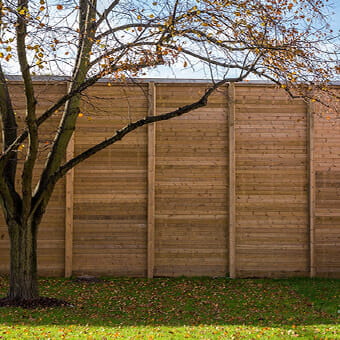
Acoustic barriers provide significant value within MOD security design, particularly where operational activity requires privacy, security, and generates noise or light pollution. When positioned around core high security zones or sensitive operational areas, acoustic barriers reduce noise transmission, limit light spill, and restrict visual exposure. Constructed as solid structures, they are difficult to scale and can also contribute to physical delay and asset concealment with high security LPS 1175 versions available, supporting JSP principles that emphasise discretion and the protection of capability.
Their multifunctional role makes them well suited to the requirements of the modern defence estate, where operational effectiveness, environmental management, and protective security must operate together.
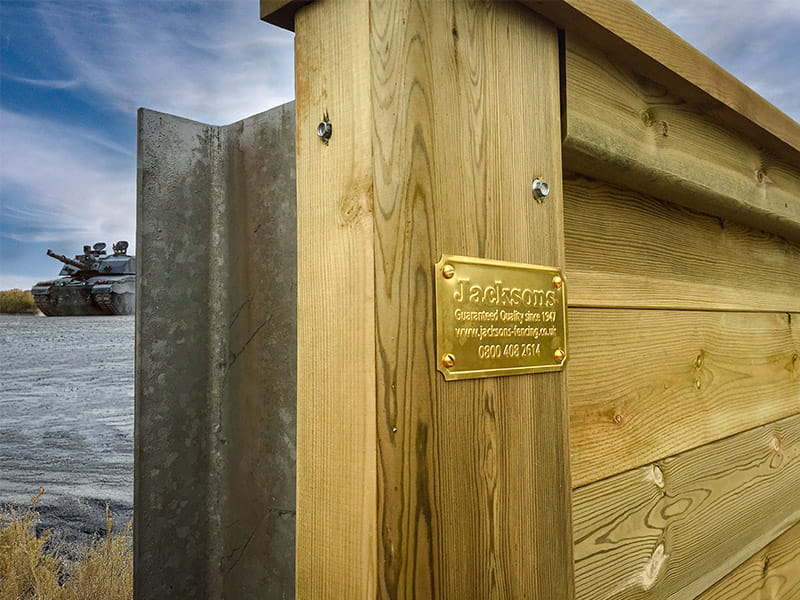
Read our blog on ‘Acoustic Barriers for Defence Bases and Training Areas’ for more information this subject.
Certified fencing and modern defence security standards
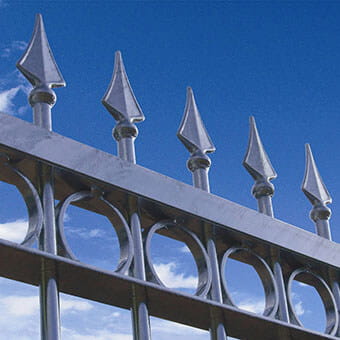
MOD security standards have evolved, with legacy CPNI and NPSA fence classifications no longer in use. Current defence projects increasingly rely on independently tested and certified fencing systems to demonstrate performance and compliance.
LPS 1175 rated fencing provides defined levels of resistance to forced entry, based on attack method, tools, and time to breach. These ratings enable designers to align physical protection with threat level, manned security and response timings, and the criticality of the protected asset, in accordance with JSP driven risk management principles.
Using certified fencing across both perimeter and internal layers supports a consistent, auditable, and risk based approach to security design.
Layered security and the five Ds
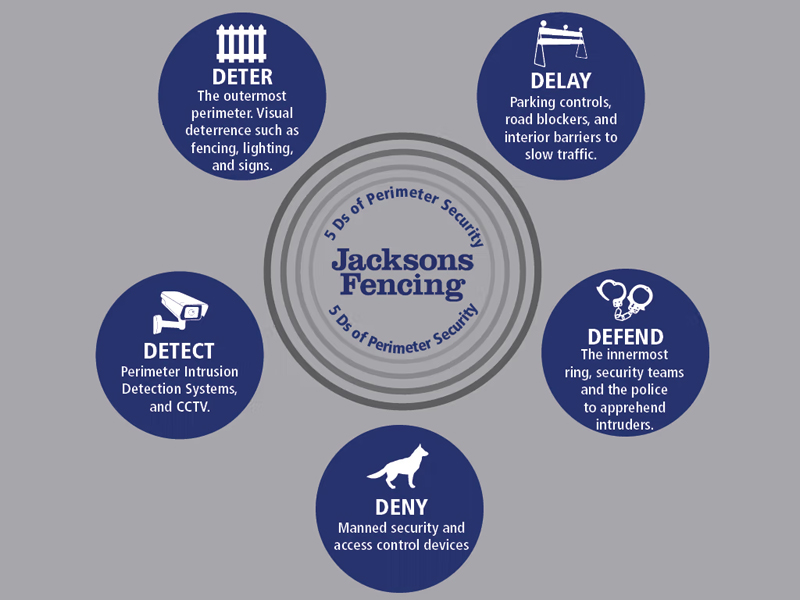
Layered physical security directly supports the five Ds of perimeter security as referenced across MOD and JSP guidance.
Each layer reinforces the next, ensuring resilience under both routine and heightened threat conditions.
A Layered Physical Security Approach
For MOD and defence sites, layered physical security is essential for protecting people, assets, and operational capability. By integrating certified perimeter fencing, hostile vehicle mitigation, intrusion detection, visual screening, and clearly defined core high security zones, defence organisations can deliver a defence in depth strategy that aligns with MOD policy and JSP guidance.
A well designed layered approach ensures that no single failure compromises the site and that every delay supports a coordinated, proportionate, and effective response.
Related content
The Cost of Perimeter Failure in Defence Environments
Related products
Jacksons Security has a range of products relating to this article, all complete with our 25 year service life guarantee. If you cannot find the item you are looking for, please do not hesitate to call our friendly sales team.
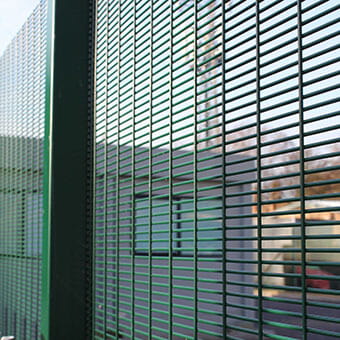
Related Content
Case Studies
Related Case Studies
We have completed a large number of projects in various sectors, from housing, retail, leisure and education, to hospitals and healthcare, transport, utilities, and high security NPSA (previously CPNI) sites. Discover more through our portfolio of case studies.

Blogs
Related Content
We have an extensive library of blogs covering a wide selection of topics, whether you need a helpful guide for recognising accreditations, an understanding of different processes such as galvanisation, or specialist advice on securing a rural site against crime.

Contact Us
Need Help?
From design and manufacturing to supply and installation, we can help you with your project. If you'd like to discuss anything in this article or need information or guidance, please feel free to contact us at any stage to discuss your requirements.
Top