Our other sites:


As Battery Energy Storage Systems (BESS) and solar developments continue to expand across the UK, developers are under increasing pressure to demonstrate that projects can operate without causing unacceptable impacts on nearby communities. One of the most important considerations during the planning process is noise.
While good site selection and careful equipment specification form the foundation of effective acoustic design, these measures alone may not always achieve the required noise limits. In such cases, acoustic barriers can play a valuable role in reducing noise impacts and helping projects progress through planning with confidence.
In this article, we explore how acoustic barriers fit within the wider acoustic design process, what makes them effective, and how they can be integrated successfully into solar and BESS developments.
Why Noise Matters for Solar and BESS Developments
Although solar farms are often considered relatively quiet developments, associated infrastructure can generate operational noise. For BESS projects in particular, equipment such as HVAC systems, cooling fans, transformers, inverters, and substations can all contribute to the site's overall acoustic output. Furthermore, these developments are often located in rural areas where existing background noise levels are low, making operational noise more noticeable and increasing the potential for acoustic effects on nearby receptors.
Planning authorities typically require developers to assess potential impacts at nearby noise-sensitive receptors, including:
Where operational noise has the potential to exceed accepted thresholds, mitigation measures may be required to ensure compliance and minimise the impact on local amenity.
The earlier noise is considered during project design, the greater the opportunity to address potential issues cost effectively.
Understanding the Acoustic Design Hierarchy
Effective noise management follows a structured process. Before considering barriers, it is important to evaluate opportunities higher up the acoustic design hierarchy.
1. Maximise Separation Distance
Distance remains one of the most effective forms of noise mitigation. Positioning noisier equipment further from sensitive receptors can significantly reduce sound levels before they reach nearby properties.
When site constraints allow, layout optimisation should always be the first consideration.
2. Control Noise at Source
Reducing noise where it is generated often provides the most efficient solution. This may include:
Addressing noise at source can often eliminate the need for more extensive mitigation later in the project.
3. Integrate Acoustic Barriers
When site layout and equipment selection alone cannot achieve the required acoustic performance, barriers can provide an effective additional layer of protection.
4. Operational Controls
In some circumstances, operational restrictions such as reduced nighttime running modes may be considered. However, these are generally viewed as a final option once physical mitigation measures have been explored.
What Makes an Effective Acoustic Barrier?
Not every fence, wall or screen provides meaningful acoustic benefit.
For a barrier to effectively reduce noise, it should:
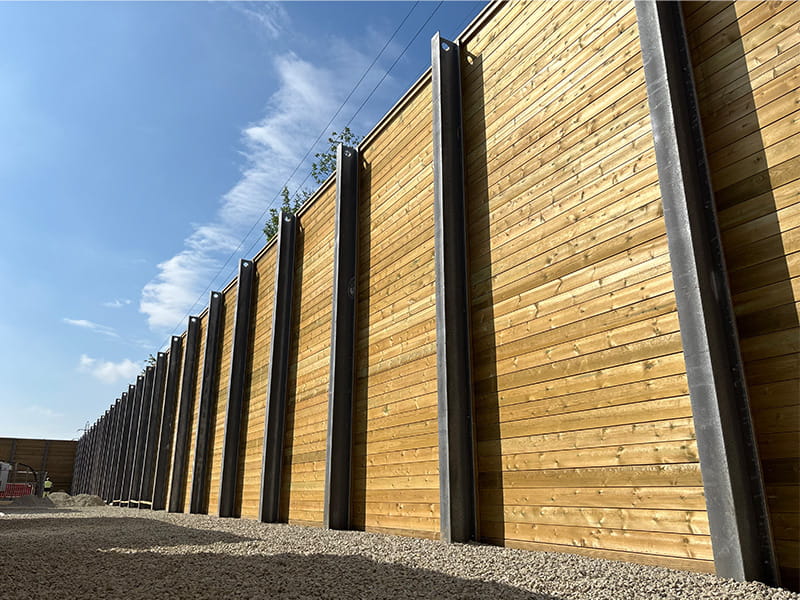
Be solid and continuous
Even relatively small gaps can compromise performance. Acoustic barriers should be constructed using continuous materials and designed to eliminate openings wherever possible.
Break the line of sight
One of the primary functions of a barrier is to prevent a direct path between the noise source and the receptor. If a property can ‘see’ the noise source above or around the barrier, sound can still travel relatively efficiently.
Provide sufficient mass
Heavier, denser materials generally provide greater attenuation performance. Common solutions include:
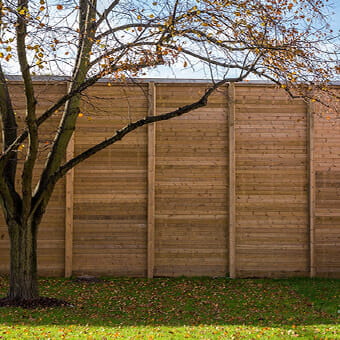
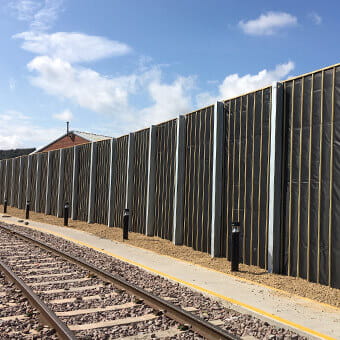
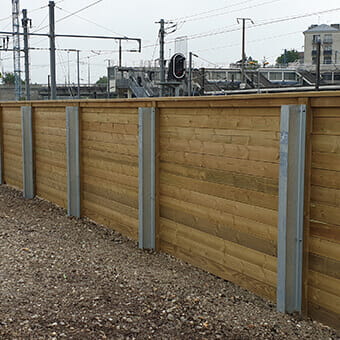
The most appropriate solution will vary depending on the acoustic requirements, visual constraints, and planning considerations associated with each site. We explore other types of acoustic barriers in our blog post.
The Importance of Barrier Location
The effectiveness of an acoustic barrier is influenced not only by its design but also by where it is positioned.
Barriers are often most effective near the source
Placing a barrier close to noise-generating equipment can:
This approach can help reduce construction costs while also limiting visual impact.
Height matters
In some cases, a relatively small increase in barrier height can deliver a significant improvement in performance.
However, taller structures may raise planning concerns relating to:
Achieving the correct balance between acoustic performance and site integration is therefore essential.
Acoustic Barriers and Landscape Design
Acoustic barriers are often considered alongside landscape mitigation measures.
A common misconception is that trees and vegetation alone provide significant noise reduction. While planting can improve visual screening and contribute positively to biodiversity objectives, meaningful acoustic attenuation generally requires a substantial physical structure.
This is where integrated solutions can offer considerable benefits.
Bund-and-Barrier Solutions
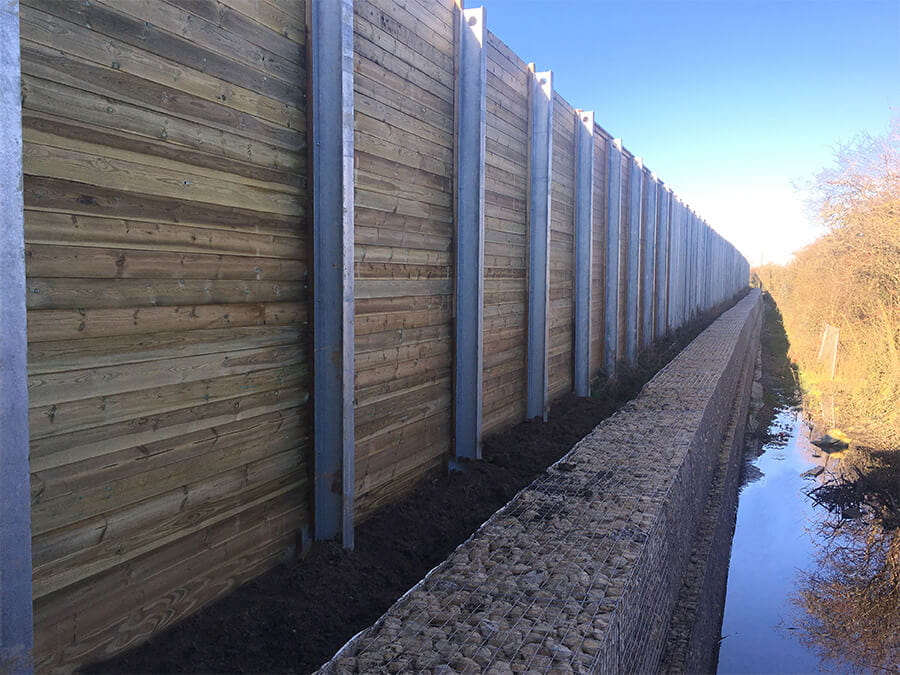
Our acoustic barriers are often specified to be installed on top of earth bunds. Earth bunds combined with acoustic fencing can:
As a result, these solutions are frequently considered on solar and BESS developments where visual sensitivity is a key planning consideration.
Balancing Acoustic Performance and Planning Requirements
Acoustic barriers must often satisfy multiple objectives simultaneously.
A successful design should consider:
Acoustic performance: Can the barrier achieve the required attenuation?
Visual integration: How will the structure appear within the local landscape?
Site constraints: Can the barrier be installed without impacting access, drainage, or operational requirements?
Long-term durability: Will the barrier retain its performance throughout the lifespan of the development?
Close collaboration between acoustic consultants, planners, landscape architects, and design teams can help ensure all these considerations are addressed as part of a coordinated project strategy.
A Practical Example
Consider a BESS development where cooling units are located close to a site boundary adjacent to residential properties.
Initial Assessment
Noise modelling identifies that operational sound levels exceed the target criterion during nighttime operation.
Design Review
Several mitigation options are considered, including:
However, site constraints limit the effectiveness of these measures.
Acoustic Barrier Integration
A purpose-designed barrier is introduced close to the cooling equipment, interrupting the direct sound path between the source and nearby receptors.
Outcome
The revised design achieves the required noise limits while avoiding significant changes to the wider site layout, helping the project maintain programme and budget objectives.
Key Takeaways
Acoustic barriers remain an important tool within the design of modern solar and BESS developments. When integrated thoughtfully alongside site layout optimisation, equipment selection and wider environmental design considerations, they can provide a highly effective means of managing operational noise.
The most successful projects are those that consider acoustics early, allowing mitigation measures to be incorporated into the design process rather than added retrospectively. By taking this proactive approach, developers can reduce planning risk, improve stakeholder confidence and support the delivery of well designed renewable energy infrastructure.
Related content
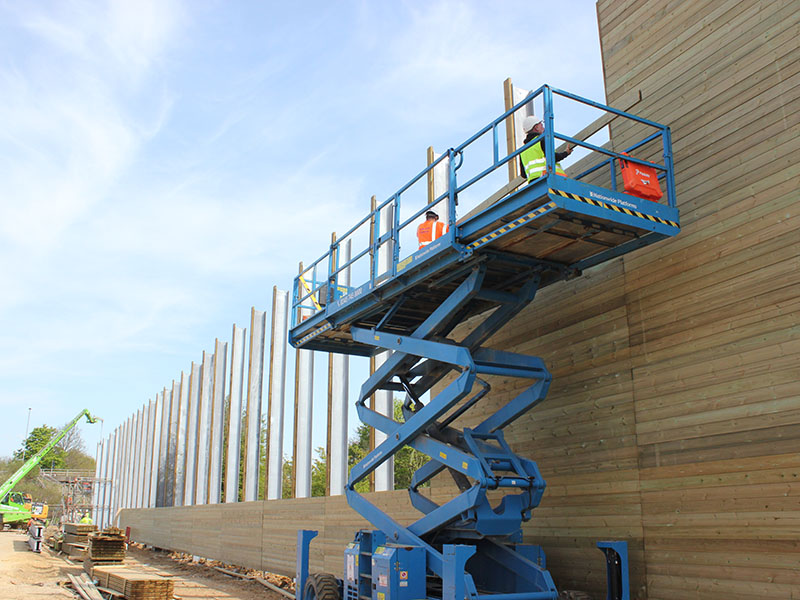
We supplied and installed 156 metres of 5m high Jakoustic Commercial and Highway acoustic fencing for a battery energy storage system site in Glassenbury. Read the case study:
BESS Acoustic Barrier Case Study
Also read about an acoustic enclosure installation for an energy supplier.
Visit our energy sector security page for more information.
Related content
Case Study: Substation Noise Reduction
Case Study: ASHP noise reduction systems that don’t restrict airflow
Related products
Jacksons Security has a range of products relating to this article, all complete with our 25 year service life guarantee. If you cannot find the item you are looking for, please do not hesitate to call our friendly sales team.
Top