Our other sites:


Defence sites face a unique range of security challenges. Whether protecting military bases, training areas, ammunition storage facilities, defence manufacturing plants, or secure logistics hubs, perimeter security needs to do more than prevent unauthorised access.
While physical security is often focused on stopping intruders, defence organisations must also consider what can be seen from outside the site. Vehicles, equipment, infrastructure, and operational activity can all provide valuable information to those observing from nearby roads, public rights of way, or neighbouring land.
Visual screening can help reduce opportunities for observation, supporting the protection of personnel, assets, and critical infrastructure. However, screening is only one part of an effective perimeter strategy. For defence sites, fencing should also provide resistance to climbing, cutting, and vandalism, while delivering independently tested security performance and long term durability.
The most effective defence perimeters form part of a layered security approach, where fencing, gates, access control, CCTV, and operational procedures work together to protect the site. By considering all of these elements from the outset, organisations can create a perimeter that not only limits visibility into sensitive areas but continues to provide reliable security throughout its operational life.
The Security Risks of Being Visible: Why Visual Screening Fences Matter
Defence sites are designed to protect sensitive assets, operations, and personnel. However, even without gaining physical access, someone observing from outside the perimeter may be able to gather useful information about how a site operates.
Vehicle movements, equipment storage areas, training activities, and access routes can all help build a picture of daily operations. While a single observation may reveal very little, repeated monitoring over time can identify patterns, highlight areas of activity, and potentially expose vulnerabilities.
In some cases, the information gathered could be highly time sensitive. For example, aircraft movements at an airbase may indicate operational activity, while photographs and videos could reveal details of specialist equipment, military vehicles, or emerging technologies.
Importantly, this information is not always collected by those with malicious intent. Plane spotters, photographers, and members of the public may share images online without considering the wider implications. Once published on social media, however, that content can be viewed, analysed, and shared far beyond its original audience.
For military bases, defence manufacturers, secure logistics facilities, and research centres, protecting information can be just as important as protecting physical assets. Limiting visibility into sensitive areas can therefore play an important role in a layered security strategy, helping to ensure that those outside the perimeter only see what the organisation intends them to see.
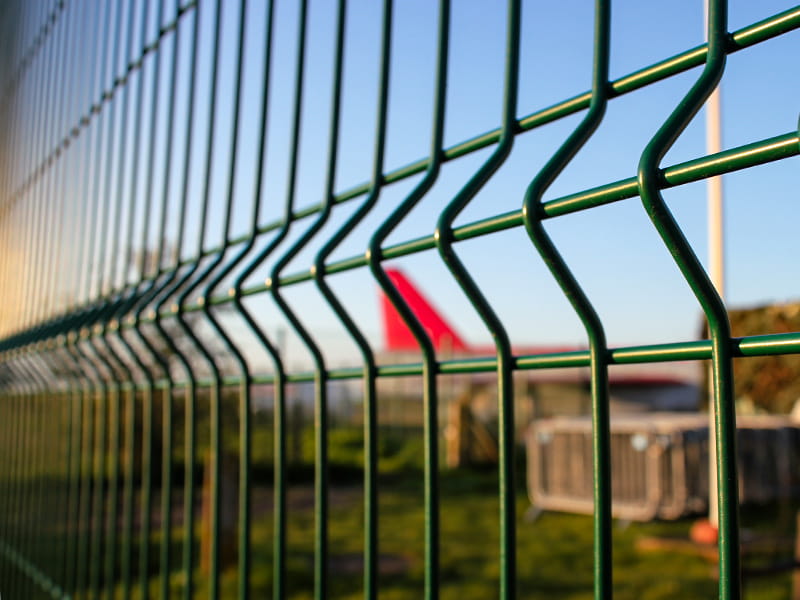
Screening Fences Help Keep Surrounding Communities Happy
The benefits of visual screening extend beyond the site boundary itself.
Defence sites can attract attention from plane spotters, photographers, and members of the public, particularly during periods of increased activity. While this interest is often harmless, it can lead to increased traffic, congestion, and disruption in the surrounding area, as well as creating more opportunities for filming and observation around the perimeter.
This can create several challenges:
- Increased traffic on local roads
- Obstruction of access routes
- Parking pressures in nearby communities
- Additional opportunities for observation and intelligence gathering
- Safety concerns for both visitors and residents
- Increased likelihood of sensitive images and video appearing online
Visual screening fences can help reduce these issues by limiting views into sensitive areas and making it more difficult to capture photographs or videos from outside the site. As well as supporting operational security, effective screening can help minimise unwanted attention, reducing disruption for neighbouring communities and helping maintain positive relationships with local residents.
Why Screening Should Be Considered Early
One of the biggest mistakes organisations and specifiers can make is treating visual screening as an afterthought.
When designing a perimeter, the focus often falls on specific requirements such as access control, security ratings, acoustic and anti-climb performance, or aesthetics. While these are all important, it is easy to overlook how much of the site remains visible from nearby roads, public rights of way, or neighbouring land.
The result can be a perimeter that meets the project specification but still allows sensitive areas, equipment, or activities to be viewed from outside the boundary.
Retrofitting screening later is often more expensive and disruptive than incorporating it into the original design, with additional costs potentially including:
- Removal or modification of existing fencing
- Additional installation and labour costs
- Operational disruption during upgrade works
- Temporary security vulnerabilities during construction
- Increased maintenance requirements
- Additional planning or approval costs
For defence sites, visual screening should be considered alongside security ratings, access control, and other perimeter requirements from the outset. Taking a holistic approach can help avoid costly upgrades while delivering a perimeter that provides both security and concealment throughout its operational life.
Visual Screening is Only One Part of the Solution
While visual screening can help reduce opportunities for observation, it should never be viewed as a standalone security measure.
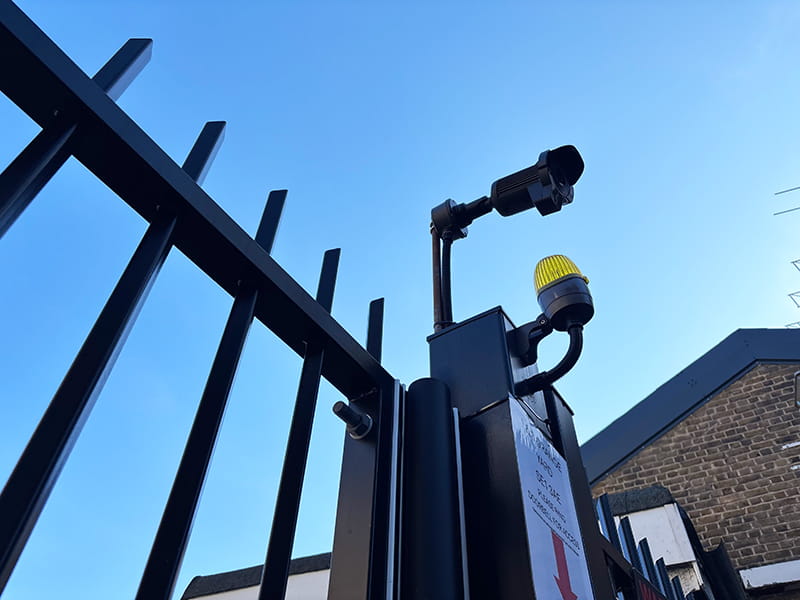
The most secure defence sites adopt a layered approach, where fencing, gates, access control, CCTV, perimeter detection systems, and operational procedures work together to deter, detect, and delay potential threats.
Within this strategy, the perimeter fence is often the first physical barrier an intruder encounters. While screening helps conceal sensitive activities, it is equally important that the fence can resist climbing, cutting, and vandalism.
When specifying perimeter fencing for defence sites, key considerations should include:
- Visual screening and concealment
- Anti climb features
- Resistance to cutting and attack
- Vandal resistance
- Integration with CCTV and detection systems
- Independently tested security performance
- Long term durability and lifecycle costs
The Importance of High Quality, Tested, and Durable Solutions
For defence sites, perimeter security should be built around proven, long term performance rather than simply meeting a specification on the day of installation. Systems certified to LPS 1175 have been independently tested against recognised attack methods, providing confidence that they can form an effective part of a layered security strategy.
However, security is about more than achieving a security rating. Any screening fence must also remain secure in service. There is little benefit in installing a screening solution if it can be easily cut, torn away or removed, exposing sensitive areas and potentially creating a weakness in the perimeter.
Durability is equally important. Defence sites are long term assets, and fencing that suffers from corrosion, rot, or deterioration can quickly become a security risk while increasing maintenance and replacement costs.
For this reason, defence organisations should look beyond initial purchase costs and consider whole life value. High quality fencing systems that combine robust screening, independent testing and long term durability can help ensure the perimeter continues to provide effective protection for many years to come.
Security Performance Must Last
Security is not just about how a fence performs when it is first installed. Defence sites are long term assets, and perimeter security should remain effective for many years.
There is little value in installing a security rated fence if components deteriorate after only a few years. For example, a mesh fence may have a service life of 15 years or more, but if the screening infill fades, degrades, or needs replacing after a short period, it can create additional costs, maintenance requirements, and potential security weaknesses.
When assessing perimeter solutions, organisations should consider whole life performance, not just initial purchase costs. High quality systems that combine robust construction, durable screening, and independently tested security performance can help maintain protection while reducing long term maintenance and replacement costs.
Combining Security and Concealment
For many defence sites, the ideal solution combines physical security with effective visual screening.
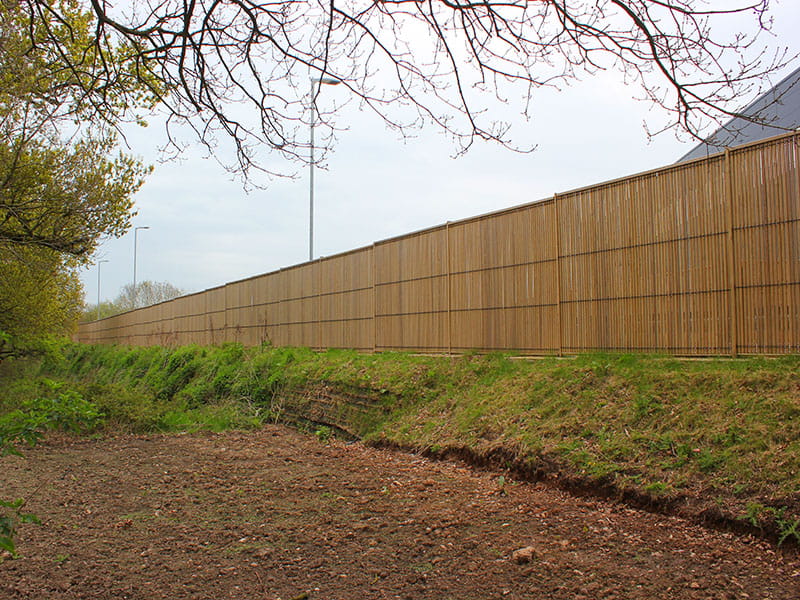
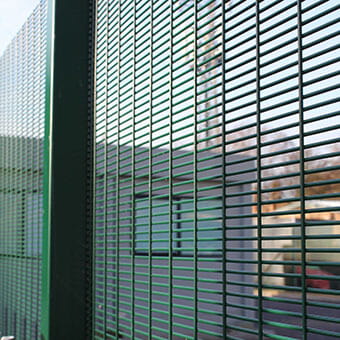
EuroGuard® Combi A1 (SR1) is a good example of this approach. By combining a welded mesh security fence with timber infill pales, it helps restrict views into sensitive areas while maintaining an effective physical barrier.
Suitable applications include:
- Defence contractors
- Military logistics hubs
- Equipment storage compounds
- Secure operational facilities
- Defence manufacturing sites
The result is a perimeter that helps protect against intrusion while reducing opportunities for observation.
When Acoustic Fencing Adds Further Value
Some defence sites require more than visual concealment. Training areas, vehicle maintenance facilities, and testing sites may also need to reduce noise impacts on neighbouring communities.
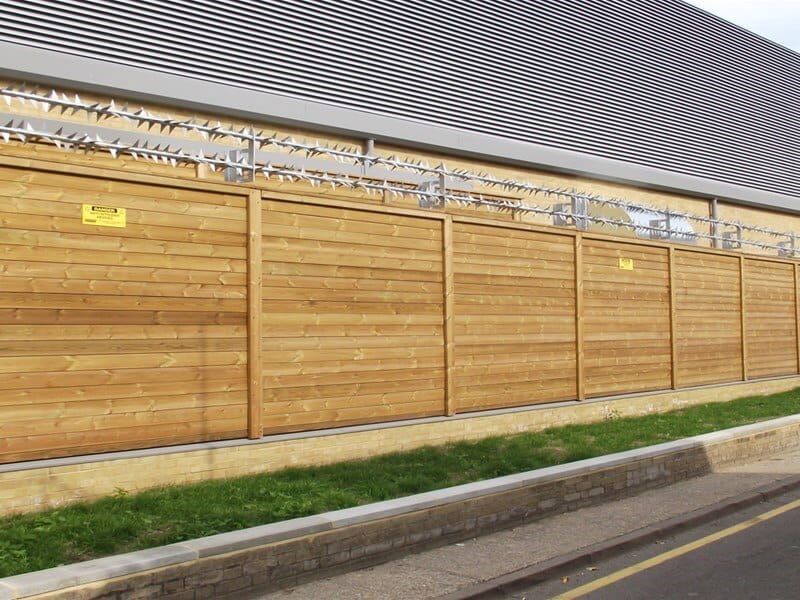
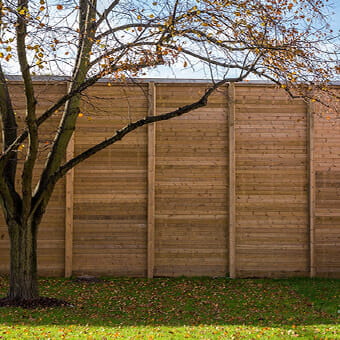
In these situations, Jakoustic® Class 3 Acoustic Fencing can provide a dual purpose solution. Alongside its acoustic performance, the solid construction creates an effective visual screen that helps protect sensitive activities from view.
Key benefits include:
- Reduced visibility into operational areas
- Improved operational security
- Reduced noise transmission
- Support for planning requirements
- Reduced impact on neighbouring communities
Looking at the Bigger Picture
Visual screening is an important part of defence site security, but it is only one piece of the puzzle. The most effective perimeters combine screening with anti-climb performance, attack resistance, independent testing, durability, and integration with wider security measures.
Whether using LPS 1175 certified fencing, EuroGuard® Combi A1 for enhanced concealment, or Jakoustic® Class 3 Acoustic Fencing for combined screening and noise reduction, the goal should be the same: a resilient perimeter that supports a comprehensive layered security strategy and continues to perform throughout its operational life.
Related content
The Cost of Perimeter Failure in Defence Environments
Related products
Jacksons Security has a range of products relating to this article, all complete with our 25 year service life guarantee. If you cannot find the item you are looking for, please do not hesitate to call our friendly sales team.
Related Content
Case Studies
Related Case Studies
We have completed a large number of projects in various sectors, from housing, retail, leisure and education, to hospitals and healthcare, transport, utilities, and high security NPSA (previously CPNI) sites. Discover more through our portfolio of case studies.

Blogs
Related Content
We have an extensive library of blogs covering a wide selection of topics, whether you need a helpful guide for recognising accreditations, an understanding of different processes such as galvanisation, or specialist advice on securing a rural site against crime.

Contact Us
Need Help?
From design and manufacturing to supply and installation, we can help you with your project. If you'd like to discuss anything in this article or need information or guidance, please feel free to contact us at any stage to discuss your requirements.
Top