Our other sites:


Much of the world stopped or slowed down during the pandemic, and as we emerge from the quiet, noise pollution and the bearing it has on contemporary living seems more noticeable than ever. Studies suggest that the impact of noise pollution extends much further than ringing ears; from property prices and architectural design, to mental health and physical wellbeing, it is having an enormously harmful effect on our way of life.
Acoustic barriers are structures that are used internally and externally to block soundwaves, using airtight systems which can either absorb or reflect noise. A dense surface mass underpins the effectiveness of these products, but with such variation in circumstances and requirements, they often demand further tailoring of their height, positioning and construction to achieve the best results.
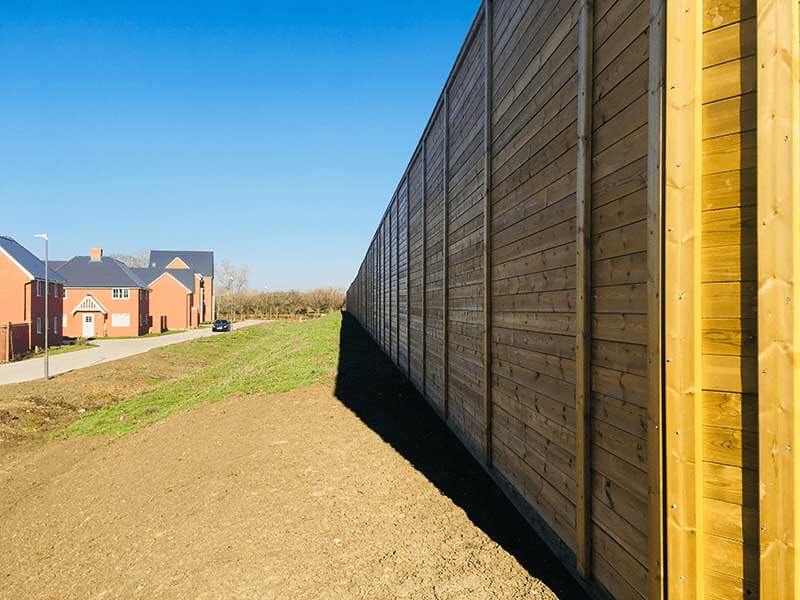
Jacksons’ acoustic barriers
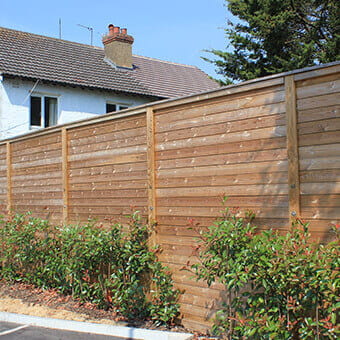
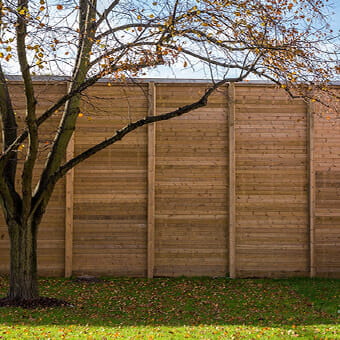
Jacksons’ acoustic barriers offer a cost-effective solution where sound attenuation is required. Our Jakoustic® range combines 75 years of fencing expertise with comprehensive research to deliver a wide selection of acoustic barriers and gates that provide good noise reduction, security, sustainability, and which blend in with surrounding environments.
The Jakoustic® range of absorptive and reflective timber acoustic barriers can ensure optimum noise reduction. We also provide permanent installation services, including maintenance and a 25 year guarantee, to give you complete peace of mind.
How Acoustic Barriers Reduce Noise
Understanding how acoustic barriers work can help determine whether a temporary or permanent solution is the most effective choice for your site.
Sound Absorption vs Sound Reflection
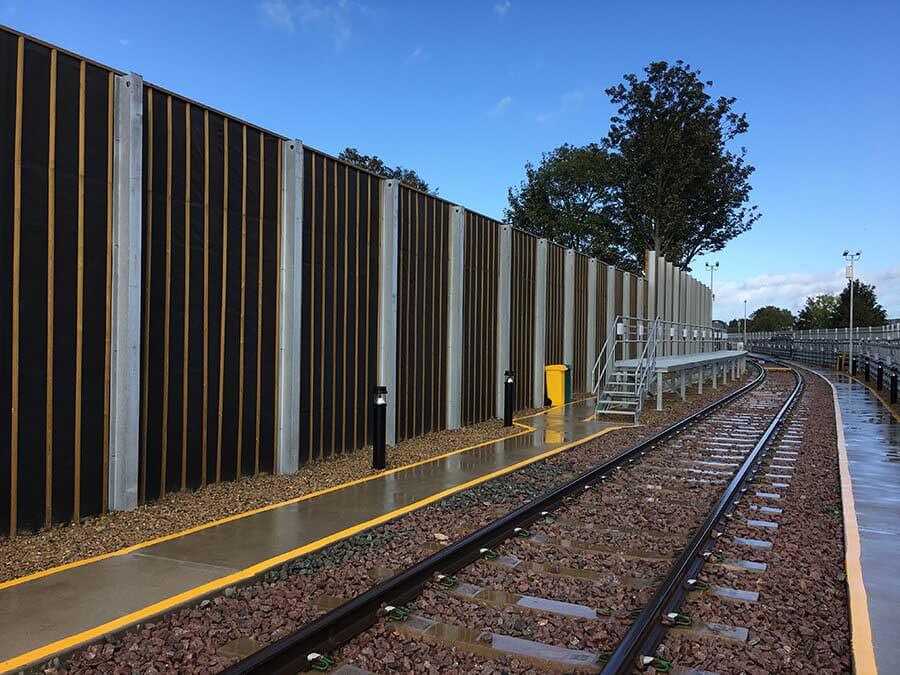
Acoustic barriers are designed to either absorb sound, reflect sound, or provide a combination of both. Absorptive acoustic barriers reduce noise by capturing sound energy and preventing it from bouncing back into the surrounding environment. Reflective acoustic barriers use a dense construction to block and redirect sound away from the protected area.
The most suitable option will depend on the site layout, the type of noise being generated and the proximity of neighbouring properties.
What Level of Noise Reduction Can Be Expected?
The effectiveness of an acoustic barrier depends on several factors, including the barrier specification, its location and the nature of the noise source.
A well designed acoustic barrier can typically reduce noise levels by 5–15dB, depending on source location, barrier height and site conditions. While this may seem modest, even small reductions in decibel levels can significantly improve comfort for nearby residents, workers and visitors.
Why Barrier Height Matters
Barrier height is one of the most important factors affecting acoustic performance. To effectively reduce noise, the barrier should interrupt the direct line of sight between the noise source and the receiver. In general, taller barriers create a greater sound shadow, preventing more noise from travelling beyond the site boundary. When selecting the appropriate barrier height, considerations should include:
- The type and position of the noise source
- The distance to neighbouring properties
- Site topography and ground levels
- Planning requirements
- Future site developments
The Importance of Correct Positioning
Even a high-performance acoustic barrier may not achieve optimum results if it is poorly positioned. Barriers are generally most effective when installed as close as possible to either the noise source or the area requiring protection.
To maximise noise reduction, consideration should also be given to:
- Gaps beneath or between panels
- Access points and gates
- Changes in site levels
- Nearby buildings and reflective surfaces
- Long term operational requirements
A professional site assessment can help ensure that the barrier's height, location and construction are tailored to deliver the best possible acoustic performance while meeting any security, privacy and aesthetic requirements.
Choosing temporary or permanent acoustic barriers
Determining whether temporary or permanent acoustic barriers are appropriate for a site is a frequently encountered obstacle and one that, without insight, can result in unnecessary costs and wasted time.
Our experts have compiled this blog to differentiate and highlight the advantages and disadvantages of each to guarantee a greater (and quieter) return on investment.
Temporary Acoustic Barriers
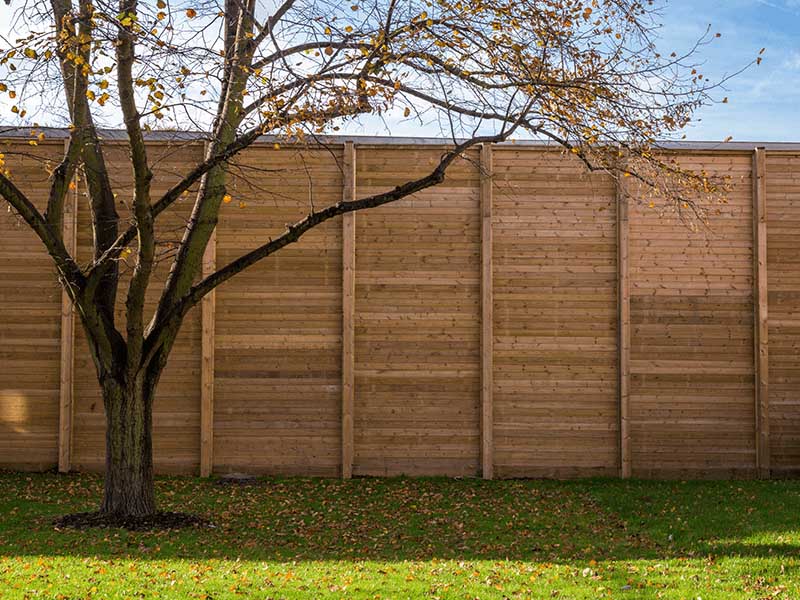
Temporary acoustic barriers offer a short-term solution to noise reduction. With an average lifespan of two to five years, they are ideal for construction sites, festivals and sporting events. Hiring temporary acoustic barriers offers flexibility, adaptability and minimum cost-per-use. However, unlike permanent barriers, temporary acoustic barriers are less environmentally-friendly, requiring new barriers to be purchased frequently and old ones to be replaced.
Temporary acoustic barriers cannot be used as a standalone product; unlike permanent barriers, they must be used in conjunction with temporary fencing, but attachment is a quick and straightforward procedure.
Whilst temporary acoustic barriers offer privacy they lack in security, limiting their suitability for sites that require higher, long-term levels of protection. However, if you’re unsure of whether your site or circumstance demands permanent acoustic barriers, their temporary counterparts provide the opportunity to test suitability and positioning before investment.
Permanent Acoustic Barriers
Assuming that temporary acoustic barriers are best suited to temporary sites – and overlooking permanent acoustic barrier solutions – can end in undesired results.
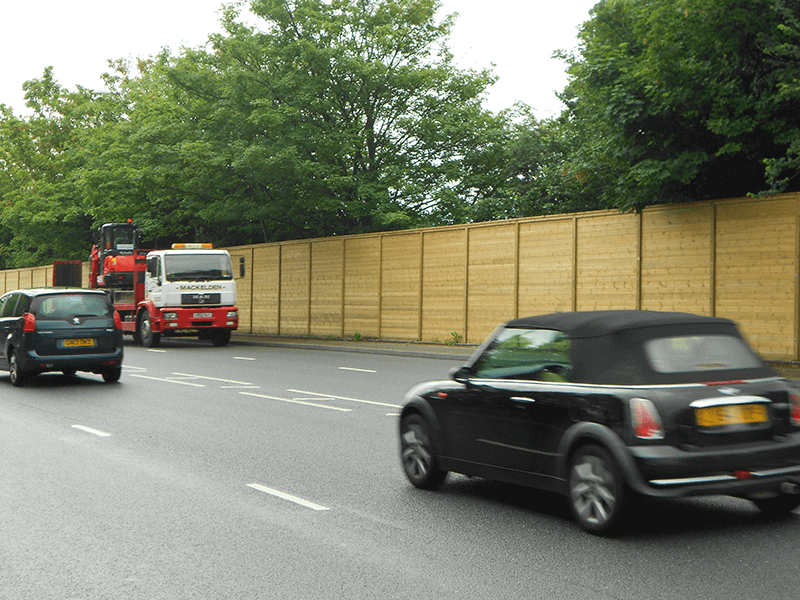
For sites that regularly hold events, opting for permanent acoustic barriers can have many benefits. Not only do they meet the site requirements by containing sound within the perimeter, but they also provide assured long-term protection of the area while also saving time and money that would otherwise be wasted on repeated installation and dismantling.
With high demand for temporary acoustic barriers, permanent installation can alleviate the pressure of sourcing acoustic barriers during peak festival and sporting seasons, reducing the risk of cancellation or delays.
On construction sites, around schools and on housing developments, consideration for the benefits of permanent acoustic barriers outside of noise reduction such privacy, security and aesthetics can save time, money and further disruption in the future.
Real World Applications and Case Studies
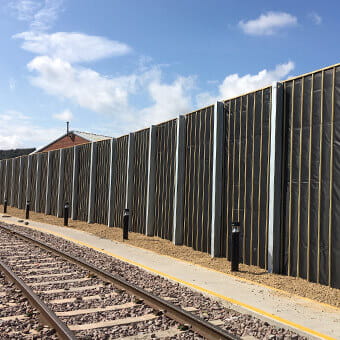
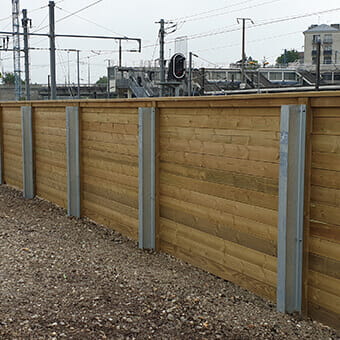
The choice between temporary and permanent acoustic barriers often depends on how long noise mitigation is required. Permanent acoustic barriers are used across a wide range of sectors, including housing developments, schools and educational facilities, transport infrastructure, sports and recreation venues, retail and leisure developments, and commercial properties, where long-term noise reduction, privacy and security are key considerations.
This demonstrates how permanent acoustic barriers can deliver lasting value beyond noise control alone, particularly for sites that operate year round.
To see how these solutions have been successfully implemented across a range of projects, explore our case studies and discover the benefits achieved in real-world environments.
Get in touch
At Jacksons Fencing, our range of permanent acoustic barriers offers a solution for every circumstance. Jakoustic® products have been used successfully across a wide variety of sectors, from transport, education, business and industry, housing and even critical infrastructure to limit the impact of noise pollution.
Our Jakoustic® range of acoustic barriers is also covered by our 25-year guarantee, meaning that our customers continue to reap the benefits of our acoustic barriers long after installation.
If you are responsible for upholding your legal obligation to limit noise pollution on a site, or you are suffering from the consequences of it, then contact Jacksons today to find your solution.
Related content
What is the Best Acoustic Barrier?
Acoustic Fencing: The Most Common Questions
Five common mistakes when installing acoustic fencing
This blog was originally written in 2022 and was updated in 2026.
Related products
Jacksons Security has a range of products relating to this article, all complete with our 25 year service life guarantee. If you cannot find the item you are looking for, please do not hesitate to call our friendly sales team.
Related Content
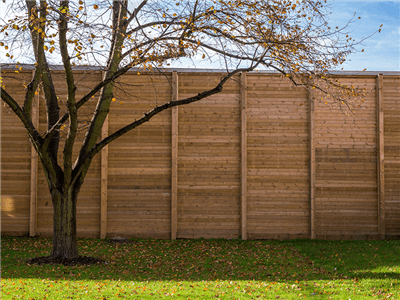
Acoustic Case Studies
Related Case Studies
We have completed a large number of Acoustic projects in various sectors, from housing, retail, leisure and education, to hospitals and healthcare, transport, utilities, and high security CPNI sites. Discover more through our portfolio of Acoustic case studies.
Acoustic Blogs
Related Content
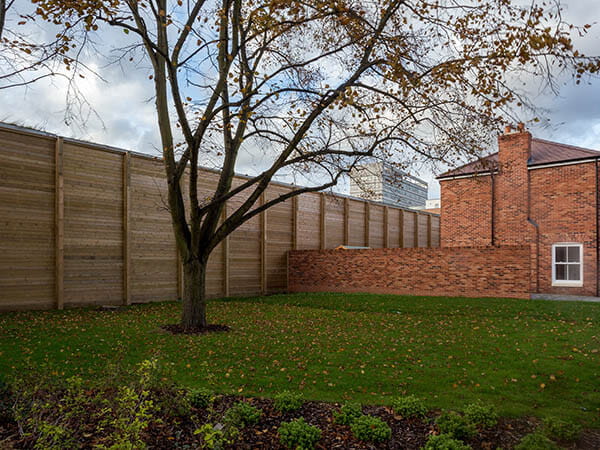
We have an extensive library of Acoustic blogs covering a wide selection of topics, whether you need a helpful guide for recognising accreditations, an understanding of different processes such as our unique timber treatment or UKCA marking regulations for noise barriers.

Contact Us
Need Help?
From design and manufacturing to supply and installation, we can help you with your project. If you'd like to discuss anything in this article or need information or guidance, please feel free to contact us at any stage to discuss your requirements.
Top