Our other sites:


Utilities form the backbone of national life, supplying essential services such as electricity, gas, clean water, wastewater removal, telecommunications, and digital connectivity. As part of the UK’s Critical National Infrastructure (CNI), these organisations operate sites, networks, and assets that society depends on daily. Any disruption can pose significant risks to public safety, economic stability, and national resilience.
Protecting these facilities from hostile, criminal, and accidental threats is more important than ever. Modern perimeter security, controlled access, and resilient infrastructure play a critical role in ensuring the continuity of essential services.
A Shifting Threat Landscape
Many utility sites include legacy infrastructure and outdated perimeter systems that are increasingly vulnerable to contemporary attack methods. Threats range from theft, vandalism, and arson to sabotage, trespass, and terrorism, as well as natural hazards such as storms and flooding. As these risks evolve, operators are expected to specify performance tested, independently verified security solutions.
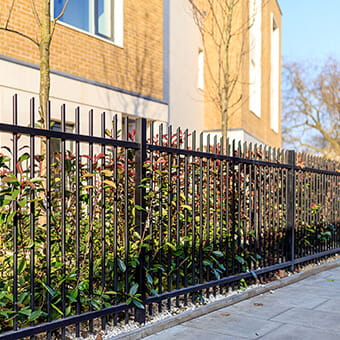
A key benchmark in the UK is the LPS 1175 standard, which provides credible, measurable attack‑delay ratings for physical security products. Fencing and gates certified to LPS 1175 offer proven resistance against forced entry using realistic attack tools and defined timeframes. This enables security professionals to select from a wide range of solutions based on verified performance rather than assumptions or appearance alone.
Specifying Security for Water Treatment Facilities
The UK water network operates continuously and provides one of the most crucial public services. Any compromise to treatment plants, pumping stations, or reservoirs can have severe consequences. Robust, reliable perimeter security is therefore essential.
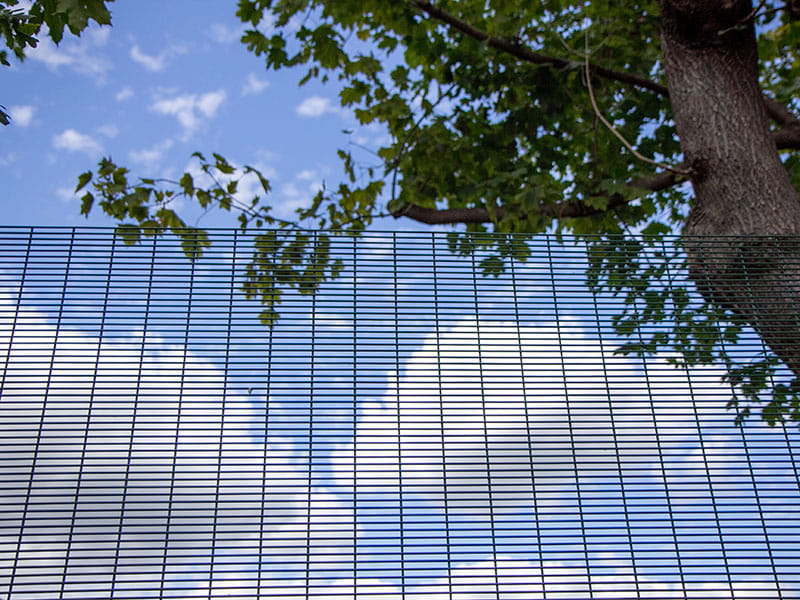
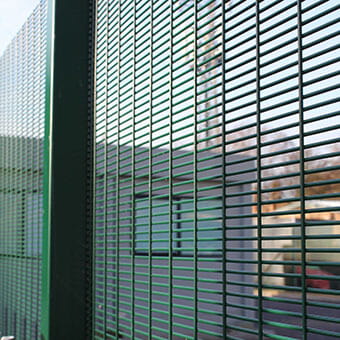
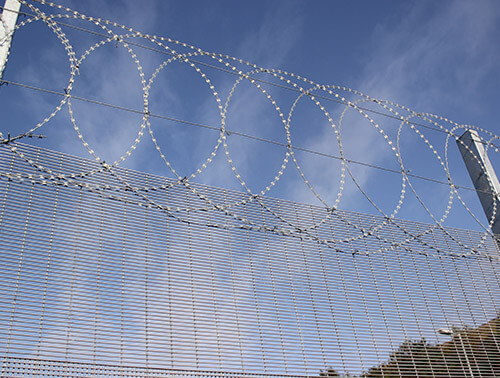
Close-knit 358 mesh systems such as Securi‑Mesh® are commonly used due to their high visibility, anti‑climb properties and tamper-resistant fixings. Better, utilities are increasingly specifying LPS 1175 rated 358 mesh systems, which provide measurable attack‑delay performance and greater assurance against forced entry. These systems are widely deployed across the water sector to mitigate risks such as contamination, chemical interference, and targeted intrusion.
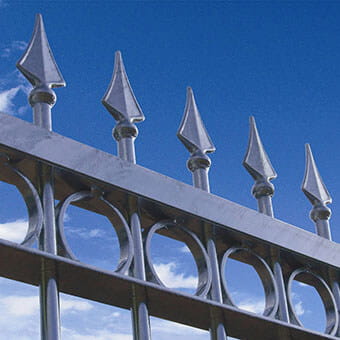
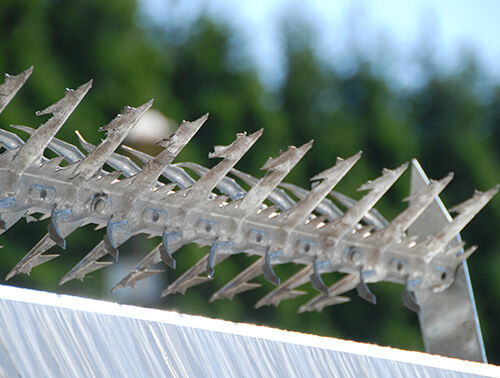
Additional deterrents such as barbed wire, razor toppings, rotating anti‑climb devices, and PIDS (Perimeter Intrusion Detection Systems) can be added to further enhance protection and delay.
Access Control: A Multi-Layered Approach
Perimeter security is only effective when access points are properly protected. A modern specification for a utility site should include a multi-layered access control strategy, utilising the 5 Ds of perimeter security, that delays intruders and supports thorough monitoring.
Vehicle and Pedestrian Access
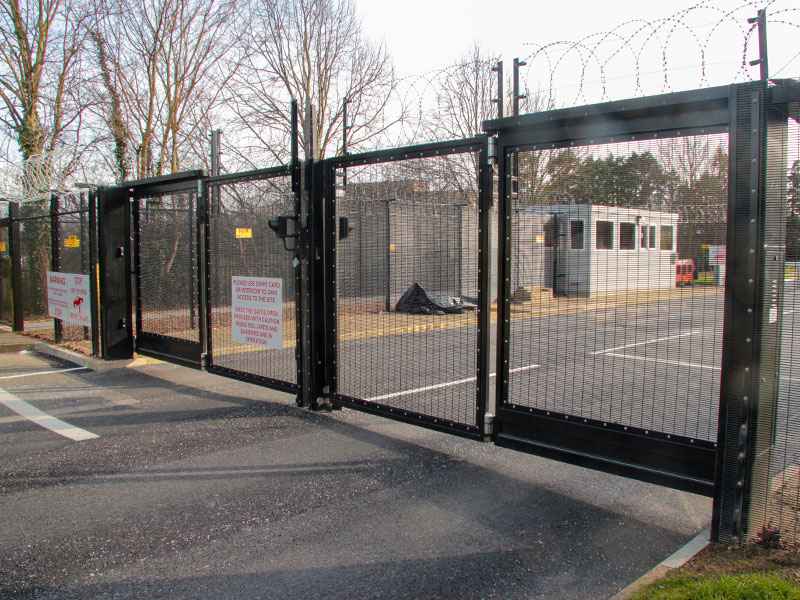
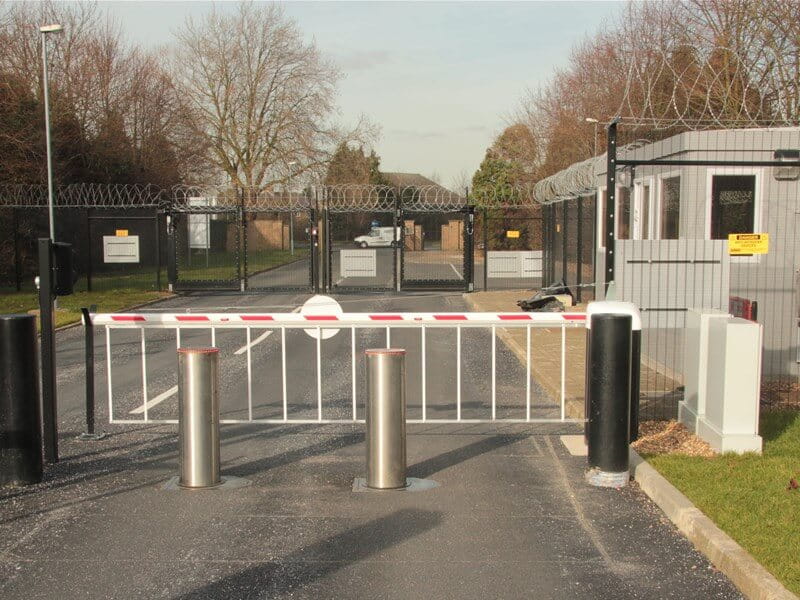
- PAS 68 crash rated speed gates
- Rising bollards
- Road blockers
- Traffic arm barriers
- Pedestrian turnstiles or controlled gates
Layering these systems ensures intruders must pass through successive barriers before reaching critical infrastructure. When integrated with surveillance, perimeter intrusion detection and on-site security teams, this creates a secure “air-lock” allowing controlled screening and rapid response.
Protecting Energy Infrastructure
The UK’s energy supply comes from a mix of fossil fuel stations, nuclear facilities, renewable installations and imported sources. Each presents unique security challenges and strict compliance requirements. Damage or disruption to energy infrastructure can have immediate, nationwide impact.
To mitigate these risks, operators increasingly rely on LPS 1175 certified fencing around substations, transformers and generation facilities. These systems delay forced entry, resist heavy tools and provide reliable, independent validation of performance.
Remote assets such as transmission towers and pylons also require careful protection. Rising incidents of vandalism and targeted attacks highlight the need for secure perimeter systems, anti-climb solutions, and surveillance to protect these often isolated structures and reduce emergency response burdens.
Noise Mitigation for Sensitive Sites
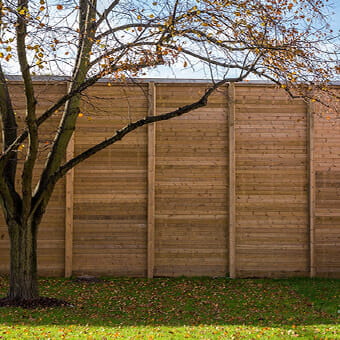
Where substations, generators or other energy equipment operate near residential areas, acoustic control is essential. Continuous low frequency noise can cause significant disturbance.
Acoustic barriers provide:
- High performance noise reduction through dense, interlocking construction
- Enhanced physical protection when combined with steel mesh or certified layers
- An attractive façade that blends into the environment
- Anti-climb benefits due to their height and solid face
Non-Conductive GRP Fencing
Glass Reinforced Plastic (GRP) fencing is widely used in electrical environments due to its non-conductive and non-magnetic properties. It is also transparent to radio frequencies, making it suitable for sensitive communication and monitoring systems.
Available in vertical bar and mesh formats, GRP fencing provides:
- Safety near high voltage equipment
- Resilience against corrosion
- Durability in harsh or coastal environments
- A long-lasting alternative to metal fencing
Internal Access Control for Power Plants
Inside the perimeter, controlling movement is essential to ensure only authorised personnel can access specific zones. Systems may include:
- Speed gates for fast, secure entry
- Traffic barriers operated by security personnel
- Internal gate systems separating operational areas
Integrating these with monitoring and visitor management ensures an organised and secure approach to on-site movement.
Managing Adjacent Land and Shared Boundaries
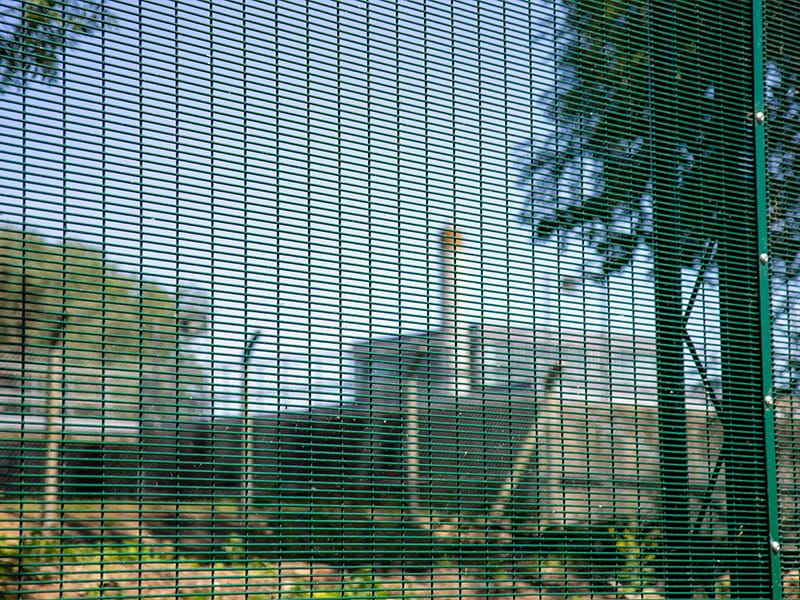
Utilities such as water treatment plants often contain open bodies of water and reservoirs, which must be kept clear of foreign objects to reduce contamination and increase safety of those working at the site. This is particularly important for sites near schools, parks, and recreation grounds where there is a risk of balls and sports equipment going over the fence into the water. We provided a bespoke solution for the shared boundary of a water treatment plant and recreation ground.
Conclusion
As utilities face increasingly complex and evolving threats, securing essential services requires a modern, evidence-led approach. The LPS 1175 standard provides a trusted benchmark for selecting physical security measures capable of resisting real-world attack conditions.
By combining certified fencing, multi-layered access control, specialised materials and environmental solutions such as acoustic barriers and GRP systems, operators can build robust perimeter strategies that support operational continuity and strengthen the resilience of the UK’s most vital infrastructure.
Related products
Jacksons Security has a range of products relating to this article, all complete with our 25 year service life guarantee. If you cannot find the item you are looking for, please do not hesitate to call our friendly sales team.
Related Content
High Security Case Studies
Related Case Studies
We have completed a large number of High Security projects in various sectors, including data centres, embassy buildings, government properties and NPSA (previously CPNI) sites. Discover more through our portfolio of High Security case studies.
Other Security Related Blogs
Related Content
We have an extensive library of blogs about the High Security sector, covering a wide selection of topics including guides for choosing the right security product, understanding security ratings, and planning and designing secure sites.

Contact Us
Need Help?
From design and manufacturing to supply and installation, we can help you with your project. If you'd like to discuss anything in this article or need information or guidance, please feel free to contact us at any stage to discuss your requirements.
Top